
Obby IQ Escape from the Laboratory Walkthrough and Answers

Obby: IQ Escape from the Laboratory is cleared by combining precise jumps, clue hunting, and short puzzle solving. The goal of each stage is to understand its rule, reach the exit safely, and avoid losing a discovered answer after a fall. The main principle is simple: inspect the whole level first, separate the platforming challenge from the puzzle, and only then enter a code or start jumping. Use normal arithmetic rules unless the game clearly demonstrates a different pattern.
How do you complete Obby IQ Escape from the Laboratory?
To make steady progress, begin every stage by identifying its challenge type: route, trap, math problem, code, or a combination of several mechanics.
Do not sprint toward the first visible door. Turn the camera, check the platform beneath your character, and find a safe position that gives you a view of the full route. Divide platforming sections into short segments. Choose a landing spot first and jump second. This makes distance easier to judge and keeps your character away from platform edges.
When you encounter a puzzle, do not immediately enter random numbers. Read the entire expression, check every symbol, and look for a nearby example. A wrong answer in this kind of obby may send you back to the beginning of the stage, so ten seconds of checking can save several repeated attempts. On a mixed stage, solve the puzzle first, remember the answer, and then cross the dangerous section.
How do you play step by step?
- Stop after loading - identify the dangers. Do not move during the first second. Let the stage load, then find platform edges, moving obstacles, and the likely exit.
- Turn the camera - collect the clues. Scan the scene from left to right and from top to bottom. A number may only be readable from a certain angle, while a safe platform can be hidden behind scenery.
- Identify the challenge - choose the method. An obby section requires a jumping rhythm, an equation requires calculation, a keypad requires a code, and a maze requires navigation using memorable landmarks.
- Split the route - reduce the risk. Select the nearest stable platform and aim for its center. Do not base the whole attempt on one long jump when two shorter jumps are available.
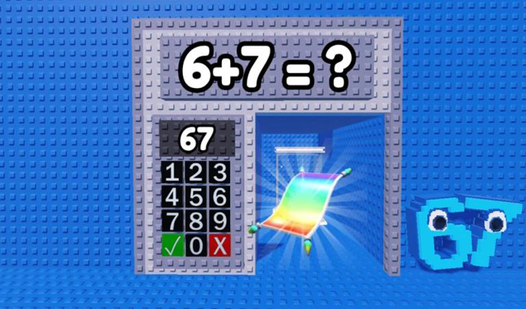
- Solve the equation separately - produce a verifiable answer. Copy the numbers in their original order, account for parentheses, and calculate multiplication or division before addition or subtraction.
- Compare the answer with the surroundings - rule out a hidden pattern. If other equations are displayed nearby, test your method against them. The game may be asking for a pattern demonstrated by previous lines rather than ordinary school arithmetic.
- Enter the code once - preserve the attempt. Check every digit before pressing the confirmation button. If the panel does not respond, make sure the character is close enough and the stage has actually been activated.
- Cross in short sequences - stay in control. Realign the camera and stop the character after every difficult jump. Continuous running looks faster but tends to cause unnecessary falls.
- Remember the failure point - change one action. Do not repeat the entire attempt on autopilot after losing. Adjust the camera angle, jump timing, or chosen platform that caused the failure.
- Reach the confirmation - finish the stage. Do not turn around immediately after entering a door or finish zone. Wait for the next level or a clear sign that your progress has been saved.
How do you solve equations in Obby IQ Escape from the Laboratory?
Start with standard arithmetic and search for an unusual pattern only when the normal answer fails or the level provides examples that teach another rule.
Copy the expression without changing anything. Similar symbols are easy to confuse: a multiplication sign may resemble a letter, while a division sign can be harder to see than the digits. Then apply the order of operations. Calculate parentheses first, multiplication and division from left to right next, and addition and subtraction from left to right last.
If several equations appear on a wall, do not borrow a rule from a random online hint. Test it against every visible line. A valid pattern explains all displayed examples in the same way. If a rule works for only one line, it is a guess rather than a solution.
For a long number, read the digits aloud one at a time before entering them. Many failures on these stages come from swapping two digits or missing a symbol, not from incorrect arithmetic.
How do you pass level 74 with 6303=?
The expression 6303=? does not provide enough information for one reliable nonstandard answer, so you need to find the rule inside the level itself.
Check whether 6303 is a standalone number or part of a sequence. Inspect the area around the expression. Other lines might show whether you need to add the digits, read them in another order, or apply the same transformation repeatedly. These are possible tests, not confirmed answers. Choose a rule only after it matches every example visible on the screen.
If there are no extra conditions, begin with the literal interpretation instead of making the puzzle more complicated. If that answer is rejected, remember the result and resume searching for a visual clue. Randomly trying four-digit combinations will almost always take longer than inspecting the stage again.
How do you pass level 75 with 5*95?
If the stage shows exactly 5*95 and provides no separate pattern, the normal multiplication result is 475.
You can calculate it in parts. Multiply 100 by 5, then subtract 5 multiplied by 5. That gives 500 minus 25, which equals 475. Before entering it, make sure the first character is actually 5 and the symbol between the numbers means multiplication. If 475 is rejected, do not start testing nearby numbers. Search for another example or condition that changes how the expression should be read.
Check the keypad format as well. Some panels require a separate confirmation button, while correcting one wrong digit may require clearing the entire field. This does not change the answer, but it prevents a control mistake from looking like a calculation mistake.
How do you pass level 91 when the keypad is behind glass?
First determine whether the keypad is an interactive target or only a clue, then locate the code and an accessible way to continue through the stage.
Do not waste attempts jumping directly into the glass unless the game indicates that contact can open it. Approach the barrier, change the camera angle, and check whether the panel can be used through the boundary. If no interaction is available, inspect the level in reverse. Look for a digit sequence, repeating symbols, colors, or an equation that produces a code. Not every visible detail belongs to the solution, so compare any clue with the number of keypad positions and the input field format.
Check the height of the room and its side passages too. An obby may use a different approach angle instead of asking you to break a barrier. Examine wall and platform edges, but do not assume a hidden route exists until you can see a surface where the character can actually stand.
Once you find the code, remember it or write it down before attempting a dangerous jump. If the keypad remains behind the glass, try activating the available action from the closest safe position. If no interface appears, another step on the stage probably needs to be completed first.
What tips help you avoid falls and wrong answers?
Short, deliberate attempts work better than rapid guessing, especially when a stage combines jumps with puzzles.
- I position the camera slightly above the character before a sequence of jumps. This gives me a clearer view of platform edges and helps me judge the safe landing area.
- I aim near the center of a platform instead of its closest edge. A small correction in the air is then less likely to turn a successful jump into a fall.
- I write down a code before crossing a difficult section. After a fall, I do not have to search for the clue again, so the next attempt takes less time.
- I allow myself no more than two evidence-based answer attempts. If both fail, I stop guessing and inspect the level again because a missed condition is more useful than a random combination.
Which common mistakes prevent progress?
Players most often rush, misread the instructions, or try to solve a puzzle without collecting all the necessary information.
The first mistake is jumping with a poor camera angle. Even the correct route becomes harder when the character blocks the landing spot. The second is entering an answer immediately after calculating it without checking the digits again. The third is carrying a rule from the previous level into a new one even though the puzzle format has changed. The fourth is treating every wall as a secret passage and wasting attempts on an unsupported theory.
The correction is straightforward: stop after two identical failures. If the character keeps falling at the same spot, change your movement technique. If a code is rejected, change your interpretation of the clue. If an interaction does not appear, search for an activation condition or another route.
What should you play after completing it?
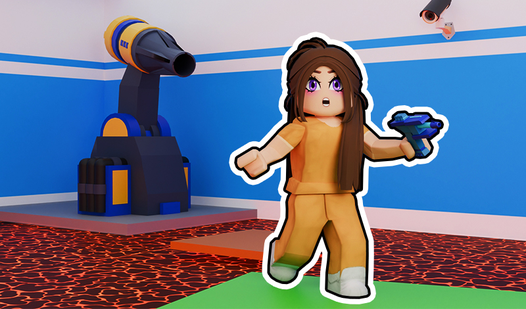
If you enjoy laboratory-themed obbies, try these related games, but do not automatically reuse their codes or solutions. Obstacle placement and puzzle logic may be different.
FAQ
What is the main strategy for Obby IQ Escape from the Laboratory?
Inspect the stage and identify the challenge type first, then solve the puzzle or choose a route before taking action.
What is the answer to 5*95 on level 75?
With standard multiplication, the answer is 475. If the game rejects it, the level must provide an additional rule or the symbol has been read incorrectly.
Can you solve level 74 using only 6303=?
No. A nonstandard answer requires additional examples or a visual condition because the expression alone does not define a unique transformation.
What should you do when the level 91 keypad is behind glass?
Test interaction from the nearest safe position, then search for the code, an opening condition, or another approach instead of wasting attempts on random jumps.