
How to Win 2048: Rules, Strategy, and Key Moves

To win 2048, combine equal-numbered tiles until you create the 2048 tile. Keep your largest tile in one corner, build descending values beside it, and avoid swiping away from that protected edge. Start by choosing a corner and using only the three directions that keep your main tile anchored whenever possible.
The controls are simple, but every swipe changes the entire board. Winning depends less on quick reactions than on preserving an organized structure and enough empty cells for future moves.
What are the rules of 2048?
The basic rule is that tiles with the same value merge when a swipe pushes them together.
A standard game uses a 4-by-4 grid. Swiping up, down, left, or right moves every tile as far as it can travel in that direction. When two matching tiles meet, they become one tile worth their combined value: two 2 tiles make 4, two 4 tiles make 8, and so on. After a valid move, a new low-value tile normally appears in an empty cell.
One tile cannot merge twice during the same movement. For example, a row containing 2, 2, 4 will usually become 4, 4 rather than immediately becoming 8. The exact result also depends on the direction of the swipe, so merge order matters.
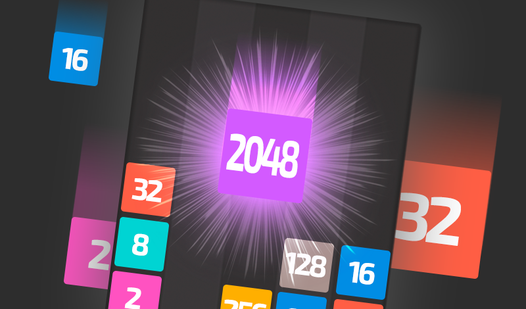
You win by creating 2048. Many versions let you continue afterward and pursue 4096 or a higher score. You lose when the grid is full and no horizontal or vertical pair of equal tiles remains.
How do you play 2048 step by step?
Follow a repeatable setup so that each move strengthens the board instead of merely creating the next available merge.
- Choose a corner to protect. Pick one bottom corner and plan to keep your largest tile there for the entire game.
- Push tiles toward the protected edge. Use downward and sideways swipes to concentrate values near your corner and leave space on the opposite side.
- Build a descending row. Arrange large tiles beside the corner in order, such as 256, 128, 64, and 32, so adjacent values can feed the largest tile.
- Merge smaller tiles away from the anchor. Develop new 2, 4, 8, and 16 tiles in the open part of the grid before bringing them into your main row.
- Check the whole board before swiping. Identify which pairs will merge, where every other tile will land, and where a new tile could appear.
- Prefer moves that create empty cells. Empty spaces provide flexibility and reduce the risk of being trapped by alternating values.
- Feed the chain in order. Combine small tiles into the exact value needed by the next tile in your descending sequence.
- Protect the structure after every merge. A tempting combination is rarely useful if it pulls the largest tile out of its corner or breaks the ordered edge.
Early in a game, several moves may appear equally safe. Use that freedom to establish the corner and edge pattern before the board becomes crowded.
How do you win at 2048 consistently?
The most reliable strategy is to keep the board monotonic: values should generally rise toward one protected corner rather than being scattered randomly.
Suppose your chosen anchor is the bottom-left corner. Your largest tile belongs there, with the next-largest values extending to the right or upward in descending order. A useful bottom row might read 512, 256, 128, 64. It does not need to look perfect after every turn, but the overall direction should remain intact.
Three habits make this structure sustainable:
- Limit your movement directions. If the anchor is at the bottom, down should be your default move. Use left and right to form merges. Avoid up unless no safe alternative exists, because it opens the protected row and may allow a new tile to appear beneath your largest values.
- Prepare merges before taking them. Combining two 64 tiles is useful only if the resulting 128 has a path toward your existing 128. Think in chains rather than isolated pairs.
- Preserve one working area. Keep lower-value tiles and spare cells in the part of the grid farthest from the anchor. This is where you manufacture the next tile needed by the main sequence.
Do not repeat a fixed swipe pattern without looking. The game introduces new tiles in available cells, so a pattern that works for several turns can suddenly damage the board. Pause when the grid becomes dense and compare the result of each legal direction.
A good decision usually does at least two of these jobs: completes a merge, opens a cell, maintains the descending edge, or places matching values close together. A move that scores points but destroys the edge may leave you worse off.
What beginner mistakes stop you from reaching 2048?
Most losses come from broken board structure rather than one unlucky tile.
The biggest mistake is moving in all four directions casually. If you swipe away from the protected edge, the largest tile may leave its corner. A new 2 can then spawn behind it, making the corner difficult to recover.
Another common mistake is merging the first matching pair you notice. Every swipe moves all tiles, so a small merge on one side may separate important values elsewhere. Inspect full rows and columns, not just the pair you want.
Other costly habits include:
- Filling every cell before creating a merge route.
- Placing the second-largest tile far from the largest one.
- Allowing large values to alternate, such as 128, 32, 64, 16.
- Chasing immediate score instead of building the next required value.
- Swiping rapidly after a successful merge and missing the new board state.
Speed provides no strategic advantage in untimed versions. Taking a few seconds to trace the movement of large tiles is often the difference between a recoverable board and a forced loss.
How can you recover when the 2048 board is almost full?
Recover by protecting the largest tiles first, then search for a move that creates a chain of two or more merges.
Count the empty cells and locate every matching horizontal or vertical pair. If only one empty cell remains, avoid moves that merely shift tiles without combining them. Look for a swipe that merges one pair and aligns another pair for the following turn.
Keep the anchor on its edge even during an emergency. Moving it may produce temporary space, but it often replaces a crowded board with a disordered one. If you must use the forbidden direction, first pack the protected row completely. A full row moves together and is less likely to have a new tile inserted into its structure.
Recovery is hardest when large tiles are separated by small blockers. Work on the smallest blocker that can realistically be upgraded. Trying to rebuild several distant high values at once usually consumes the remaining space.
What variants of 2048 can you play?
2048 variants keep the idea of combining matching values but may change the board, movement, theme, or way tiles are collected.
Classic versions are best for learning corner control, merge order, and space management. Alternative versions may turn the board into a moving path, use soft blocks, connectable objects, flowers, bubbles, or a snake that grows by collecting matching values. In those games, positioning and collision management can matter as much as maintaining a numerical sequence.
Do not assume that every variant uses the classic 4-by-4 rules. Check how new pieces enter, whether movement happens continuously, and what ends a run. The same planning principle still helps: combine low values efficiently while keeping high values accessible.
What are the best 2048 games to play free?
The best choice depends on whether you want to practice the original grid strategy or try the merging idea with different movement rules.
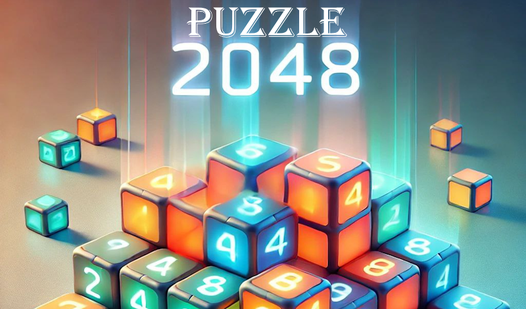
For deliberate practice, choose a straightforward 2048 puzzle with clear tiles and responsive directional controls. It should make the board easy to scan so you can predict complete rows and columns before moving. Puzzle 2048 is a natural starting point from the catalog, while New 2048 offers another numerical option to explore.
Snake-themed versions are useful when you want a faster variation built around collecting and combining values. Treat them as related challenges rather than exact substitutes for classic practice, since their movement and failure conditions may differ.
FAQ
Is there a guaranteed way to win 2048?
No strategy guarantees every result, because new tiles can appear in different empty cells. Keeping the largest tile in a corner and maintaining descending values greatly improves your chances.
Which corner is best in 2048?
Any corner can work. Choose the one that feels natural for your controls and use it consistently. Bottom corners are popular because many players find downward anchoring easy to monitor.
Should you ever swipe in all four directions?
Usually not. Use three directions for most of the game and treat the direction away from your protected edge as an emergency move.
Does making 2048 end the game?
It counts as the standard win condition, but many versions allow you to continue building larger tiles and increasing your score.