Best Block Puzzle Games to Play Free

The best block puzzle games let you place shapes on a grid, complete rows or columns, and keep space open for the next pieces. Start by fitting the hardest shape first, avoid leaving one-cell gaps, and build clears without crowding the center. Most browser versions need only a mouse or touchscreen: drag a piece into an empty area, release it, and continue until the board fills or the level goal is met.
Block puzzles are easy to understand because every decision is visible. The challenge comes from planning several placements ahead. A move that clears one line now may leave the board worse for the next three pieces, while a quiet placement can prepare two or more useful clears.
What are the rules of block puzzle games?
The basic rule is to place every available block without overlapping occupied cells or extending beyond the grid.
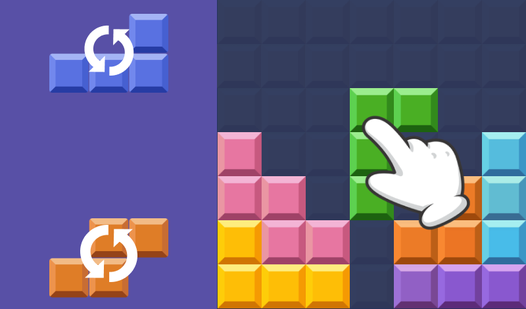
In a common browser version, the game gives you a tray of several shapes. You drag each shape onto the board, and completed horizontal or vertical lines disappear. After you use the tray, a new group appears. The run ends when none of the available pieces can fit.
Not every block puzzle follows that exact format. Some ask you to fill a fixed outline, connect matching colors, move blocks already on the board, or complete a target within a limited number of moves. Falling-block games add timing because pieces descend automatically. Rotation may be available, restricted, or disabled, so check the controls before planning around it.
Three principles apply across most variants:
- Every piece must occupy valid empty cells.
- Completed patterns create space, points, or progress.
- Poorly shaped empty areas are often more dangerous than a nearly full but organized board.
How do you play block puzzle games step by step?
You play by reading the current shapes, choosing a placement order, and preserving enough usable space for future pieces.
- Check the objective to choose the right plan. Determine whether the game rewards line clears, color matches, a high score, or completion of a fixed shape.
- Inspect every available piece to find the constraint. Long bars, large squares, and irregular shapes usually need more preparation than small pieces.
- Scan the grid to identify safe zones. Look for complete rectangular areas and nearly finished lines rather than isolated empty cells.
- Place the hardest piece to protect its landing space. Do this first unless another move creates a clearly better opening for it.
- Build toward a clear to recover room. Add blocks to rows or columns that can realistically be completed with the remaining shapes.
- Recheck the board after every placement to catch new options. A cleared line can change where the other pieces fit.
- Use the final tray piece to leave a flexible board. Favor open rectangles and connected spaces before the next group appears.
On touchscreens, start dragging from the center of a piece so your finger does not hide its destination. Release only after the placement preview shows that every cell is valid.
How do you win at block puzzle games?
You win by meeting the stated objective, but in endless modes the practical goal is to keep the board playable while increasing your score.
The strongest habit is to evaluate the whole tray before making the first move. Treat the pieces as a small puzzle set. Ask where all of them can go, which order creates the most room, and whether one placement blocks another. The first legal move is not always the safest move.
Protect large, regular spaces. A three-by-three empty square can accept many shapes, while nine scattered cells may accept almost none. Connected space is valuable because future pieces are unknown. Keeping the center relatively open also gives awkward shapes more possible orientations and landing positions.
Avoid holes that your game cannot repair. A single empty cell surrounded by blocks is harmless only if single-cell pieces exist. Narrow channels can be just as troublesome when the available shapes are wider. Before placing a piece, look at the empty area it leaves behind, not just the cells it fills.
Clear lines with a purpose. An immediate clear is useful when it opens the board, but it can be wasteful if it destroys a setup for several clears or forces a large piece into a corner. Compare the space gained with the flexibility lost. Survival usually matters more than a small short-term score bonus.
Corners and edges are useful for pieces that match them cleanly. They are risky for irregular blocks that create jagged boundaries. Build outward in compact sections, keep at least one broad lane available, and resist spreading single blocks across every part of the grid.
What makes a block puzzle game good?
A good block puzzle game combines readable shapes, responsive controls, fair piece generation, and decisions that remain interesting after the rules become familiar.
Clear visual feedback matters. You should be able to tell where a piece will land, which cells are occupied, and what will clear before releasing it. On mobile, pieces and targets need enough separation for accurate dragging. An undo option can make a game more relaxed, while its absence makes placement more deliberate.
The best choice also depends on the experience you want. Endless score modes reward consistency and risk management. Level-based puzzles reward finding a particular solution. Color variants add another condition to track. Move-block games shift the focus from placing new shapes to reorganizing a crowded position.
Difficulty should come from spatial decisions rather than unclear controls. A useful game teaches its rules quickly, then creates tension through limited room, inconvenient shapes, or competing objectives. Short restarts are another advantage because experimentation feels painless.
What are the best block puzzle games to play free?
The best free block puzzle game is the one whose rules match the kind of thinking you enjoy: open-ended placement, visual matching, construction, or movement.
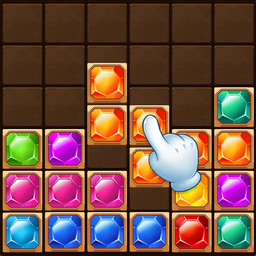
Block Puzzle: Color Puzzles is a sensible starting point if color-based visual organization appeals to you. Use the opening rounds to learn whether color changes the clearing condition or simply helps distinguish groups, then adjust your plan around the rule the game actually shows.
Block Puzzle: Smart Placement puts the genre's central skill directly in its title. Try it when you want to practice scanning the entire board, comparing landing areas, and choosing the order of several available pieces.
Block Puzzle: The Block Builder is a fitting option for players who enjoy the constructive side of the genre. Focus on making compact shapes and clean boundaries instead of collecting scattered openings.
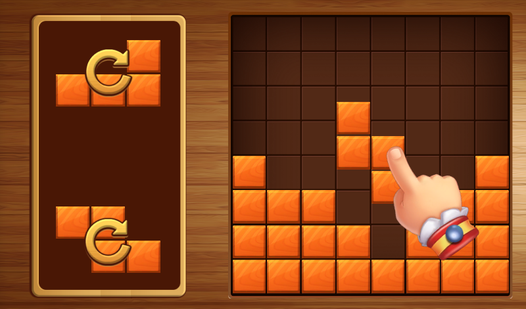
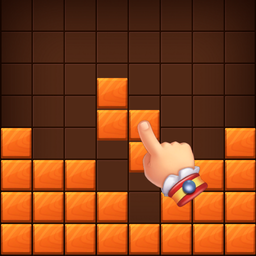
Block Puzzle: Move Blocks is the useful contrast in this selection. Its title suggests a movement-focused take, so read the opening objective carefully and check whether you are arranging existing blocks, creating paths, or solving fixed positions rather than following classic line-clear rules.
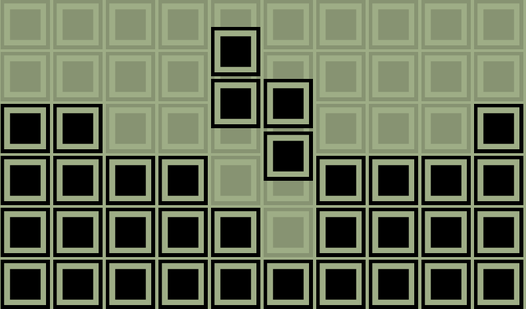
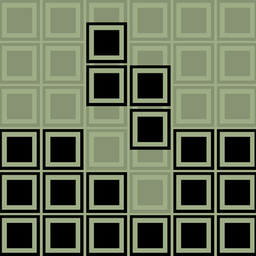
Try more than one format before deciding which is best for you. Placement games test space management, while fixed puzzles place more emphasis on deduction. A player who dislikes the pressure of falling pieces may still enjoy a turn-based grid with unlimited thinking time.
What block puzzle variants should you try?
The main variants are line-clearing grids, shape-fitting levels, color puzzles, moving-block challenges, and timed falling-block games.
Line-clearing grids give you shapes to place and remove completed rows or columns. They are usually easy to start and well suited to score chasing. Shape-fitting puzzles ask you to fill a silhouette or use every supplied piece, so success depends on recognizing exact combinations.
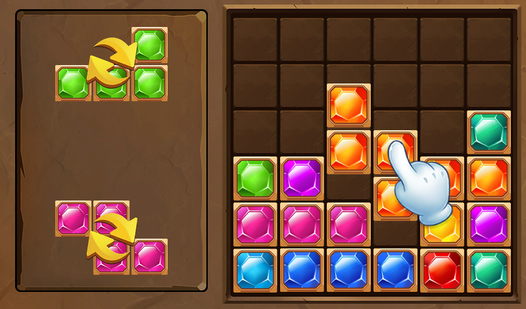
Color puzzles add matching, grouping, or color-specific targets. Empty space still matters, but the identity of each block can matter as much as its shape. Move-block puzzles begin with pieces already in play and ask you to rearrange them, free a route, or reach a target position. These reward move order and may penalize unnecessary actions.
Falling-block variants introduce speed because the board changes while you think. Quick recognition becomes more important than perfect calculation. Some games combine systems, such as a line-clearing grid with level goals or power-ups. Learn the normal clearing rule before relying on special pieces, since basic space management remains the dependable strategy.
What mistakes should beginners avoid?
Beginners should avoid impulsive clears, fragmented empty space, blocked corners, and planning for pieces that may never appear.
The most common mistake is placing a small piece simply because it fits. A legal placement can still be bad if it divides one useful opening into two unusable gaps. Pause and test the largest available shape mentally before committing the smaller one.
Another mistake is filling from every edge toward the center. This creates several unfinished zones and makes later pieces difficult to place. Develop one compact area while preserving a broad working space elsewhere. Do not treat the center as forbidden, but avoid cluttering it without a clear benefit.
Players also become attached to nearly complete lines. If finishing one row requires damaging the rest of the board, abandon that setup. Empty cells are resources, not debts that must all be filled immediately.
Finally, do not assume rotation exists or that a particular rescue piece will arrive. Plan from the pieces you can see. When several placements score equally, choose the one that leaves simple empty shapes: squares, rectangles, and wide lanes. That small preference prevents many unwinnable boards.
FAQ
Are block puzzle games free to play online?
Many browser block puzzle games can be played free without downloading software. Open a game card, check its controls, and start with the tutorial or first level if one is provided.
Can you rotate pieces in every block puzzle game?
No. Some games allow rotation, some rotate pieces automatically, and others require you to use the exact orientation shown. Test the controls before assuming a piece can turn.
What is the best strategy for a high score?
Keep empty space connected, evaluate the full tray, and prefer placements that prepare multiple clears without creating narrow holes. A stable board supports longer scoring runs than repeated risky clears.
Do block puzzle games have an ending?
Some have fixed levels or objectives, while endless modes continue until no available piece fits. In an endless game, your score and survival time act as the result.