Free Word Games Online: Rules, Tips, and Best Picks

Free word games online are browser puzzles built around finding, forming, or guessing words from a limited set of letters. Start by reading the round's goal, scan the available letters, and enter the most likely word. You win by completing the target, clearing the board, or earning enough points before your moves or time run out. Most games need only a keyboard or taps, so you can begin without learning a long rulebook.
The genre includes anagrams, letter-connecting puzzles, hidden-word searches, clue games, and guess-and-feedback challenges. Their scoring systems differ, but they reward the same core skills: recognizing patterns, testing useful possibilities, and learning from feedback instead of entering random words.
What are the rules of online word games?
The shared rule is simple: use the letters and clues provided to produce words accepted by the game's dictionary.
Before playing, identify three things: the objective, the allowed actions, and the limit. The objective might be finding every hidden word, guessing one secret word, filling empty spaces, or reaching a score. Actions can include typing, dragging through adjacent letters, rearranging tiles, or selecting letter groups. Limits may involve time, moves, guesses, or mistakes.
A word usually must use only available letters and respect any required order or position. Some games allow repeated letters only when duplicates appear on the board. Others let letters be reused. Plurals, names, abbreviations, and regional spellings may be accepted in one dictionary and rejected in another, so treat the in-game response as the final ruling.
How do you play word games step by step?
Start by identifying the puzzle's exact goal, then turn each attempt into either progress or useful information.
- Read the objective - know what ends the round. Check whether you must find all words, uncover one answer, clear pieces, or beat a score.
- Inventory the letters - see your real options. Notice vowels, repeated letters, fixed positions, blocked cells, and any letter groups that must stay together.
- Mark the constraints - eliminate impossible answers. Record the required length, known letters, banned letters, clue category, and remaining guesses or moves.
- Build familiar patterns - create likely candidates. Try common beginnings, endings, vowel combinations, and short words before searching for unusual vocabulary.
- Submit a useful attempt - gain progress or feedback. In guessing games, favor a word that tests several untried letters. In level puzzles, prioritize words that change the board favorably.
- Read every signal - update your next choice. A correct position, rejected word, revealed letter, or moved tile tells you what to keep and what to discard.
- Finish methodically - check what remains. Compare empty spaces, unused letters, and clue wording before spending a hint or making a desperate guess.
How do you win at word games more often?
You win more consistently by reducing the number of plausible answers with every move, not by guessing the first word that comes to mind.
Begin with letter coverage. In a guess-and-feedback game, an opening word with several distinct, common letters usually reveals more than one filled with duplicates. Once the board confirms a letter, test its possible positions while introducing new letters. Do not keep recycling a combination that the feedback has already ruled out.
For anagrams and letter-connecting puzzles, separate the letter set into useful chunks. Look for common prefixes such as re-, un-, and dis-, then endings such as -ed, -er, -ing, and -ly. Also move vowels between consonants mentally. A set that appears meaningless in its displayed order may become obvious when you stop reading from left to right.
Short words matter. Players often hunt for the longest answer while overlooking simple three- or four-letter words that reveal a pattern, clear an obstacle, or complete a list. Find the reliable words first. The longer answer is easier to see once fewer letters remain unexplained.
Manage limited resources deliberately. Save hints for positions where you have narrowed the answer but cannot separate the final candidates. Under a timer, skip a stubborn clue and collect easier points elsewhere. If mistakes cost lives, pause before submitting a doubtful spelling. The best move depends on the penalty, not just the possible reward.
What are the best free word games to play online?
The best free word games give clear feedback, readable letters, fair difficulty, and enough variety to reward reasoning rather than repeated blind guesses.
Choose according to the kind of thinking you enjoy. Letter-building games suit players who like rearranging pieces and spotting patterns. Guessing games reward deduction and careful test words. Timed or competition-themed games add pressure, while level-based puzzles allow a steadier pace. A good first choice should explain its controls quickly and make rejected answers easy to understand.
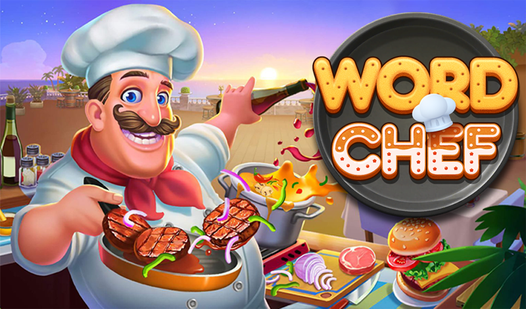
Word Chef uses a cooking theme for a familiar word-puzzle setting. It is a natural starting point when you want to examine a small letter set, build possible words, and progress through manageable rounds.
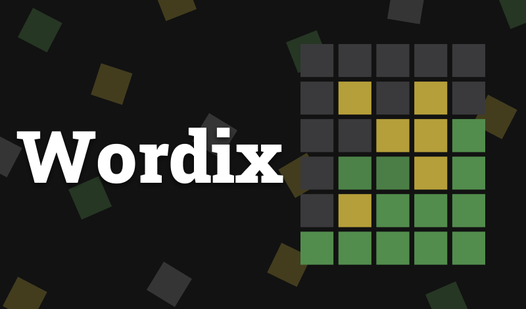
Wordix is a good match for players who enjoy compact guessing sessions and feedback-driven deduction. Check its on-screen legend first, then use each result to narrow the next attempt instead of repeating similar guesses.

Word Bits focuses on forming words from smaller letter units. It favors pattern recognition: test how fragments can connect, pay attention to the remaining pieces, and avoid assuming that the displayed order is meaningful.
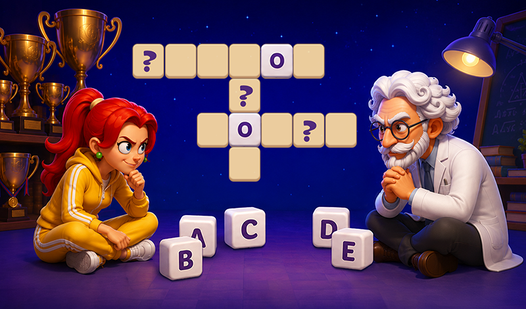
Word Cup provides a competition-flavored alternative for players motivated by targets and scores. Accuracy still comes first, but quick recognition becomes more important when the round rewards pace.
What types of free word games are available?
The main variants change where the information comes from: visible letters, positional feedback, clues, a letter grid, or a timer.
- Anagram games ask you to rearrange a fixed set of letters into one or more valid words.
- Letter-connecting games require you to trace or combine letters, sometimes with adjacency rules that restrict each path.
- Guess-and-feedback games compare each attempt with a hidden answer and reveal correct letters, positions, or exclusions.
- Word searches hide listed or themed words inside a grid, usually horizontally, vertically, diagonally, or backward.
- Clue puzzles provide definitions, categories, pictures, or crossword-style hints instead of a complete letter set.
- Timed word games turn vocabulary into a speed challenge by awarding points before the clock expires.
Many browser games mix these formats. A level may begin as an anagram, place solved words into spaces, and then use the answers to unlock another puzzle. Read each new instruction rather than assuming every level follows the opening rules.
What mistakes do beginners make in word games?
Most beginner mistakes come from ignoring information that is already visible on the screen.
- Guessing randomly: An attempt should test letters, fill a known pattern, or improve the board.
- Chasing only long words: Secure obvious short answers first so the remaining structure becomes clearer.
- Forgetting duplicate letters: A word may need two copies of a letter even when you have confirmed only one.
- Assuming every dictionary is identical: A rejected word is not always misspelled; it may simply fall outside that game's word list.
- Using hints too early: Search prefixes, endings, vowel positions, and clue wording before revealing an answer.
- Playing too fast: Speed helps only when errors are cheap. Under a mistake penalty, accuracy produces the better score.
When stuck, reset your view instead of repeating the same scan. Read the letters in a different order, cover already solved areas, say possible sounds quietly, or leave the puzzle for a minute. A short break often exposes a pattern your eyes had started treating as fixed.
How can you improve at word games?
Short, deliberate practice improves word-game performance more reliably than memorizing long lists of obscure words.
After a round, review the answer you missed and identify why: unfamiliar vocabulary, a hidden duplicate, an overlooked ending, or a poor early guess. That diagnosis gives you something specific to practice. Alternate between relaxed puzzles and timed modes so you develop both careful deduction and faster recall.
You can also build a compact mental toolkit: common two-letter combinations, frequent prefixes and suffixes, vowel-heavy openings for exploration, and consonant patterns such as str, ch, sh, and th. These are prompts for generating candidates, not rules that guarantee an answer.
FAQ
Can I play free word games online without downloading anything?
Yes. Browser word games run on the page, although controls and performance can vary by device and game.
Are online word games good for vocabulary practice?
They can reinforce spelling, pattern recognition, and word recall. For formal learning, check unfamiliar answers in a dictionary and use them in context afterward.
What should I do when I cannot find the last word?
Recount the letters, check for duplicates, test common endings, and compare the answer length with the remaining spaces before using a hint.
Which word game type is easiest for beginners?
Untimed anagram and letter-connecting games are usually approachable because the available letters remain visible and you can examine them at your own pace.