Best Word Games Online: Free Picks and Winning Tips

The best word games online turn vocabulary into quick, free puzzles you can play in a browser. Depending on the game, you may guess a hidden word, connect letters, build words from a limited set, or clear a board. Start by identifying the objective, make words from the available clues, and use feedback from every move to narrow your next choice.
What are the rules of online word games?
The rules depend on the puzzle type, but every good word game asks you to form or identify valid words under a clear restriction.
A guessing game gives you a hidden word and a limited number of attempts. After each guess, colors or symbols may show which letters are correct, misplaced, or absent. A letter-linking game presents a small group of letters that you swipe or connect to fill a crossword-style grid. In an anagram game, you rearrange every available letter into one or more words. Board-based games may ask you to place words, remove letter blocks, or reach a target score.
Before making a move, check four things: the goal, the accepted word length, whether letters can repeat, and what ends the round. Also notice whether the game accepts plurals, names, abbreviations, or uncommon dictionary words. These details differ between games and can change an otherwise sensible answer into an invalid one.
How do you play word games step by step?
You play most online word games by reading the objective, testing useful letter combinations, and adjusting your choices from the information you receive.
- Read the objective - know what finishes the round. Determine whether you must find one hidden word, fill several spaces, clear tiles, or earn points.
- Inspect the letters - identify strong starting material. Look for vowels, repeated letters, common endings, and pairs such as ST, CH, SH, or TR.
- Make an informative first move - reveal useful clues. In a guessing puzzle, try distinct common letters. In a linking puzzle, begin with obvious short words to expose the grid.
- Study the response - reduce the possibilities. Treat confirmed positions, rejected letters, empty slots, and score changes as evidence.
- Build from reliable pieces - extend known patterns. Add prefixes, suffixes, or a missing vowel instead of repeatedly scrambling every letter at random.
- Check the restriction - avoid wasting a move. Confirm word length, adjacency rules, available attempts, and whether a letter may be reused.
- Use a hint selectively - protect the interesting part of the puzzle. Spend hints after logical options run out, not immediately after the first difficult moment.
- Review the solution - improve the next round. Notice the letter pattern or vocabulary gap that prevented you from seeing the answer sooner.
How do you win at online word games?
You win more consistently by choosing moves that provide information, recognizing common word structures, and keeping several possibilities open.
In hidden-word games, the first guess should test useful letters rather than chase a lucky solution. A word containing common vowels and several distinct consonants can eliminate more possibilities than one with repeated letters. Once feedback arrives, obey it precisely. Do not reuse a letter already ruled out unless the rules suggest duplicates may matter.
Position matters as much as letter identity. If a letter belongs in the answer but not in the position you tested, write down the remaining legal positions mentally or on paper. Then choose a real word that checks more than one possibility at once. Near the end, list every answer that fits before committing. This prevents a familiar word from hiding equally valid alternatives.
For letter-linking and anagram puzzles, find the structural anchors first. Common beginnings include RE, UN, IN, and PRE; useful endings include ED, ER, ING, LY, and S when plurals are allowed. Do not attach them automatically, but test whether they turn a known root into a legal answer. Short words can also uncover the intended vocabulary and reveal intersections in a grid.
Score-based games reward efficiency differently. Longer words may be valuable, but clearing awkward letters or creating space can be the stronger move. Read the scoring display instead of assuming length is everything. If there is a timer, scan systematically: find vowels, inspect likely consonant pairs, then test endings. Random swiping feels fast but often repeats failed combinations.
What are the best word games to play free?
The best free word games have readable rules, responsive controls, fair feedback, and enough variety to reward skill rather than blind guessing.
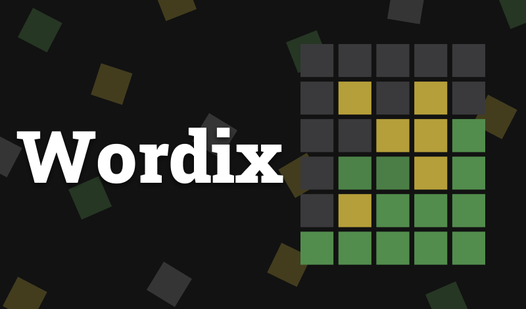
Choose a game according to the kind of thinking you enjoy. Word Cup is a natural starting point for a brisk, score-minded session. Wordix suits players looking for a compact word challenge where careful choices matter. Word Chef uses a playful theme that fits relaxed vocabulary practice, while Word Bits is a good alternative when you want to explore another presentation of letter-based puzzles.
Because browser catalogs can contain different versions and rule sets, use the opening round as a quick test. A strong game should explain its objective within moments, show why a move succeeded or failed, and make letters easy to select on both desktop and mobile. It should not require hints to compensate for unclear controls.
Difficulty should feel progressive. Early rounds can teach the accepted vocabulary and interaction pattern, while later ones should introduce less obvious combinations or tighter constraints. A useful hint system reveals a letter or position without solving the entire board. Fast restarts and a readable dictionary are also valuable because they let you learn from failure instead of waiting through unnecessary screens.
Which type of word game should you choose?
Choose hidden-word puzzles for deduction, letter-linking games for pattern recognition, and score-based games for speed and vocabulary range.
Hidden-word games are best if you like extracting maximum value from limited attempts. Each result changes the problem, so disciplined elimination matters more than knowing obscure words. Anagram puzzles are calmer and reward flexible thinking: the answer may become obvious when you change the first letter, separate a suffix, or read the letters in a different direction.
Crossword-style linking games provide more context because word lengths and intersections constrain the answer. They are approachable for casual play, yet later grids can become demanding. Timed or competitive formats add pressure and favor quick recognition. They can be exciting, but they are not always the best way to learn unfamiliar vocabulary.
Try more than one format. Skill transfers between them: anagrams improve letter manipulation, grids strengthen pattern recognition, and guessing games teach elimination. Switching formats also prevents you from relying on a single habit.
What mistakes do beginners make in word games?
Beginners most often waste moves by ignoring feedback, fixating on one answer, and guessing without a repeatable method.
The most common error is confirmation bias. A plausible word enters your mind, and every later clue gets bent to support it. Reset after each move and rebuild the candidate pattern from confirmed information. If the pattern is S _ A _ E, do not keep testing words that violate a known position simply because they sound close.
Another mistake is overlooking repeated letters. A puzzle may contain two copies of a letter even if your first guess confirms only one. Feedback systems handle duplicates differently, so learn the local rule before drawing a firm conclusion. In anagram games, the reverse problem occurs: players may accidentally use a letter more times than it appears.
Players also reach for rare words too early. Common vocabulary, standard prefixes, and ordinary inflections solve far more rounds. Save unusual spellings for situations where the pattern truly demands them. Finally, avoid using every hint as soon as it becomes available. A hint is most helpful after you have listed plausible patterns and found that none work.
How can you improve your word-game vocabulary?
You improve fastest by studying reusable patterns and reviewing missed answers instead of memorizing disconnected word lists.
Keep a short record of answers that surprised you. Group them by feature: repeated consonants, uncommon vowel pairs, silent letters, prefixes, or endings. This makes each new word part of a pattern you can recognize later. Reading broadly helps, but focused review produces faster gains for puzzle play.
Practice anagramming without moving randomly. Pick a likely root, separate common endings, and rotate the starting consonant. For hidden-word puzzles, learn high-frequency letter combinations and compare possible answers by the information they would reveal. A failed guess can still be excellent if it eliminates several candidates.
Short daily sessions work better than one exhausting session because recognition depends on repeated exposure. Stop when guesses become careless. Returning with fresh attention often reveals a pattern that was invisible a few minutes earlier.
FAQ
Can I play word games online for free?
Yes. Browser word games can be played without a download, although individual games may include ads, optional hints, or other catalog-specific features.
What is the best first word in a guessing game?
Use a valid word with several distinct, common letters. The ideal choice depends on the dictionary and rules, so prioritize information over trying to guess the answer immediately.
Do word games actually improve vocabulary?
They can strengthen spelling, recall, and pattern recognition, especially when you review unfamiliar answers and learn how they are used rather than merely revealing them.
Should I use hints in online word games?
Use a hint after you have applied the available clues and tested reasonable patterns. Hints are useful learning tools, but using them too early removes the deduction that builds skill.