
Free Solitaire Games Online: Rules, Tips, and Picks

Free solitaire games online let you play classic single-player card puzzles instantly in a browser. In Klondike, the best-known version, you build four foundation piles from Ace to King by suit while arranging the tableau in descending order with alternating colors. Start by revealing hidden tableau cards, move useful low cards to the foundations, and turn to the stock when the board offers no productive move.
Solitaire is easy to begin because you do not need an opponent, an account, or knowledge of every variation. The challenge comes from choosing moves in the right order. A legal move is not always a helpful move, and preserving several options is usually more important than making rapid progress on one pile.
What are the rules of solitaire?
The basic rule of Klondike solitaire is to uncover the tableau and transfer all 52 cards to four suit-specific foundation piles.
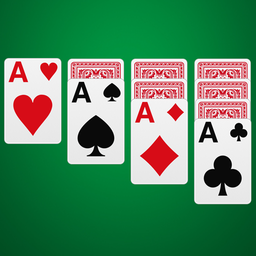
A standard deal uses seven tableau columns. The first column contains one card, the second contains two, and the pattern continues through the seventh. Only the top card of each column begins face up. The remaining cards form the stock, while cards drawn from it are placed in the waste. Four empty foundation spaces complete the layout.
The main rules are:
- Build tableau columns downward in alternating colors. A black 8 can receive a red 7, but not a black 7 or any 9.
- Move a face-up sequence together when every card in that sequence already follows the alternating-color rule.
- Turn over the newly exposed card whenever a tableau move reveals a face-down card.
- Place Aces on the foundations first, then build each foundation upward by suit through 2, 3, and eventually King.
- Fill an empty tableau column only with a King or with a valid sequence headed by a King.
- Draw from the stock according to the selected mode. Draw-one games reveal one card at a time, while draw-three games expose cards in groups of three.
Online versions normally enforce legal movement automatically. That makes them convenient for learning, but it does not remove the strategic problem: several legal destinations may exist, and only one may improve access to hidden cards.
How do you play solitaire step by step?
Begin by improving the tableau, then use the stock to solve positions the visible cards cannot unlock.
- Scan every face-up card to find useful moves. Look for Aces, 2s, alternating-color links, and moves that expose a hidden card.
- Move available Aces to the foundations. This creates space and gives low cards a permanent destination.
- Reveal a face-down tableau card whenever possible. Each revealed card adds information and may open an entire chain of moves.
- Build descending alternating-color sequences. Place red cards on black cards and black cards on red cards while keeping useful columns mobile.
- Compare equivalent moves before choosing. If a red 6 can go on two black 7s, prefer the move that reveals a card or empties a column.
- Use the stock after checking the tableau. A stock card may solve the current position, but drawing too quickly can make you overlook a free move.
- Create empty columns deliberately. An empty column is valuable only if you have a King or King-led sequence that benefits from the space.
- Finish by transferring ordered cards to the foundations. Once all cards are visible and the tableau cannot trap anything, most online games can complete the foundations quickly.
Do not judge the deal by its opening seconds. One exposed card can unlock several others, producing a chain that changes the whole board.
How do you win at solitaire?
You win more often by prioritizing access and flexibility instead of sending every eligible card to the foundations immediately.
Reveal hidden cards first
A move that turns over a face-down card is usually stronger than one that merely rearranges visible cards. Hidden cards are both the main obstacle and the main source of new options. If two moves are legal, compare how many future moves each creates rather than how tidy each looks.
Pay special attention to the longer right-hand columns because they contain more hidden cards. Clearing one of these columns often matters more than polishing a nearly solved pile on the left.
Protect empty columns
An empty tableau column is not automatically progress. It becomes useful when moving a King into it uncovers another card, joins separated sequences, or frees a blocked pile. Avoid clearing a column if the only available King would occupy it without improving the position.
Before moving a King, inspect its color. A red King accepts a black Queen, while a black King accepts a red Queen. Choosing the wrong King can leave an important Queen and its sequence stranded.
Do not rush medium cards to the foundations
Moving Aces and 2s up is normally safe, but advancing one suit far ahead can reduce tableau flexibility. For example, a red 6 on a foundation cannot temporarily hold a black 5 in the tableau. Keep medium cards available until you know they are not needed to connect sequences.
Try to develop the two colors at a similar pace. Balanced foundations make it less likely that a necessary supporting card has already been locked away.
Learn the stock order
In draw-three solitaire, stock management is part of the puzzle. Remember which useful cards are buried behind the currently available one. A move from the waste changes which cards will become accessible on the next pass, so taking a card now can alter the entire stock sequence.
Do not use a waste card simply because it fits. Check whether leaving it in place preserves access to something more important on the next cycle. If the game limits redeals, this decision becomes even more important.
Use undo as a learning tool
An undo button can show why a promising move failed. Return to the decision point, try the alternative destination, and observe which option reveals more information. This builds pattern recognition faster than restarting every difficult deal without analysis.
Luck still matters in Klondike because some cards begin hidden and some deals cannot be solved under particular draw rules. Good strategy raises the percentage of winnable positions you actually convert, but it cannot guarantee that every deal has a solution.
What are the best free solitaire games to play online?
The best free solitaire games combine readable cards, responsive controls, clear rules, and enough options to match the way you prefer to play.
Start by checking whether a game offers draw-one, draw-three, undo, hints, sound controls, and automatic foundation movement. Undo is valuable for practice, while unlimited hints may reduce the satisfaction of solving the layout yourself. On a phone, large card faces and reliable tap controls matter more than decorative animation. On a computer, smooth dragging and an uncluttered board make long sessions easier.
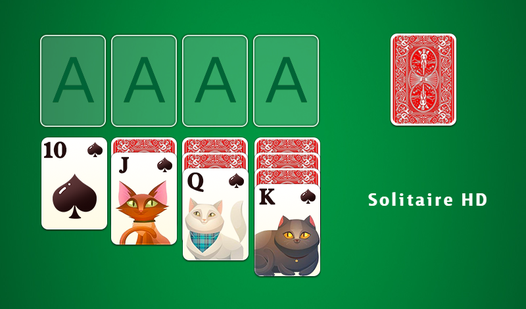
Solitaire HD is the most conventionally named option in this catalog set, so it is a sensible first stop when you want a familiar card-game presentation. Use the opening deal to assess card readability and how quickly the controls respond.
Zen Solitaire is the option to inspect when you want a title framed around a calmer style. Solitaire Lite is a useful comparison if you prefer a simpler-feeling entry or want to see which version loads and plays most comfortably on your device. These descriptions follow the games' catalog positioning rather than promising a rule set, so check each game's instructions before assuming that every control or draw mode is identical.
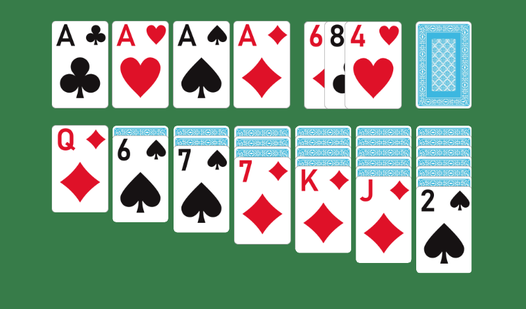
A good browser version should make the state of the puzzle obvious. You should be able to distinguish red and black suits immediately, see the stock and waste clearly, and understand why a rejected move is illegal. Aggressive interruptions are especially harmful in solitaire because they break concentration and make the stock order harder to remember.
Which solitaire variants can you play?
Klondike is the common starting point, but other solitaire variants change the layout, building rules, or skills required.
- Draw-one Klondike gives access to more stock cards and is usually the friendlier format for learning.
- Draw-three Klondike makes stock order more important and generally demands more planning.
- Spider uses multiple decks and asks you to assemble descending same-suit sequences before removing them.
- FreeCell begins with all cards visible and rewards careful planning because very little information is hidden.
- Pyramid removes pairs whose values total 13, shifting the challenge from sequencing to arithmetic matching.
- TriPeaks clears cards one rank above or below the current waste card, creating quick chains and risk-reward decisions.
Some browser games also borrow the solitaire structure for a different kind of puzzle. Word Solitaire is the catalog choice to examine if you want a title that signals a word-based twist rather than strictly traditional Klondike. Treat it as a variation on the broader solo-puzzle idea and read its on-screen rules before applying standard foundation strategy.
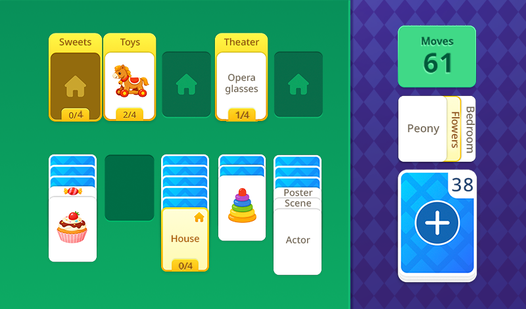
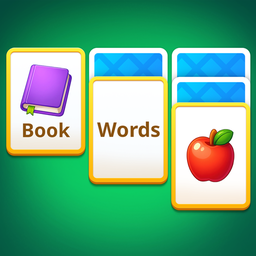
Trying several variants helps identify what you actually enjoy. Klondike mixes planning with hidden information, FreeCell emphasizes calculation, and pairing games favor scanning and probability. A player who dislikes the luck of one format may still enjoy the more open information of another.
What solitaire mistakes should beginners avoid?
The most common mistake is making the first legal move without checking what it blocks or reveals.
Avoid moving cards between tableau columns when the move changes nothing. It may look active, but it can close a useful destination and create a loop. Do not send every card to the foundations at once, especially when that card could support a long sequence. Do not open a column without a productive King plan, and do not draw from the stock before scanning for newly available tableau moves.
Another mistake is ignoring color balance. If both red Queens are blocked but you fill your only empty column with a black King that cannot help them, progress may stop. Pause after every reveal and rescan the whole board. New cards often create moves in columns that seemed settled a moment earlier.
Finally, distinguish a loss from an unfinished analysis. Before restarting, check the waste, foundation cards that could safely return to the tableau if the game permits it, alternate destinations, and the consequences of undoing your last few moves. Even when the deal remains unsolved, identifying the decision that caused the lock teaches more than an immediate restart.
FAQ
Can I play solitaire online for free without downloading it?
Yes. Browser-based solitaire games run directly on the game page, although features, controls, and advertising vary between titles.
Is every game of Klondike solitaire winnable?
No. Some deals cannot be solved under their current draw and redeal rules, and hidden information prevents perfect decision-making in every game.
Should I move cards to the foundations as soon as possible?
Move Aces and most 2s early, but keep some medium cards in the tableau when they are still needed to connect alternating-color sequences.
Is draw-one or draw-three solitaire easier?
Draw-one is generally easier because more stock cards are directly accessible. Draw-three adds stock-order planning and can leave useful cards buried.