
Escape from the Fruit Man Walkthrough and Tips
Escape from the Fruit Man is best played by alternating fast, familiar stretches with brief pauses to read the route. Your goal is to reach the exit, keep the pursuer from closing the gap, and clear obstacles without throwing away a good run. The key is simple: aim the camera at the next safe spot before moving, avoid blind jumps, and remember exactly where each mistake began.
How do you play Escape from the Fruit Man?
Learn the movement and camera first, then treat the route as a sequence of short sections between clear, safe points.
Do not treat your first run as an all-or-nothing victory attempt. Test how sharply the character turns, whether momentum carries through a jump, and how much you can adjust in midair. Those three observations are more valuable than charging ahead. Keep the camera positioned so you can see both the platform in front and the edge beneath you. If a wall or decoration blocks the view, release movement for a moment, fix the camera, and continue.
During a chase, focus primarily on the route rather than the enemy. Check the pursuer's position on a straight, safe stretch. Turning the camera during a difficult jump is more likely to cause a fall than provide useful information. If the game returns you to a checkpoint, use the retry as a learning loop: correct one mistake instead of changing the entire route at once.
What is the most reliable Escape from the Fruit Man walkthrough strategy?
The most reliable approach uses controlled pacing and saves risky moves for moments when both the character and camera are properly aligned.
Mentally divide the course into three kinds of sections. Build speed on straightaways. Before narrow passages, move toward the center early so you are not correcting at the edge. Before a chain of obstacles, look for a position that reveals at least the next safe area. This cuts down on random falls and makes the logic of the map easier to learn.
Do not assume the shortest line is automatically best. A shortcut saves time only if you can land it consistently. A wider path with one extra turn is often faster than missing a risky jump and replaying a large section. The cost of failure matters even more when checkpoints are far apart or you have not confirmed where they are.
If the pursuer keeps catching you, look for wasted movement rather than a hidden speed button. Common losses include wide turns, angled jumps, stopping after a landing, and fighting the camera. Remove one of those losses and the gap often becomes much more comfortable.
How do you play step by step?
Use the same repeatable process on every run so each attempt teaches you something useful.
- Test the controls and make movement predictable. Turn and jump a few times in a safe spot to feel the momentum and sensitivity.
- Read the next section and choose a landing point. Move toward one specific safe area rather than simply pressing forward.
- Align the character and reduce sideways movement. A straight approach leaves more room for correction and lowers the chance of clipping an edge.
- Accelerate on a readable stretch and build a gap. Speed is useful when the route no longer requires sudden camera changes.
- Slow down before an unknown obstacle and preserve the run. A brief loss of pace costs less than a fall or complete restart.
- Jump from a stable direction and finish the landing. Do not begin the next turn until you know the character is securely on the surface.
- Check the chase at a safe moment and make a decision. A large gap allows more care, while a small gap means removing pauses from familiar ground.
- Name the cause of failure and change one technique. Try an earlier jump, a straighter angle, or calmer camera work, but not all three at once.
- Repeat the successful rhythm and lock in the route. Consistency usually wins sooner than constant experimentation.
How can you clear jumps and narrow sections without falling?
Difficult sections become manageable when you set your direction before the edge and aim for the middle of the landing area rather than its nearest border.
The main mistake in a narrow section is trying to accelerate, turn the camera, and correct the character at the same time. Separate those actions. Set the view first, align your movement second, and jump third. Do not hold a sharp turn before landing, because the character may veer sideways as soon as they touch the surface.
Use a rhythm for jump sequences, but never press automatically. Visually confirm every landing. If the character model or camera hides the next surface, adjust the angle before takeoff instead of during the jump. If moving or disappearing obstacles appear, watch one cycle before entering the sequence. That is not wasted time. It buys predictability.
I usually aim slightly beyond the center of a safe zone. A small shortfall or sideways drift is then less likely to send the character over the edge. On short platforms, however, do not hold forward longer than necessary. Stabilize after contact, identify the next marker, and then accelerate.
What should you do if the Fruit Man keeps catching you?
Remove unnecessary pauses from familiar sections while staying careful wherever one fall could ruin the attempt.
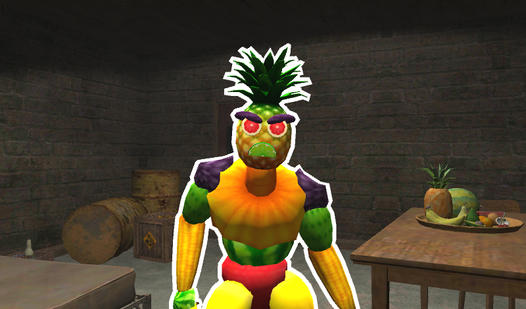
First identify exactly where your advantage disappears. If the enemy gains on a straightaway, you may be losing speed through camera jerks, needless jumps, or zigzag movement. If the problem appears before an obstacle, prepare earlier. A turn started several steps before a narrow entrance is smoother and faster than a desperate correction at the edge.
Do not look back every few seconds. Checking the pursuer matters only if the information changes your decision: whether you have time to inspect the route, should choose the safer line, or can afford a short pause. If the answer is still simply to keep running, the camera belongs in front.
I use familiar straightaways as recovery sections. I avoid decorative jumps and do not weave from side to side. Clean movement wins back the time spent carefully reading a difficult section.
Why does every attempt end in the same place?
A repeated failure means you need to change the setup before the obstacle, not press harder at the last moment.
Look at the two seconds before the mistake. The character may be approaching at an angle, the camera may distort your sense of depth, the jump may start too late, or a sideways input may remain held after landing. The real cause often appears before the fall itself. Trying to rescue the trajectory at the edge only hides a poor approach.
Describe the error in one sentence: “I jump while turning,” “I cannot see the middle of the platform,” or “I keep moving right after landing.” Then choose one rule for the next attempt. This turns repetition into practice. Saying you were simply unlucky changes nothing and sends you into the same trap again.
If restarts are quick, dedicate early attempts to scouting. Learn where you can safely accelerate, which turns demand an early entry, and where the camera loses the route. You do not always need to push farther at any cost. Understanding a troublesome section is more useful than slipping through it once by accident.
Which mistakes most often block a successful run?
Most failed runs come from rushing into unknown ground, making unnecessary inputs, or trying to rescue a bad approach too late.
- Jumping without a visible target. Find the landing area first or you are choosing a direction blindly.
- Using maximum speed everywhere. Speed helps on a learned route but makes new obstacles harder to read.
- Swinging the camera during a jump. The new angle disrupts distance judgment and your correction direction.
- Taking a shortcut just because it exists. The risk is not worthwhile if a miss sends you far back.
- Checking the chase in a dangerous spot. Knowing where the enemy is does not help if you miss the platform edge.
- Changing the entire strategy at once. You cannot tell what worked if you alter the route, angle, pace, and camera in a single attempt.
I tend to win after removing extra actions. One clean turn and one prepared jump may look slower than frantic movement, yet they preserve momentum better. The controls become predictable, and my attention remains on the next obstacle.
Are there any secrets or useful tactics?
The main secret is not hidden on the map: learn the route in small blocks and turn every cleared block into a stable habit.
Use visual markers. A platform corner, a contrasting piece of scenery, or the center of a doorway can guide your line. A marker makes a successful trajectory easier to repeat than the vague idea of jumping “somewhere over there.” Choose markers visible from your normal camera angle so you do not have to stop and search for them.
Another useful tactic is assigning a purpose to each attempt. One run can be for scouting, with extra attention on what lies ahead. The next can be fast on the sections you have already learned. This keeps you from guessing the route and trying to execute every move perfectly at the same time.
If the game offers camera sensitivity settings, tune them for precision rather than spectacle. A camera that is too fast makes small corrections difficult, while one that is too slow prevents you from reading the next turn. A good setting lets one confident movement place the view exactly where you need it.
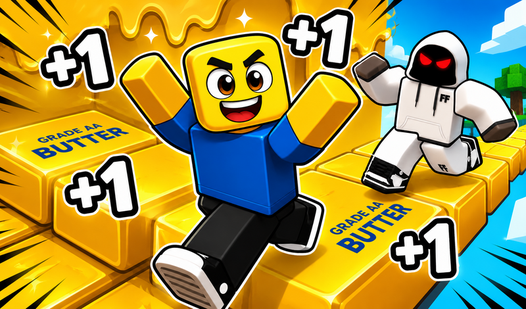
Another escape scenario can help you practice calm route reading. The principle remains the same: establish a clear line first, then add speed.

How can you tell that your strategy is improving?
A better strategy produces repeatable clears of familiar sections with fewer desperate corrections, not one lucky run.
Track progress through simple signs. You already know where to point the camera. You approach a difficult spot from the correct side. You fall less often on learned ground. After a mistake, you can explain its cause. Even before you reach the exit, those changes show that the run is becoming less dependent on chance.
Do not demand a perfect attempt. The next goal can be smaller: two clean jumps in a row, one controlled turn, or preserving the chase gap until a new section. Small, reliable improvements accumulate. Once the route is stored in memory, speed arrives naturally because you no longer pause to decide what to do.
FAQ
What is the goal of Escape from the Fruit Man?
Reach the exit while clearing obstacles and maintaining distance from the pursuer.
How can I finish the game faster?
Accelerate on familiar straightaways, prepare turns early, and avoid gambling on an unknown obstacle without a visible landing point.
What should I do if I keep falling in the same place?
Review the approach, align the camera and character earlier, and change only one part of your movement on each attempt.
Do I need to watch the Fruit Man constantly?
No. Check the distance on safe stretches, and keep the camera pointed forward during jumps and narrow passages.