
Reagents: How to Beat Levels and Choose a Stage

In Reagents, you pour colored liquids between flasks until every color is separated. The key is not speed but preserving free space: do not fill an empty flask with a random color, check which layer each pour will uncover, and complete a single-color flask only when doing so will not block the moves you still need.
How do you beat levels in Reagents?
To beat a level, separate all mixed reagents by color without reaching a position where none of the exposed layers can be poured into another flask.
The controls are simple: select the flask containing the top layer you want to move, then select its destination. A pour can go into an empty container or onto the same color when there is enough space. That simple rule creates the puzzle because the color you need may be buried under several incompatible layers.
Look beyond the current move and consider what it produces. A useful pour should combine matching colors, expose a helpful layer, or free a flask. If it does none of these things, it probably moves the same problem somewhere else.
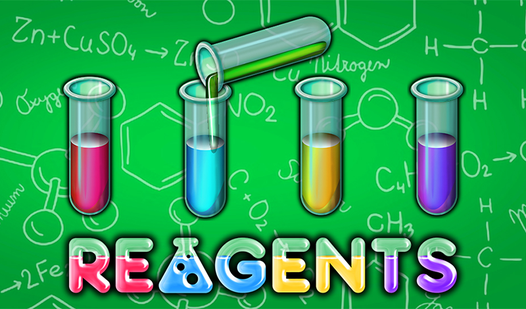

Can you choose a level in Reagents?
You cannot select a locked level because stages open in order, while a level screen can only return you to stages that are already available if that screen exists in your version.
If launching the game immediately loads a puzzle, it is probably continuing from your latest unlocked stage. Check the menu, the level-list button, or the main screen. Completed and currently available tasks may be displayed there. A stage that has not been unlocked cannot be started by skipping the previous ones.
If you want to leave a difficult layout and move forward, restarting is the practical option. It restores the original color arrangement so you can test a different sequence. A normal restart of the current puzzle should not erase progress from stages you have already completed.
How do you play step by step?
Start by studying the exposed layers, then make only the pours that create space or connect matching colors.
- Inspect every flask and identify colors that are exposed in more than one place.
- Choose the simplest match and combine identical top layers without adding another color to the stack.
- Free one flask and preserve it as working space for temporary moves.
- Build one color gradually by uncovering its parts across different flasks in a useful order.
- Check the layer underneath before every pour and decide where that newly exposed reagent can go.
- Set a completed single-color flask aside and stop using it as temporary storage.
- Restart the layout if free spaces disappear and the exposed colors no longer match.
Do not rush to complete whichever color appears most often. Some of its pieces may be covering reagents that matter more to your immediate plan, so finishing it early can occupy a valuable flask. Create room first, then begin closing out colors.
What is the right way to sort reagents by color?
Good sorting follows three goals: connect matching top layers, uncover a buried color, and preserve at least one flexible flask.
Before pouring, ask one short question: what becomes available after this move? If it exposes a color that already has a suitable destination, the sequence is promising. If it reveals a new color with nowhere to go, look for another option.
It helps to divide the flasks into three mental groups. Completed flasks hold one color and no longer take part in rearranging. Working flasks collect a chosen color. Temporary flasks hold layers that block access to a reagent you need. This simple classification reduces random pours.
Layer order matters as well. Two flasks containing the same color may still be difficult to combine when different reagents cover it. Start with the portion that has fewer layers above it. This usually creates working space sooner and avoids a long chain of extra rearrangements.
Why should you keep an empty flask?
An empty flask gives you room to move obstructing layers and is often the only way to break an awkward arrangement.
The biggest mistake is filling it immediately with several unrelated colors. It then stops being flexible because the top reagent blocks everything beneath it. Treat the empty container as a temporary position and try to clear it again after a short sequence.
Sometimes a nearly completed flask is more useful than a completely empty one, especially when its color appears frequently on top. It can accept matching layers while reducing the number of mixed stacks. This works only when you can see a path to completing that color. Without a plan, the working flask becomes another obstacle.
What should you do when a level reaches a dead end?
When useful pours have almost disappeared, stop making random moves, identify the earlier decision that caused the problem, and restart with a different opening.
A dead end usually begins before it becomes obvious. Warning signs include every temporary space holding a different color, matching reagents buried under incompatible layers, and a need to reuse a completed flask for storage. Continuing to guess from that position rarely helps.
After restarting, do not automatically repeat the whole sequence. Change the moment when you filled the last empty flask, or begin by uncovering a different color. One early choice can change the order in which later layers become available. You do not need to memorize every pour. Remember the decision after which your working space disappeared.
There is no time pressure, so pausing is safer than making a rushed move. When uncertain, calculate at least one step ahead: where will the new top layer go, and will a suitable flask still be available?
How can you beat difficult levels without hints?
Solve a difficult layout through short sequences, each designed to expose a color, complete a flask, or restore free space.
Do not attempt to plan the entire level at once. Although you can see lower layers, the practical move order depends on which colors become available after several pours. Pick an intermediate objective, such as emptying one container or joining two exposed parts of the same color. Once that is done, reassess the board.
When two options look similar, prefer the reversible one. Pouring into an empty flask usually leaves more choices than placing a color onto a matching layer in an almost full container. Moving single layers endlessly between empty spaces is not progress, however. Every temporary move should prepare a specific combination.
Begin with flasks whose exposed layers can be distributed quickly among colors you have already started collecting. Leave a heavily mixed stack with several inconvenient reagents alone until you create more space. This approach reduces the number of active colors and makes the board easier to read.
Which techniques do I use for consistent solutions?
I judge a move by how much freedom it preserves, not by how neatly it combines colors right now.
- I avoid touching a completed single-color flask even when using it for temporary storage looks convenient. Reopening a solved part usually adds unnecessary moves and makes the layout harder to manage.
- I try to assign a color to each working flask. If I place another reagent there just to create room, I first make sure I can remove it with the next short sequence.
- I watch the final free container carefully. Before filling it, I check whether the move will empty another flask. If it does not make that exchange, I search for a safer option.
- I restart after identifying the cause of a dead end instead of making many random pours. On the next attempt, I change one specific decision: the first color I collect, the temporary flask I use, or the order in which I uncover layers.
After a logic puzzle, you may want a game with a different pace. A laboratory escape relies more on movement and reactions, but the habit of spotting a safe route ahead is still useful.
If you enjoy breaking a problem into manageable parts, try a construction puzzle as well. Success there also depends on performing actions in the right order and reading shapes carefully.
Which mistakes most often prevent a solution?
The most common problems are completing one color too early, losing the empty flask, and pouring without a clear next objective.
Do not assume every color match is useful. If combining two layers fills your only working container while exposing two incompatible colors, the position may become worse. Another mistake is trying to build every color evenly. The more unfinished stacks you create, the less space remains for rearranging layers.
Do not hesitate to abandon a failed plan by restarting. A new attempt is part of solving this puzzle, not a punishment. Testing another opening sequence is more productive than repeatedly moving the same top layers back and forth.
Finally, do not select the destination immediately after choosing the source flask. Check that the top colors match, that enough space remains, and that the layer uncovered in the source has somewhere useful to go. This quick check prevents most dead ends.
FAQ
Can you choose any level in Reagents?
No. Locked stages open sequentially. The menu can only select stages that are already available, provided your version includes a level list.
How can I tell when the current position is unsolvable?
Clear warning signs are occupied temporary flasks, no useful matches among exposed colors, and no way to uncover another color without additional space.
Do specific colors have to go into specific flasks?
Usually, a flask is not assigned to a particular color. You only need to separate every reagent and avoid mixing stacks that are already complete.
What should I do if I keep repeating the same mistake?
After restarting, change one early decision and observe the result. Begin with another color or preserve the empty flask for longer.