
Mahjong for Beginners: Rules, Steps, and Strategy

Mahjong solitaire is a matching puzzle in which you remove pairs of identical free tiles until the board is empty. A tile is normally free when nothing covers it and at least one long side is open. Start by matching exposed tiles, but choose pairs that uncover the most useful new moves. This solo browser game is different from traditional four-player mahjong, which uses hands, melds, draws, and discards.
What are the rules of mahjong solitaire?
The basic rule is simple: select two matching free tiles to remove them from the layout.
A typical board begins with 144 tiles arranged in overlapping layers. The exact number and shape can vary between browser games, but the important restriction remains the same. You cannot select a tile buried under another tile, and a tile blocked on both its left and right sides is usually unavailable. Removing a valid pair may expose tiles below it or open the side of a neighboring tile.
Most symbol tiles must match exactly. A bamboo tile marked with five symbols matches another five-bamboo tile, not any other bamboo tile. The same applies to circles, characters, winds, and dragons. Flower and season tiles often follow a looser rule: any flower may pair with another flower, and any season may pair with another season. Some simplified games remove these special groups, so check the instructions shown beside the board.
You win by removing every tile. You lose, or must reshuffle, when tiles remain but no legal pair is available. A hint can identify a current move, but it does not guarantee that the move leads to a solvable finish.
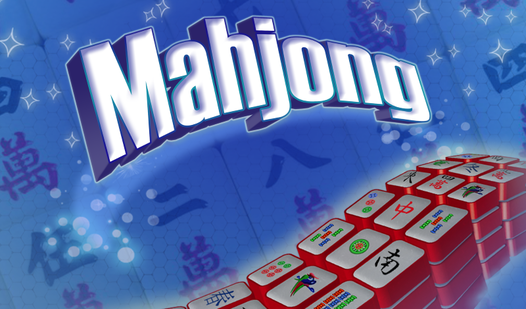
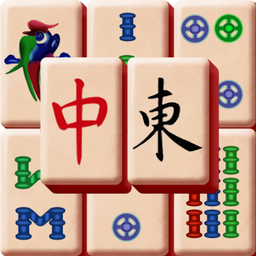
How do you play mahjong step by step?
You play well by checking the whole layout before each match and using pairs to create future options.
- Scan the top and outer edges to find playable tiles. Look first at the highest layer and the far left and right ends of rows, since these positions are most likely to be free.
- Identify every available copy of a symbol. If three or four matching tiles are open, do not automatically take the first pair you see. Compare what each possible pairing would release.
- Remove a pair that opens the board. Favor matches that uncover a covered tile, release a long row, or free two positions at once.
- Recheck the newly exposed area. Every removal changes the board. A tile that was blocked a moment ago may now form a valuable pair.
- Protect rare matches. If only one playable partner exists for an important tile, avoid using that partner on a less constrained copy unless the move creates a clear advantage.
- Balance the layers and side rows. Clearing only the top or only one side can leave the remaining structure locked. Make progress in several constrained areas.
- Use undo to test uncertain choices. If the game offers unlimited undo, treat it as a learning tool. Return to the last decision point instead of restarting immediately.
- Finish by counting remaining copies. Near the end, inspect how identical tiles are positioned. Plan the order of the final pairs so one copy does not trap its only partner.
Speed is unnecessary while learning. An untimed board lets you practice the central skill: judging what a match reveals, not merely noticing that two tiles look alike.
How do you win at mahjong solitaire more often?
You win more consistently by maximizing access to new tiles and avoiding pairs that consume each other's only escape route.
The strongest move is often the one that changes the board most. A pair on two completely open corners may be legal but accomplish little. A pair that removes a top tile and releases the end of a crowded row creates more choices. More available choices reduce the chance of reaching a forced dead end.
Pay special attention to tall stacks, long horizontal rows, and tiles that block several others. These are bottlenecks. If two matching bottleneck tiles can be removed together, that move is usually more valuable than clearing isolated tiles. However, do not follow a rigid rule such as always taking the highest pair. The correct comparison is how many useful tiles each candidate move exposes.
When more than two copies of a tile are free, think in pairings rather than individual moves. Suppose copies A, B, C, and D are visible. Matching A with B may release nothing, while matching A with C may uncover two tiles. The symbols are identical, but the consequences are not. This is one of the main differences between deliberate play and random matching.
Also watch identical tiles stacked over one another. If one copy covers another and their remaining partners are awkwardly placed, you may need to preserve a specific open copy for later. Before removing a pair, ask two questions: what becomes free, and what matching options remain?
Hints and reshuffles are useful, but they teach different things. A hint helps when you have overlooked a legal move. Undo helps you study cause and effect. A reshuffle changes the puzzle and rescues a blocked position, so it is convenient but less useful for learning how the dead end developed.
What mistakes do mahjong beginners make?
The most common beginner mistake is taking every visible match without considering what will remain afterward.
Other frequent problems include:
- Clearing easy edge pairs first. Open tiles are tempting, but removing them may not unlock anything.
- Ignoring tiles beneath the top layer. A move should be judged partly by the covered tile it reveals.
- Using the first two copies out of three or four. Different pairings of the same symbol can lead to very different boards.
- Focusing on one section. A nearly empty left side does not help if a locked stack in the center controls the remaining moves.
- Trusting hints as strategy. A hint normally shows a legal pair, not necessarily the best pair.
- Waiting too long to undo. Once several uncertain moves have been added, identifying the original mistake becomes harder.
- Playing only for speed. Fast recognition helps after the fundamentals are secure, but rushed matches can hide poor decisions.
A useful practice habit is to pause whenever three or more legal pairs are visible. Rank them by how many tiles they expose and whether they attack a bottleneck. This small routine develops planning without turning every move into a long calculation.
What types of mahjong games can beginners play?
Beginners can choose among classic layered boards, simplified matching games, three-dimensional layouts, and themed puzzle variants.
Classic mahjong solitaire is the best place to learn free-tile rules and opening strategy. Layouts modeled after the familiar turtle shape tend to combine a tall center with extended side rows, although browser versions may offer many board shapes. Easier layouts have more exposed tiles and fewer deep bottlenecks.
Three-dimensional mahjong changes the spatial problem. Instead of reading a flat layered arrangement, you may rotate or inspect a structure to find accessible matching pieces. The objective is still based on matching, but visibility becomes part of the challenge.
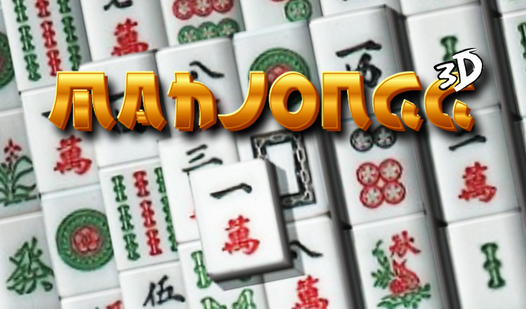

Some variants add numbers, arithmetic, match-three rules, timers, limited moves, or power-ups. These can be entertaining, but their rules may differ substantially from standard mahjong solitaire. Treat the instructions inside each game as authoritative. A title such as Math Mahjong signals a puzzle twist rather than the rules of traditional four-player mahjong.
Traditional mahjong is a separate multiplayer game. Four players build a hand by drawing and discarding tiles, usually aiming to complete four groups and a pair, with scoring and legal hands varying by ruleset. Mahjong solitaire can teach tile recognition, but it does not teach the calls, scoring, defense, or table procedure used in Chinese, Japanese, American, and other multiplayer forms.
What are the best free mahjong games for beginners?
The best beginner game has clear tile art, visible free-tile feedback, undo, hints, and an untimed or forgiving mode.
Start with a straightforward layered version if you want to learn the standard browser puzzle. Clear visual contrast matters more than elaborate decoration because beginners need to distinguish similar character, bamboo, wind, and dragon tiles. An available-moves counter can also reveal whether you missed a match.
After you understand the basic restrictions, try a different layout or a variant that changes one skill at a time. A 3D board tests spatial scanning. A number-based variation changes symbol recognition. A faster or more elaborate version can test decision-making once you no longer need to think about whether a tile is free.


Do not judge a game only by how quickly you clear its first board. A good practice game makes your choices readable: you can see what a move uncovered, reverse a mistake, and understand why the board became blocked. That feedback builds transferable strategy across many layouts.
FAQ
Is mahjong solitaire the same as regular mahjong?
No. Mahjong solitaire is a one-player tile-matching puzzle. Traditional mahjong is usually played by four people who draw, discard, and form scored hands.
Can every mahjong solitaire board be solved?
Not always. Some games generate only solvable deals, while others allow arrangements or move sequences that produce dead ends. Undo and reshuffle options vary by game.
What makes a tile free in mahjong solitaire?
Under the common rule, no tile may cover it and at least one of its long sides must be open. Individual variants may use different availability rules.
Should beginners use hints and undo?
Yes. Use hints to find overlooked legal pairs and undo to compare decisions. Undo is especially valuable because it shows which earlier match caused a section to become blocked.