
Free Mahjong Games Online: Rules, Tips and Picks

Free mahjong games online usually mean mahjong solitaire: a single-player puzzle in which you remove pairs of identical free tiles. A tile is normally playable only when nothing covers it and at least one long side is open. Start by scanning the top and outer edges, match exposed pairs, and try to uncover new tiles without trapping the remaining copies.
Traditional four-player mahjong is a deeper game of drawing tiles and building hands. Most quick browser games use the solitaire rules described here, although layouts, timers, hints, and special tiles can differ. Check the instructions shown by each game before your first move.
What are the rules of online mahjong?
The basic rule is to select two matching, uncovered tiles that are free on at least one side, causing that pair to leave the board.
A typical puzzle begins with 144 tiles arranged in several overlapping layers. The exact count may change in smaller or themed versions. A covered tile cannot be selected, and a tile blocked on both its left and right sides is also unavailable. Removing a pair can expose tiles underneath or open the side of a neighboring tile.
Most symbol tiles must match exactly. A bamboo tile marked with one pattern, for example, cannot be paired with a different bamboo pattern. Many versions treat flowers as one flexible group and seasons as another, so two different flowers or two different seasons may form a legal pair. This convention is common rather than universal; the game should highlight a pair or reject the selection if its rules differ.
The board is cleared when every tile has been removed. You lose or become stuck when tiles remain but no legal pair is available. Some games offer shuffling, undo, hints, or a restart instead of ending the round immediately.
How do you play mahjong step by step?
Use this sequence to make legal moves while preserving options for later turns.
- Scan the highest layer - identify tiles that block the largest stacks. Removing a pair from the top often releases more useful tiles than clearing an isolated edge.
- Check both outer sides - find tiles with a genuinely open left or right edge. A visible face is not enough if neighboring tiles still block both long sides.
- Count exposed copies - compare every available tile with its matching symbols. If three identical tiles are free, decide which pairing exposes the most valuable positions.
- Match a productive pair - uncover hidden tiles or free several neighbors. Prefer moves that increase the number of selectable tiles rather than moves that change nothing.
- Rescan the whole board - notice pairs created by the last removal. New options may appear far from the pair you just cleared.
- Protect scarce matches - avoid burying the only useful partner for an exposed tile. Think about where the other copies may be located before committing.
- Use undo to compare choices - test a difficult branch without forgetting the original position. Undo is most useful as a learning tool, not merely as rescue after random play.
- Clear the final pairs - verify that stacked duplicates are removed in a workable order. Endgames are often decided much earlier by the order used to release identical tiles.
How do you win at mahjong solitaire more often?
You win more consistently by choosing moves that create future choices, not simply by removing the first pair you notice.
Prioritize tall stacks and long horizontal rows. These positions usually block multiple tiles, so opening them improves the board faster. A pair made from two loose corner tiles may be legal but strategically neutral. If another pair releases two covered tiles, that is normally the stronger move.
Watch identical tiles that sit on top of one another. Suppose one exposed symbol can match either of two available copies, but one of those copies covers a fourth identical tile. Pairing with the covering copy may release the hidden match; using the other copy may leave the stack locked. This is why the choice between apparently equivalent pairs can decide the puzzle.
Try to keep several tile types available. Clearing every exposed copy of one symbol is not automatically helpful if the move closes other routes. A healthy board has multiple legal pairs and more than one area that can be opened next.
Use hints carefully. A hint usually shows a legal pair, not necessarily the best pair. Treat it as confirmation that a move exists, then inspect the board for alternatives. If a shuffle is available, save it for a truly blocked state unless the game rewards speed more than efficient solving.
What are the best free mahjong games to play online?
The best free mahjong game is one with readable tile faces, clear feedback, fair layouts, and controls that support deliberate play.
A strong starting game should make covered and free tiles easy to distinguish. It should respond clearly when a selection is legal, explain any special flower or season rules, and avoid making the player guess whether a tile is blocked. Undo is valuable for learning because it reveals how one pairing changes later possibilities. Hints help with visual searches, while restart and shuffle options make difficult boards less frustrating.
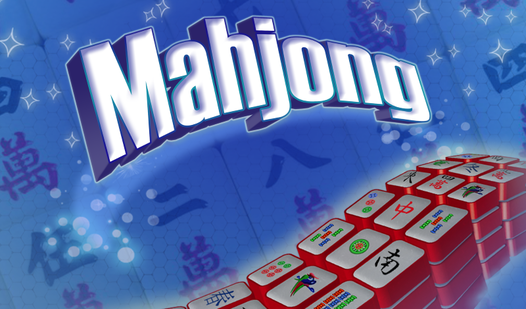
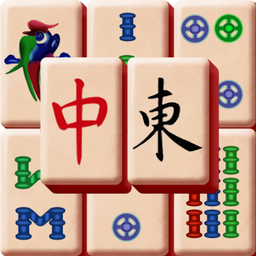
The straightforward Mahjong listing is a sensible place to learn the familiar tile-matching loop. Concentrate on recognizing free tiles and comparing multiple legal pairs before selecting one.
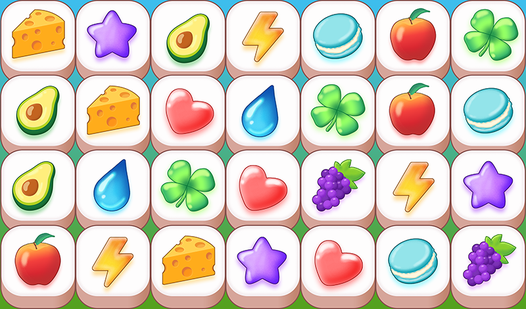
Mahjong 3 offers another catalog entry for players who already understand the foundation and want a different presentation or puzzle set. Because numbered sequels can change layout rules or assistance features, read its opening instructions rather than assuming every detail matches another version.
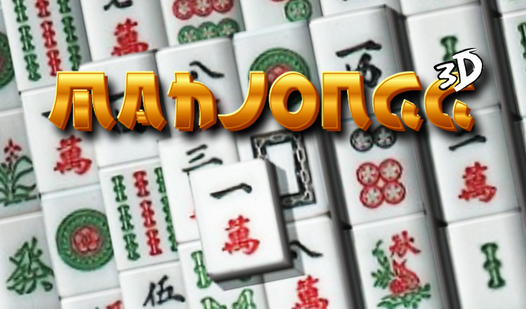

3D Mahjong is the natural choice when you want a more spatial take on tile matching. Three-dimensional arrangements can make visibility and rotation part of the challenge, so inspect all accessible angles before deciding that no match remains.
Math Mahjong is the clearest option for a math-themed variation. Expect its exact matching condition to matter more than recognition alone, and confirm whether the game wants equal symbols, equations, values, or another relationship. The title signals the theme, but its own rules screen is the authority.
What strategy should beginners use in mahjong?
Beginners should slow down, compare alternative pairs, and judge each move by how many new tiles it releases.
Before clicking, ask two questions: what will this pair uncover, and could these tiles be needed in a different order? This short pause prevents many avoidable dead ends. If two moves look equal, favor the one that opens a central stack, separates a long row, or exposes two distinct symbols.
Develop a consistent scan pattern. Look across the top layer, down the left edge, down the right edge, and then through newly exposed gaps. Randomly moving your eyes around the board makes obvious pairs harder to see. Patterned scanning is especially useful when several tile faces share similar colors or small markings.
Plan in short branches rather than attempting to solve the entire layout mentally. Consider the likely result of the next two or three removals. If one move reveals an unknown tile and another reveals nothing, the first usually supplies more information as well as more freedom.
Do not chase the timer while learning. Fast recognition develops naturally after repeated play. Accurate choices save more time than hurried clicks followed by undo, shuffling, or a full restart.
What common mahjong mistakes should you avoid?
The most common mistake is treating every legal pair as equally useful.
Players often clear easy edge pairs while ignoring tiles that lock the tallest stacks. Another mistake is matching the wrong two copies when three or four identical tiles are exposed. Compare their positions before choosing. Removing two tiles that were not blocking anything may strand the remaining copies beneath each other.
Do not assume a tile is free because its face is visible. Check its left side, right side, and any tile resting partly above it. Also avoid relying on hints as automatic strategy. They find a move, but the suggested move may not produce the best board.
Finally, learn the game-specific rules for bonus tiles. Exact matching is normally required, yet flowers and seasons may follow group matching. Guessing at this rule wastes time and can make a valid pair appear inconsistent.
What types of online mahjong games are available?
Online mahjong includes classic solitaire layouts, compact puzzles, timed challenges, three-dimensional boards, and themed rule variations.
Classic solitaire is best for learning because the main challenge is move order and tile visibility. Compact layouts finish faster and make it easier to study cause and effect. Timed modes reward rapid symbol recognition, but they can encourage weak habits if you have not learned to evaluate pairs first.
Three-dimensional variants add spatial inspection. You may need to rotate the structure or examine depth before identifying playable pieces. Themed versions can replace traditional symbols, introduce arithmetic relationships, limit moves, or add level objectives. These changes do not always preserve every standard rule, so treat each instruction screen as part of the puzzle.
There are also multiplayer mahjong games based on drawing, discarding, and completing hands. Those are related to the traditional table game rather than mahjong solitaire. If a game mentions four players, concealed hands, suits, winds, calls, or scoring combinations, expect a substantially different ruleset from the matching puzzles covered here.
FAQ
Can I play free mahjong games online without downloading anything?
Yes. Browser mahjong games run on the game page, although loading behavior and device support can vary. Open a catalog card, read its controls, and start with an untimed layout if one is offered.
Are all visible mahjong tiles playable?
No. In standard mahjong solitaire, a tile must be uncovered and have at least one open long side. A fully visible face may still be blocked by tiles on both sides.
Is mahjong solitaire always solvable?
Not necessarily. Solvability depends on how the layout was generated and on the order of your moves. Some games create guaranteed-solvable boards, while others provide shuffle or restart tools when no pair remains.
Do flower and season tiles have to match exactly?
Often they do not. Many versions allow any flower to match another flower and any season to match another season, but implementations differ. Check the individual game's rules before relying on group matching.