
How to Play Tic Tac Toe: Rules and Strategy

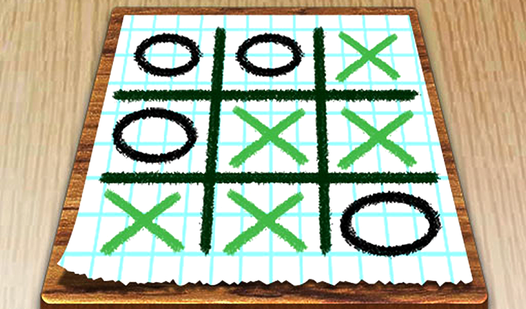
Tic tac toe is a two-player game played on a 3-by-3 grid. One player uses X and the other uses O. Take turns placing one mark in an empty square. The first player to complete a horizontal, vertical, or diagonal line of three marks wins. If all nine squares are filled without such a line, the game ends in a draw. To start, draw the grid, choose marks, and decide who moves first.
The rules fit into a few sentences, but strong play depends on recognizing threats before they become obvious. A good move can attack two lines at once, while a careless move can give the opponent an unavoidable win.
What are the rules of tic tac toe?
The basic rule is that two players alternate placing marks until someone forms a line of three or the board fills.
The board contains nine squares arranged in three rows and three columns. The starting player places an X in any empty square. The second player places an O, and play continues in that order. A mark cannot be moved, replaced, or placed on an occupied square.
A winning line can run across any row, down any column, or through either of the two long diagonals. Only a straight line counts. Three matching marks arranged in an L shape do not win. The game should stop as soon as a player completes a valid line, even if empty squares remain.
If neither player makes a line after the ninth legal move, the result is a draw. X traditionally moves first, although players can alternate the opening move between rounds to keep a match fair.
How do you play tic tac toe step by step?
You play by claiming one empty square per turn while building your own line and interrupting the opponent's line.
- Set up the board: Draw two vertical and two horizontal lines to create nine equal spaces.
- Choose the marks: Give one player X and the other O so every move has a clear owner.
- Select the starting player: Use a coin toss, alternate between rounds, or let the previous round's loser start.
- Place the first mark: Claim one empty square, preferably the center or a corner if you want the strongest opening options.
- Check the opponent's move: Look across its row, column, and diagonal to see which line they are building.
- Complete an immediate win: If two of your marks already share a line with one empty square, take that square and end the game.
- Block an immediate threat: If the opponent has two marks in a line, occupy the third square unless you can win immediately yourself.
- Create multiple threats: Choose moves that contribute to two possible winning lines, making them harder to defend.
- Confirm the result: Stop after a line of three is completed, or declare a draw once all squares are occupied.
After each move, scan all eight possible winning lines: three rows, three columns, and two diagonals. This habit is more reliable than looking only at the area around your latest mark.
How do you win at tic tac toe?
You win more often by prioritizing immediate wins, blocks, forks, the center, opposite corners, and empty corners in that order.
First, always check whether you can win on the current move. If not, check whether the opponent can win on their next move and block that square. Missing either of these one-move tactics is the most common way to lose.
The central square is powerful because it belongs to four possible winning lines: its row, its column, and both diagonals. A corner belongs to three lines, while an edge square belongs to only two. That does not mean every edge move is bad, but center and corner moves usually create more opportunities.
The key tactical idea is a fork. A fork creates two separate winning threats at the same time. Because an opponent can normally occupy only one square per turn, a genuine fork produces a win on your next move. Corners are especially useful for setting up forks because they connect a row, a column, and a diagonal.
Defense also requires recognizing forks. Suppose the opponent controls two corners while you hold the center. Playing on an edge can prevent them from creating two simultaneous threats. A move that blocks no immediate line may still be necessary because it removes a dangerous fork one turn early.
If you move first, opening in the center or a corner gives you the best practical chances. If you move second and the opponent takes the center, choose a corner. If the opponent starts in a corner, taking the center is the safest reply. These responses keep access to several lines and reduce the opponent's fork opportunities.
What mistakes do beginners make in tic tac toe?
Beginners usually lose by reacting to one line at a time instead of considering every line affected by a move.
One mistake is attacking while ignoring an immediate threat. Your promising pair of marks means nothing if the opponent can complete a line now. Apply a strict priority: win first, block second, then build future threats.
Another mistake is opening on an edge without a purpose. Edge openings are legal, but they participate in fewer winning combinations than the center or a corner. They give an alert opponent more freedom to control the board.
Players also overlook diagonals because rows and columns are visually easier to follow. Check both diagonals after every move involving the center or a corner. A diagonal can appear disconnected until its final square is claimed.
A subtler error is blocking the visible threat but allowing a fork. Before placing a defensive mark, ask what the opponent could do after your block. If their next move would create two lines, find a defense that disrupts the fork rather than merely postponing it.
Finally, do not continue placing marks after a winning line has appeared. The game ends immediately. Extra moves can create confusion about who actually won.
Can tic tac toe always end in a draw?
Yes, perfect play by both players always produces a draw, but ordinary games are still decided by mistakes, missed threats, and successful forks.
The small board has been completely analyzed. Neither the first nor the second player can force a win against flawless defense. The first player can guarantee at least a draw, and the second player can also secure a draw by answering every threat correctly.
This does not make the game pointless. Tic tac toe teaches scanning, move priority, tactical prediction, and the difference between a direct threat and a setup. It is also quick enough to play a series in which players alternate who starts. For a simple match format, award one point for a win, no points for a loss, and half a point for a draw.
What tic tac toe variants can you play?
Tic tac toe variants stay fresh by changing the board, symbols, victory condition, or relationship between several smaller boards.
Larger-board versions may require four or five marks in a row. The extra space makes long-term planning more important and prevents the board from being solved at a glance. Some variants add gravity, so marks fall to the lowest open position in a column. Others introduce move limits, special cells, or alternative ways to claim squares.
Ultimate tic tac toe uses nine small 3-by-3 boards arranged as one large 3-by-3 board. A move inside a small board typically determines which small board the opponent must use next. Winning a small board claims its position on the large board, and the larger match is won by claiming three small boards in a line. Implementations can differ, especially when a player is sent to a completed board, so check the instructions provided by the version you open.
Visual themes can also change the feel without changing the underlying strategy. Symbols may be replaced by faces, objects, or other icons, but the same habits still matter: find wins, block threats, and watch for forks.
What are the best tic tac toe games to play free?
The best free tic tac toe game is one with a readable board, responsive controls, clear turn feedback, and a mode suited to how you want to play.
For a classic session, look for an uncluttered 3-by-3 board where occupied squares and the winning line are easy to distinguish. A themed version is useful when you want familiar rules with a different presentation. Multiplayer-oriented listings are better when you want a human opponent, while computer play is convenient for practicing openings and defensive patterns. Check each game's own instructions for its exact modes and controls.
Tic Tac Toe Emoji is a natural catalog choice if you want a playful symbol theme while practicing the standard ideas described above.
Tic Tac Toe Vegas offers another visual direction for short rounds. A change in presentation can make repeated practice feel less mechanical even when the strategic questions remain familiar.
Use several rounds to practice one skill at a time. During the first set, focus only on spotting immediate wins and blocks. In the next set, identify every possible fork before moving. Then play while predicting the opponent's best reply. This turns a very short game into a useful exercise in tactical thinking.
FAQ
Who goes first in tic tac toe?
X traditionally goes first. For a multi-round match, alternate the starting player so both people receive the same number of first moves.
How many ways can you win tic tac toe?
There are eight winning lines on a standard board: three rows, three columns, and two diagonals.
What is the best first move in tic tac toe?
The center or a corner is the strongest practical choice because each belongs to more possible winning lines than an edge square.
Can you win tic tac toe every time?
No. You cannot force a win against an opponent who plays perfectly. Correct play from both sides leads to a draw.