
How to Play Dominoes: Rules, Strategy, and Variants

To play standard dominoes, shuffle the tiles face down, draw your starting hand, and place a tile that matches one open end of the layout. Players take turns matching numbers, drawing or passing when they cannot move. The first player to empty their hand wins the round; if the game becomes blocked, the player with the fewest remaining pips wins.
That is the core of dominoes, but scoring, hand size, and drawing rules vary. Before starting, agree on whether you are playing Draw, Block, or another variant. Online games normally choose the rules for you and highlight legal moves.
What are the rules of dominoes?
The basic rule is simple: each tile you play must have one half that matches the number on an open end of the domino chain.
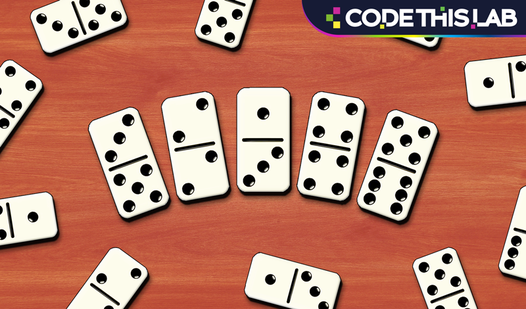
A standard double-six set contains 28 tiles. Each tile has two numbered halves, ranging from blank to six. A tile with the same number on both halves is a double, such as 4-4. The dots are called pips.
Place all tiles face down and mix them to form the boneyard. In a common two-player game, each player draws seven tiles. Games with more players may use smaller hands, depending on the chosen rules. Keep your tiles hidden from your opponents.
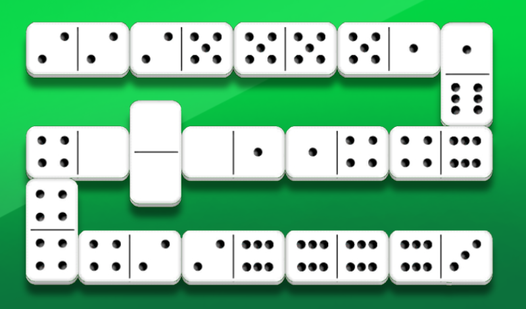
The player holding the highest double usually starts. If nobody has a double, the heaviest tile, meaning the tile with the greatest total number of pips, may begin instead. Turns then move clockwise. A played tile must match one of the two available ends of the chain. Doubles are often placed crosswise so they are easy to recognize, but they do not automatically create extra playable ends.
In Draw Dominoes, a player without a legal move takes tiles from the boneyard until a playable tile appears or the supply reaches the required minimum. In Block Dominoes, that player simply passes. House rules differ, so confirm them before the first tile is played.
How do you play dominoes step by step?
You play by building one connected chain while trying to use every tile in your hand before your opponents do.
- Shuffle the tiles: Turn every domino face down and mix them so no player knows their positions.
- Draw a hand: Take the required number of tiles, usually seven in a two-player double-six game, and leave the rest in the boneyard.
- Choose the opener: Let the highest double lead, or use the heaviest tile if the rules allow and no double was drawn.
- Match an open end: Place a tile whose number matches either exposed end of the chain. A 6-2, for example, can connect to an open 6 or an open 2.
- Draw or pass: If you cannot play, follow the variant's rule. Draw Dominoes requires taking from the boneyard, while Block Dominoes usually requires a pass.
- Continue the chain: Take turns until someone empties their hand or nobody can make another legal move.
- Score the round: Award points according to the agreed system, reshuffle, and begin another round if playing to a target score.
On a digital board, select or drag a legal tile to an open end. Some games rotate the tile automatically. If several placements are possible, check which end you are choosing because the decision can change your options on the next turn.
How do you win at dominoes?
You win a round by playing your final tile, or by holding the lowest pip total when the layout is blocked.
A blocked round occurs when no player can match either open end and no usable tiles remain in the boneyard. Everyone counts the pips left in their hand. The lowest total wins under common rules, although some tables treat the result differently after a tie.
Match victory often requires several rounds. A common scoring method gives the round winner points equal to the pips left in all opponents' hands. Play continues until someone reaches an agreed target, such as 100 points. Other formats record only wins or award the difference between hand totals.
Emptying your hand is therefore better than merely holding a low total, but reducing expensive tiles still protects you if the round becomes blocked. A hand containing 6-6 and 6-5 carries 23 pips, so keeping both late in the round is risky.
What is the best strategy for dominoes?
Strong domino strategy combines hand flexibility, number tracking, and control of the chain's open ends.
First, inspect the distribution of your hand. If you hold several tiles containing one number, that number is your strong suit. Opening or preserving that suit can give you repeated moves while making opponents respond on your terms. A hand full of unrelated numbers needs flexibility, so avoid closing off the only values you can still play.
Watch every pass. In a Block game, a player who passes on open ends of 2 and 5 probably holds neither number. You can later expose those values to restrict that player again. In a Draw game, the information is less certain because the player may acquire a matching tile from the boneyard.
Track numbers that have appeared. In a double-six set, each number occurs on seven tiles. If all seven tiles containing 4 are visible or in your hand, nobody else can answer a newly exposed 4. This can let you force a block or protect your next move. You do not need perfect memory at first; start by tracking the number you hold most often.
Keep versatile tiles when possible. A 6-3 links two different suits, while 6-6 can be played only on a 6. Doubles are useful for shedding pips and maintaining a suit, but they can become awkward if their number disappears from the open ends. Play a high double early when you lack support for it. Save it only when you can reopen that number later.
Think one turn beyond the current match. Before playing, ask which two values will remain open and how many answers you have for each. The most obvious legal move is not always the safest one. A lower-scoring tile may preserve two future moves, while dumping a large tile can leave your hand disconnected.

What mistakes do new domino players make?
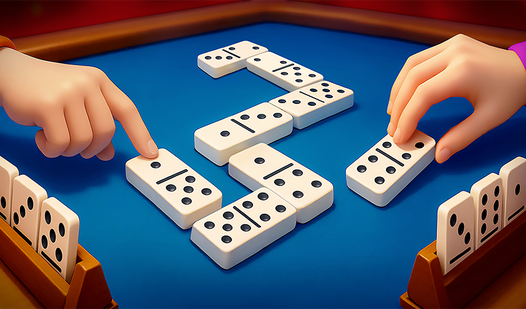
The most common mistake is choosing a legal tile without considering what values it leaves available.
Beginners also hold high doubles too long, reveal a strong suit without enough supporting tiles, and ignore useful information from opponents' passes. Another error is focusing only on personal pip count. Low tiles are safer during a block, but a flexible hand is more likely to go out first.
Do not assume every domino game uses identical rules. Drawing until you can play, drawing only one tile, and passing immediately are three different systems. Starting hands and scoring targets also change between variants. Read the rule panel before relying on a tactic learned elsewhere.
Finally, avoid playing too quickly online. When a tile fits both ends, the interface may ask you to select a side. Choosing the wrong end can expose a number you cannot answer and give the next player an easy route into their strongest suit.
What are the main dominoes variants?
The main variants keep the matching principle but change how players draw, score, or expand the layout.
Block Dominoes has no routine drawing after the initial deal. A player who cannot match an end passes, so tracking missing numbers and creating a blocked layout are central skills.
Draw Dominoes lets players take from the boneyard when stuck. It is more forgiving, but drawing adds pips and gives an opponent time to reduce their hand.
All Fives, also called Muggins in some rule sets, awards points when the open ends add up to a multiple of five. Every placement becomes both a hand-management decision and a scoring calculation.
Mexican Train gives players personal trains plus a shared train. Doubles and markers affect which lines are available, making it more open and tactical than a single-chain game.
Chicken Foot creates branching lines around doubles. Players may need to complete the branches before normal play resumes, so doubles have a much larger structural role.
Some browser titles use domino pieces in puzzles, chain reactions, or tile-clearing challenges rather than traditional table rules. These games share the visual language of dominoes but may test planning, timing, or pattern recognition instead of pip matching.
What are the best domino games to play free?
The best choice depends on whether you want conventional matching rules, direct competition, or a domino-themed puzzle.
For learning, begin with a clearly labeled classic game and check its rules for hand size, drawing, and scoring. A battle-oriented title may suit players who want short head-to-head rounds. A block-focused option is useful for practicing passes, number tracking, and closed-board strategy. Catalog titles can implement their names differently, so use the opening instructions to confirm the exact mode.
Domino Classic is the natural first catalog option for someone seeking a traditional presentation. After learning the turn structure, Domino Battle offers another entry point for competitive play. Domino Block is a relevant choice when you want to explore the block style or a similarly named domino challenge. Domino Legend provides one more free browser option to compare controls and rule sets without installing a game.

Whichever game you choose, play the first round slowly. Notice how drawing works, when the round ends, and how points are awarded. Once those rules are clear, start tracking one suit and planning one move ahead. Those two habits improve play more quickly than trying to memorize every tile immediately.
FAQ
How many dominoes does each player start with?
In a common two-player game using a double-six set, each player starts with seven tiles. Three- or four-player games and other variants may deal five, six, or seven, so follow the selected rules.
Can you play dominoes with two people?
Yes. Two-player Draw or Block Dominoes is one of the simplest ways to learn. Both players commonly draw seven tiles, leaving the remaining dominoes in the boneyard when the variant uses one.
What happens if you cannot play a domino?
In Draw Dominoes, you draw according to the table's rule, sometimes until you find a playable tile and sometimes only once. In Block Dominoes, you pass and the next player takes a turn.
Do you have to play a double first?
Only the opening rule commonly favors a double, usually the highest one held. After the first turn, you may play any legal matching tile. Some variants give doubles additional rules, so check the chosen mode.