
Free Sudoku Games Online: Rules, Tips, and Picks

Free Sudoku games online let you solve logic puzzles directly in a browser without buying a book or installing an app. In standard Sudoku, fill a 9x9 grid so every row, column, and 3x3 box contains the digits 1 through 9 exactly once. Start with the most constrained areas, mark possible numbers, and place a digit only when the existing clues prove where it belongs.
What are the rules of Sudoku?
The rule is simple: each digit from 1 to 9 must appear once in every row, column, and outlined 3x3 box.
A standard grid contains 81 cells divided into nine 3x3 boxes. Some cells begin with fixed clues, and those numbers cannot be moved. Your job is to complete every empty cell without repeating a digit in any row, column, or box.
Sudoku uses numbers, but it is not an arithmetic game. You never add, subtract, or calculate values. The digits could be replaced with nine different symbols and the puzzle would work the same way. They are labels used to test placement and exclusion.
A well-formed puzzle has a logical path to a unique solution. That does not mean every next move will be immediately obvious. You may need to record candidates, compare several units, or recognize a pattern before another placement becomes certain. Guessing can produce a completed grid by accident, but it is not reliable solving: one unsupported choice may create a contradiction much later.

How do you play Sudoku step by step?
Solve Sudoku by repeatedly finding which digits are missing, eliminating impossible cells, and updating the grid after every confirmed placement.
- Scan the clues to find a busy area. Choose a row, column, or box with several filled cells so fewer digits remain possible.
- List the missing digits. Compare the completed numbers with 1 through 9 to identify exactly what the selected unit still needs.
- Check intersecting units. For each empty cell, reject any digit already present in that cell's row, column, or box.
- Place a naked single. If only one candidate survives in a cell, enter it because no other value can legally fit there.
- Find a hidden single. If a missing digit can occupy only one cell within a row, column, or box, place it even if that cell has several written candidates.
- Rescan after every placement. A new digit removes a candidate from related cells and may immediately create another single.
- Use notes when scanning stalls. Record small candidate digits, then compare them for pairs and other elimination patterns instead of guessing.
- Verify the completed grid. Confirm that every row, column, and box contains 1 through 9 with no duplicates.
Online interfaces often make candidate notes faster than writing on paper. Learn how the selected game distinguishes notes from final entries before filling several cells; accidentally entering a candidate as a final answer can make an otherwise sound solve confusing.
How do you win at Sudoku?
You win by completing every cell legally, and the safest route is to move from direct deductions to candidate-based patterns without making unsupported guesses.
Begin with scanning. Pick one digit, such as 7, and inspect where it already appears in neighboring rows and columns. Those placements block many cells in nearby boxes. If only one cell remains available for 7 in a box, you have found a confirmed move. This technique is often called crosshatching.
Next, look for naked and hidden singles. A naked single is a cell with one candidate. A hidden single is a digit that has only one possible location in a unit, even though its cell may still show multiple candidates. Hidden singles are easy to miss if you study cells individually, so periodically inspect all possible positions for one digit across an entire row, column, or box.
If singles disappear, search for locked candidates. Suppose every possible 4 in one 3x3 box lies in the same row. The 4 must occupy one of those cells, so it cannot appear elsewhere in that row outside the box. The same reasoning works with columns.
Naked pairs provide another useful elimination. If two cells in one unit contain exactly the same two candidates, those digits must occupy those two cells in some order. Remove both candidates from the unit's other cells. The pair itself may remain unresolved, but the eliminations can expose a single elsewhere.
Good solving rhythm matters. Work in short cycles: place a confirmed number, update affected candidates, scan for singles, and only then search for a more complex pattern. Many players overlook easy follow-up moves because they continue analyzing the old board after changing it.
What beginner Sudoku mistakes should you avoid?
The most damaging beginner mistake is treating a possible number as if it were a proven number.
A candidate is legal for now, not necessarily correct. Before making a final entry, state the reason: it is the only candidate in this cell, the only position for that digit in the unit, or the result of a valid elimination pattern.
Other common errors include checking only the 3x3 box while overlooking the row, failing to update notes after a placement, and writing every possible candidate before basic scanning is finished. Excessive notes can hide obvious patterns. Add them when they reduce uncertainty, and erase candidates consistently.
Do not chase one stubborn corner for too long. Switch to a different digit or unit, because a deduction elsewhere may unlock the blocked area. If duplicates appear, return to the most recent uncertain entry rather than changing several established clues at random.
What types of Sudoku can you play online?
Most free online Sudoku games use the classic 9x9 format, but variants change the grid size, regions, symbols, or extra constraints.
Mini Sudoku commonly uses a smaller grid and is useful for practicing scanning. Larger grids demand more candidate management. Irregular Sudoku replaces square boxes with outlined regions, while diagonal Sudoku also requires the main diagonals to contain unique digits. Some collections mix several formats or present the familiar rules with a different visual theme.
Always read the displayed instructions before applying classic assumptions. A variant may include cages, comparison signs, overlapping grids, or another rule that changes which candidates are legal. The central habit remains the same: translate every rule into eliminations and place only what the combined constraints prove.
What are the best free Sudoku games to play online?
The best free Sudoku game is one with a readable grid, responsive controls, clear candidate notes, suitable difficulty, and enough feedback to help without solving the puzzle for you.
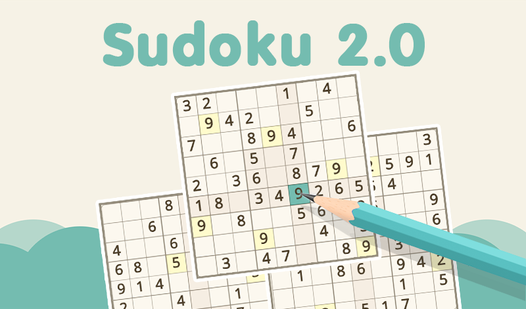
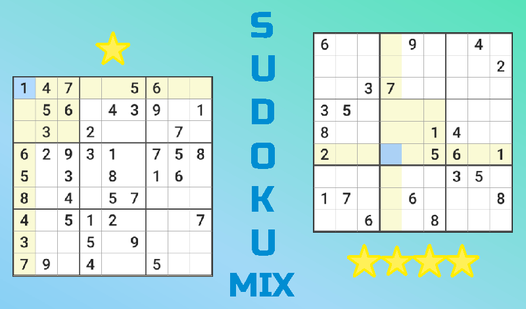
A classic listing such as Sudoku is a sensible first choice when you want familiar 9x9 logic. Sudoku Art is the presentation-oriented alternative by name; consider it when a different visual treatment helps you stay focused. Sudoku 2.0 offers another general Sudoku entry for comparing board layout and input feel. Sudoku Mix is the natural variety choice, but check each puzzle's displayed rules before assuming every board follows the standard format.
Useful controls include undo, note mode, number highlighting, and an optional mistake indicator. Undo protects against input slips. Highlighting helps you track one digit across the grid. Mistake checking can teach beginners, but turning it off encourages you to validate moves through logic. A timer is optional: it measures speed, not solving quality.
Choose easy puzzles while learning singles and scanning. Move to medium difficulty once you can finish without guesses. Hard puzzles become worthwhile when candidate pairs and locked candidates feel natural. Difficulty labels vary between games, so judge a puzzle by the techniques it requires rather than its label alone.
FAQ
Can I play Sudoku online for free without downloading anything?
Yes. Browser-based Sudoku games can run directly on their pages, although available controls, difficulty settings, and saved progress differ between games.
Does Sudoku require math skills?
No. Sudoku uses digits as symbols and depends on logic, pattern recognition, and elimination rather than arithmetic.
Is guessing allowed in Sudoku?
You can guess, but a sound Sudoku solution does not require blind guessing. Candidate notes and logical patterns let you test possibilities without committing to an unsupported answer.
How can I get faster at Sudoku?
Practice scanning systematically, update candidates after every placement, and learn singles before advanced patterns. Speed usually follows accuracy and pattern recognition.