
Free Card Games Online: Rules, Tips, and Best Picks

Free card games online let you play familiar deck-based games in a browser without buying cards or installing software. Start by choosing a game family, such as shedding, matching, trick-taking, or solitaire. Read the table rules, learn the win condition, and play a practice round before worrying about advanced strategy. Most games take only a click or tap to begin.
What are free card games online?
Free online card games are browser games built around drawing, matching, ordering, discarding, or capturing cards, usually with no purchase required to start.
The category is broader than traditional playing-card games. It includes solitaire games played alone, shedding games in which players race to empty their hands, matching games based on ranks or suits, trick-taking games, collectible-card battles, and memory challenges that imitate face-down card play.
Each family asks you to solve a different problem. Solitaire rewards planning and access to hidden information. Shedding games reward hand management and careful timing. Trick-taking games require you to predict how several players will respond. Matching and memory games depend more heavily on observation and recall.
The easiest way to begin is to pick a game with one clear objective. In an UNO-style game, for example, the main goal is normally to discard every card before your opponents. You match the active card by color, number, or symbol and draw when you cannot make a legal play. Action cards can interrupt the normal turn order, but their exact effects and stacking rules may differ between versions.
What are the rules of online card games?
The rules depend on the game family, but every card game defines a legal move, a turn order, a source of new cards, and a condition that ends the round.
In a shedding game, players begin with hands of cards and take turns placing legal matches onto a discard pile. The first player to empty their hand usually wins. In solitaire, cards are arranged into a layout, and the player moves them according to rank, suit, color, or position until a target arrangement is complete. In trick-taking games, everyone contributes one card to a trick, and a rule based on suit, rank, or trump decides who captures it.
Before your first move, identify five things: the goal, the legal matches, the effect of special cards, what happens when no move is available, and how scoring works. Do not assume that familiar house rules apply. One browser version may allow action-card stacking while another may reject it. Some games end as soon as a hand is empty; others continue across several scored rounds.
Interfaces also enforce rules differently. A playable card may glow, rise, or become clickable. Some games draw automatically when you are stuck, while others require you to select the deck. If a move appears impossible, check the instructions before treating it as a bug.

How do you play card games online step by step?
You play by learning the round objective first, then making legal moves while preserving useful options for later turns.
- Choose a game family to set the objective. Pick shedding for quick competitive rounds, solitaire for a solo puzzle, or matching and memory play for a test of recall.
- Open the rules to learn legal moves. Check what can be placed, moved, captured, or discarded and note any version-specific rules.
- Study the starting layout to find constraints. Count your cards, inspect visible piles, and identify blocked cards, scarce suits, or dangerous gaps.
- Make a safe opening move to preserve flexibility. Prefer a move that leaves several possible follow-ups instead of committing your whole hand or layout to one plan.
- Track cards as they appear to reduce uncertainty. Remember major action cards, exposed ranks, empty suits, and any opponent who repeatedly draws instead of playing.
- Adapt after every turn to avoid stale plans. Reassess which color, suit, pile, or sequence is now easiest to control.
- Use special cards when their impact is highest. A skip, reversal, wild card, trump, or layout-clearing move is often stronger near a decisive turn than at the first opportunity.
- Finish according to the exact win condition. Empty your hand, complete the foundation, collect the required tricks, or reach the target score before the other players.
- Review the result to improve the next round. Notice whether you lost through chance, a missed legal move, poor timing, or failure to track information.
How do you win at free card games online?
You win more consistently by preserving options, tracking revealed information, and spending powerful cards only when they change the outcome.
A legal move is not automatically a good move. Strong players compare what a move accomplishes now with what it removes from future turns. In a shedding game, discarding a common number may be safer than changing to a color represented by only one card in your hand. In solitaire, exposing a face-down card is usually more valuable than making a tidy sequence that reveals nothing.
Pay attention to information created by other players. If an opponent draws after the active color changes to blue, they may have no blue card and no usable wild card. That conclusion is not certain because some versions allow voluntary drawing, but it is useful evidence. If the same opponent struggles with blue again, keeping that color active becomes more attractive.
Hand size is only a rough measure of who is winning. A player with two awkward cards may be in a weaker position than someone holding four flexible cards. Look at card quality as well as quantity. Wild cards, multiple colors, connected ranks, and several legal destinations provide escape routes when the table changes.
Tempo matters too. Some moves reduce your hand immediately but hand control to an opponent. Others keep one extra card while forcing the next player to draw, skip, or abandon a useful suit. Judge the whole turn cycle rather than counting only your own discard.
In games with substantial randomness, good strategy improves your decisions rather than guaranteeing every result. A losing round can still contain correct play. Evaluate whether you chose the strongest option using the information available at the time, not whether the next card happened to favor you.
What beginner mistakes should you avoid?
The most common beginner mistake is playing the first legal card without considering what the next player can do.
Do not spend every special card early. A wild card used to discard quickly may leave you unable to escape an unfavorable color later. At the same time, holding power cards forever can be costly if unplayed cards count against your score. The right timing depends on how close the round is to ending.
Avoid changing the active suit or color to one you cannot support. Choose the option represented most strongly in your remaining hand unless you have reliable information about an opponent’s weakness. If another player is one card from winning, disruption becomes more important than building your ideal sequence.
In solitaire, do not move cards merely because the interface permits it. Prioritize moves that reveal hidden cards, open empty spaces, or create access to blocked ranks. Reversible rearrangements can wait. Also avoid sending a card to a foundation automatically if you may still need it to build a sequence in the tableau.
Finally, do not ignore the score format. A tactic suited to one quick round may be poor in a match where leftover cards carry penalties. Read how the game awards points before deciding how much risk to take.
What are the main types of free online card games?
The main types are shedding games, solitaire, matching games, trick-taking games, casino-style games, deck-builders, and card-based memory challenges.
Shedding games are approachable because the objective is visible: get rid of your hand. Solitaire games replace opponents with a constrained layout, making them useful for unhurried play. Matching games ask you to create pairs, sets, runs, or legal color and number combinations. Trick-taking games are more demanding because every card contributes information about several hands.
Casino-style games may imitate poker, blackjack, or baccarat, but free browser versions can use virtual points instead of money. Treat them as games of rules and probability, not as a way to predict gambling outcomes. Deck-builders add progression within a match: you acquire cards, improve the deck, and try to make later turns stronger than early ones.
Memory and pattern games sit at the edge of the category. They may not use a conventional deck, but they train a skill that matters whenever cards are concealed or briefly shown. The catalog includes pattern-recall titles that can serve as a short observation exercise between longer card sessions.
What are the best free card games to play online?
The best free card games explain their rules clearly, respond quickly, remain readable on your screen, and give you meaningful decisions without hiding basic play behind payment.
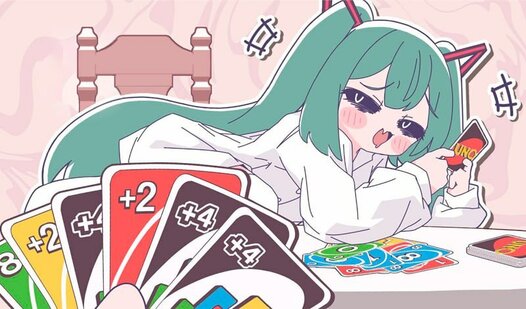
For a direct card-game choice from the matched catalog, Anime UNO is the clearest fit. It presents an UNO-style shedding format, so it suits players looking for color and symbol matching, action-card timing, and a race to empty the hand. Check its own rule screen for details such as stacking, turn direction, and the requirement to announce a final card, since browser adaptations do not always use identical house rules.
A good browser game should make legal and selected cards visually distinct. Text and symbols need to remain readable on a phone as well as a desktop. Controls should respond predictably, and restarting a round should not require navigating several unrelated screens. Sound controls, pause behavior, and a short rules panel also improve repeat play.
Fairness is harder to judge from one unlucky deal. Randomized card games naturally produce streaks. Look instead for consistent rule enforcement: the same move should be accepted or rejected under the same conditions, special effects should resolve in a visible order, and the game should clearly explain why a turn ended.
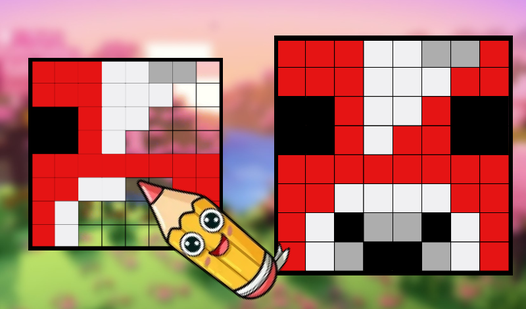
The matched catalog also contains adjacent observation games rather than a large set of conventional deck games. Repeat the Pattern of Mines Mobs is best approached as a pattern-recall challenge, not as a substitute for solitaire or UNO. Its relevance is skill-based: remembering positions and sequences can sharpen the same attention used to track exposed or concealed cards. Keeping that distinction clear helps you choose the experience you actually want.
How can you choose the right card game?
Choose according to session length, preferred level of competition, and the kind of decisions you enjoy making.
For a quick break, use a shedding or simple matching game with short rounds. Choose solitaire if you want to pause and think without waiting for another player. Try trick-taking if you enjoy reading opponents and remembering which suits have already appeared. A deck-building game is a better fit when you want longer-term combinations and gradual growth during a match.
Also decide how much randomness you tolerate. Draw-heavy games create dramatic reversals but sometimes limit control. Open-information puzzles give you more responsibility for the outcome, though some deals may still be unsolvable. Neither design is inherently better. The important question is whether you want adaptation under uncertainty or careful calculation from a stable layout.
Start with the simplest ruleset that still gives you interesting choices. Once you can explain why you made a move, add a harder variant, scoring system, timer, or stronger opponent. Difficulty is most useful when it asks for better decisions, not merely faster clicking.
FAQ
Can I play free card games online without downloading anything?
Yes. Browser card games normally open directly on the game page, although loading and save behavior depend on the device, browser, and individual game.
Are free online card games based only on luck?
No. The deal may be random, but hand management, probability, memory, timing, and opponent observation influence results in many card-game families.
What is the easiest online card game to learn?
A simple shedding game is often easiest because the objective is clear and legal cards are based on visible colors, numbers, or symbols.
Can I play online card games on a phone?
Many browser games support touch controls, but screen fit varies. Use portrait or landscape mode according to the layout and confirm that card labels remain readable before starting a long round.