Drawing Games Online: Rules, Tips, and Free Picks

Drawing games online turn a mouse, trackpad, or touchscreen into the main control. You may sketch a missing object, guide a vehicle, solve a physics puzzle, or create a shape that the game interprets. To start, read the prompt, draw one deliberate line or simple form, then watch how the game responds and adjust your next attempt.
Unlike a painting app, a drawing game usually gives every mark a purpose. Your line might become a bridge, finish an incomplete picture, represent an object, or trigger an action. Artistic skill is rarely the deciding factor. Clear intent, economical shapes, and an understanding of the game's rules matter more than polished artwork.
What are the rules of drawing games online?
The basic rule is to create a recognizable or functional drawing that satisfies the objective shown on the screen.
The exact objective changes between games. A puzzle may ask you to add a missing part to a scene. A physics challenge may turn your line into a solid object affected by gravity. A route-drawing game may ask you to connect two places without hitting an obstacle. Prompt and guessing games reward recognizable sketches instead of mechanically perfect solutions.
Most games restrict you in at least one way. You may have limited ink, a small drawing area, one continuous stroke, a timer, or only a few attempts. These restrictions are part of the puzzle. Before drawing, look for an ink meter, boundary lines, movable objects, hazards, and buttons that reset or submit the result.
A valid drawing does not always need to look realistic. If the game checks geometry, a rough triangle may work better than a detailed roof. If another player or recognition system must identify the image, a simple outline with one distinctive feature is usually stronger than a crowded picture.
How do you play drawing games step by step?
You play by identifying what the game expects, making the simplest useful mark, and learning from the result.
- Read the prompt completely to identify the goal. Decide whether you are completing a picture, drawing a path, protecting something, or communicating an object.
- Inspect the entire play area to find constraints. Notice obstacles, gaps, moving pieces, starting points, drawing boundaries, and any limit on ink or time.
- Predict what your line will become to avoid blind attempts. Ask whether it will remain ink, turn solid, fall under gravity, move a character, or be judged as an image.
- Choose the simplest recognizable shape to reduce errors. Start with a line, loop, arc, box, or stick figure instead of adding decorative detail.
- Draw slowly at important corners to improve control. Smooth curves and clean connections are easier for both puzzle systems and human guessers to interpret.
- Release or submit the drawing to test the result. Watch which part succeeds and where the interaction fails instead of immediately repeating the same shape.
- Change one feature on the next attempt to learn efficiently. Adjust the angle, length, position, size, or symbol while keeping the rest of the solution stable.
On a mouse, draw from the shoulder and forearm rather than making every movement with your fingers. On a trackpad, shorter strokes are usually more reliable. On a touchscreen, keep your hand from covering the target area and begin slightly away from crucial edges.
How do you win at drawing games?
You win consistently by solving the game's interpretation problem, not by producing the most attractive picture.
Start by identifying what judges the drawing. Physics puzzles care about weight, balance, contact, and collision. Missing-part puzzles care about meaning and placement. Route games care about continuity and clearance. Guessing games care about recognizable visual cues. A strategy that works in one category can fail completely in another.
For physics-based levels, imagine the scene one second after you release the line. A long unsupported bridge may rotate or collapse. A steep ramp may create too much speed. A closed loop can trap an object, while a wide base can stabilize a shape. Use existing walls and platforms as supports whenever possible because they cost no ink.
For recognition challenges, draw the category before the detail. A large round face with two ears communicates more quickly than carefully shaded fur. Establish the silhouette, add one or two defining features, and stop once the idea is readable. Extra marks can hide the clue or confuse automated recognition.
For completion puzzles, examine the relationships in the scene. The missing element often explains what a character is doing, repairs an obvious visual contradiction, or completes a familiar object. Check direction and scale before drawing: the right idea can still fail if it is placed outside the expected area.
What makes a drawing count in an online game?
A drawing counts when it matches the type of information the game is programmed to evaluate.
Some games detect where your stroke begins and ends. Others examine overlap with a target zone, compare the shape with a known object, or simulate the line as a physical body. This explains why a beautiful sketch may fail while a crude symbol succeeds.
If the correct idea is rejected, simplify it before making it more detailed. Move the drawing closer to the relevant object, close accidental gaps, exaggerate the defining feature, and keep separate objects from touching. In mechanical puzzles, check that your line actually contacts the required surface. A tiny gap can completely change the result.
What mistakes do beginners make in drawing games?
The most common mistake is drawing immediately without first determining how the mark will behave.
Another frequent error is using too much detail. Decoration consumes time and ink, creates unwanted collision points, and makes recognizable shapes harder to read. Begin with the minimum viable drawing. Add detail only when the game clearly needs it.
Players also repeat failed attempts without isolating the cause. If a bridge falls, changing its colorless scribble into a larger scribble teaches little. Change one variable at a time: add a support, lower the angle, shorten the span, or move the contact point.
Poor scale causes many failures. A path can be logically correct but too narrow for the moving object. A protective shape can leave a small exposed side. A missing part can be drawn in the right place but too small for the recognition zone. Leave sensible clearance and account for movement after the drawing becomes active.
Finally, avoid fighting the input device. Zoom the browser only if the game still aligns the pointer correctly, use full-screen mode when available, and clean the touchscreen if strokes skip. If the pointer seems offset, return to the default page zoom and restart the level.
What types of drawing games can you play online?
The genre includes picture-completion puzzles, physics drawing, route planning, guessing games, creative sandboxes, and action hybrids.
Picture-completion games ask what is missing and reward visual reasoning. They are approachable because the task is focused and drawings are short. Physics games give lines mass or collision, producing several possible solutions and encouraging experimentation. Route games combine planning with steady control, since the path must often remain safe after movement begins.
Guessing games focus on visual communication. Speed and recognizable symbols matter more than precision. Creative sandboxes provide fewer win conditions and are better for relaxed experimentation. Action hybrids connect a drawn line, shape, or quantity to movement, combat, defense, or another immediate outcome.
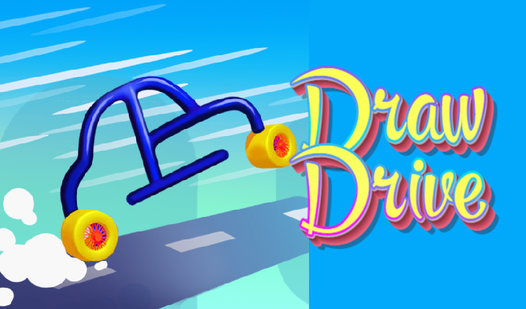
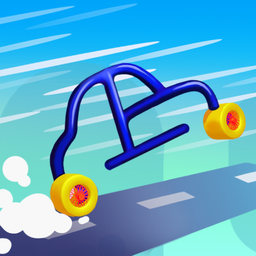
Draw Drive is a useful choice for exploring the route-and-motion side of the genre. The central appeal of this style is seeing how a drawn solution behaves once movement starts, so planning space and angles matters more than illustration.
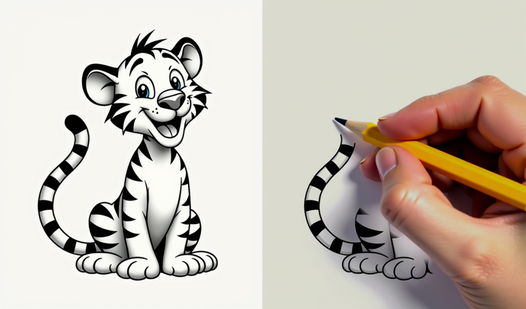

Draw This leans toward the prompt-and-sketch side suggested by its direct premise. Games in this group are a good fit when you want quick drawings and readable ideas rather than extended physics puzzles.
What are the best drawing games to play free?
The best free drawing games provide clear feedback, responsive controls, fair constraints, and enough variation to make experimentation worthwhile.
Choose according to the kind of thinking you enjoy. DOP Draw is a natural starting point for missing-part challenges: inspect the image, infer the intended addition, and express it with a simple mark. Draw Drive suits players who prefer routes, movement, and testing how a line functions. Draw This is a better match for direct sketching and prompt interpretation.
For a more action-oriented change of pace, try a game in which drawing produces a tactical result. These hybrids preserve the immediacy of sketching while giving the mark a job beyond completing a picture.
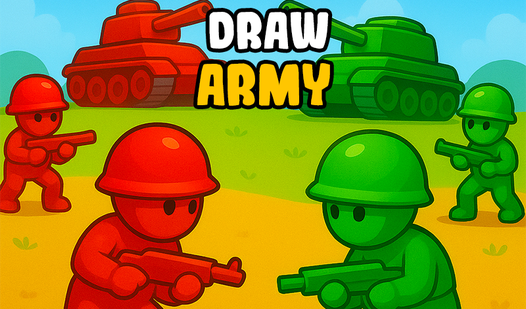
Draw Army represents that action-focused branch of the catalog. Approach it by first learning what the drawn input controls, then favor clear, repeatable marks over elaborate shapes. Across all four choices, the most useful habit is the same: make a simple attempt, observe the response, and revise with a specific purpose.
FAQ
Can I play drawing games online for free?
Yes. Browser drawing games can be played without buying drawing software, although individual games may include advertisements or optional purchases.
Do I need a drawing tablet to play?
No. A mouse, trackpad, or touchscreen is enough. A stylus can improve control, but most puzzles are designed around simple strokes rather than professional illustration.
Why does the game reject a drawing that looks correct?
The drawing may be outside the target area, too detailed, disconnected, or mechanically unstable. Simplify the shape, adjust its position, and verify that important lines touch or remain separate as required.
Are online drawing games good for learning to draw?
They can improve hand control, shape recognition, visual communication, and quick sketching. They do not replace structured art practice, especially for perspective, anatomy, color, or shading.