
Wave Challenges Walkthrough and Slaughterhouse Strategy
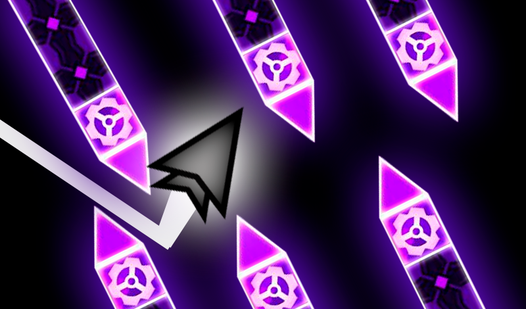
Wave Challenges tests precise control: holding sends the wave along one diagonal, while releasing changes its direction. To beat Slaughterhouse and other difficult challenges, do not try to memorize the entire route at once. Split the course into short patterns, find the rhythm of every transition, and keep your press duration consistent. Reliable movement matters more than raw reaction speed.
How do you beat Slaughterhouse in Wave Challenges?
Slaughterhouse becomes more manageable when you learn it as a chain of short rhythmic patterns instead of one long level.
First, identify every place where the corridor changes width, direction, or visual rhythm. Transitions between these sections are where most attempts end. You do not need constant corrections in a wide area. Settle near the safe center and prepare for the next narrow passage. Inside a tight corridor, use short, even presses instead of one long hold.
Do not stare directly at the wave icon. Look slightly ahead, toward the point your trajectory will reach after the next input. This gives you time to prepare a movement instead of rescuing a line that has already gone wrong. During sharp zigzags, follow the center of the open route rather than inspecting every obstacle separately.
If the same transition keeps defeating you, identify the exact cause. Did the wave hit the upper boundary? Your hold was probably too long or started too early. Did it collide with the lower wall? You may be pressing late or releasing too quickly. Change only one variable on the next attempt. Adjusting both timing and press duration makes it difficult to tell which change worked.
Slaughterhouse may look chaotic because of dense decoration and high speed, but the input remains binary: pressed or released. Reduce the visual noise to a short sequence of commands such as short, short, long, release. An internal rhythm is more dependable than reacting separately to every wall.


How do you complete Wave Challenges?
A complete run depends on basic trajectory control, careful transition practice, and focused work on problem sections.
Begin by checking the controls. Make sure you know which way the wave moves while the button is held and after it is released. Then practice guiding it through a wide corridor without producing a shaky line. Extra clicks can feel helpful, but every unnecessary input creates another opportunity for a mistake.
After that, play for consistency instead of a lucky finish. When you complete a difficult section once, repeat the same movement pattern several more times. A random success often disappears on the next attempt. A stable success feels different because you already know when to press, how long to hold, and where to release.
On longer courses, choose a few clear landmarks. A landmark might be a noticeable turn, a change in corridor shape, or the beginning of a dense zigzag sequence. Avoid relying on decorative details if they cover the route or distract you. A useful landmark should tell you when to prepare the next movement.
How do you play step by step?
Build from control to speed: create a clean trajectory first, then connect the sections you have learned.
- Test the controls and make movement predictable. Try holds of different lengths in a safe area and observe how far the wave travels.
- Move toward the corridor center and gain room to react. A central line leaves space for corrections above and below.
- Look ahead and prepare the next input. Keep your eyes roughly one obstacle ahead of the wave's current position.
- Split the route into sections and reduce the memory load. Mark the beginning and end of each tight zigzag, narrow passage, or tempo change.
- Choose a rhythm and repeat equal inputs. Use a simple internal sequence such as tap, tap, hold, release.
- Correct one error and preserve movements that already work. Do not change the beginning of a pattern because of a mistake near its end.
- Connect two neighboring sections and test the transition. Players often learn both pieces separately but fail while moving between them.
- Remove unnecessary clicks and calm the trajectory. Every input should change direction or prepare the wave for the next opening.
- Repeat the clean section and secure the result. Do not move on immediately after performing a difficult pattern correctly only once.
- Assemble the full route and maintain your tempo. Keep using the familiar rhythm near the end instead of speeding up because the finish is close.
If your version offers a practice mode or checkpoints, use them to isolate one section. You should still restart from the beginning regularly. Otherwise, you may learn every pattern separately without becoming comfortable performing them during a long, high-pressure run.
Why does the wave keep hitting the walls?
Most collisions come from holds that last too long, looking ahead too late, and making several panic corrections in a row.
The first common mistake is chasing the wave icon. The player notices that the wave is close to a wall, changes direction sharply, and immediately makes an opposite correction. This produces a shaky line that is difficult to guide through a narrow opening. It is better to return toward the center once and then continue with a planned input pattern.
The second mistake happens after a movement almost goes wrong. Even when the wave has returned to a safe line, the player adds another click out of habit. That extra command sends it into the opposite wall. After making a correction, take a brief moment to evaluate the trajectory instead of pressing automatically.
A third problem is inconsistent duration between presses that appear similar. At high speed, even a small difference changes the height at which you enter the next corridor. Focus on pressing evenly, not quickly. Quiet counting or tapping with a free finger can help you maintain a steady tempo.
Finally, do not assume you must pass through the exact geometric center of every narrow opening. Sometimes the safest line is closer to one edge because you need to reverse direction immediately afterward. Read the complete pattern: the approach, the narrow passage, and the exit.


What strategy helps with difficult sections?
A fixed input plan works best on difficult sections, and it should change only after you understand the previous mistake.
I use four practical techniques:
- I choose the press point in advance. Instead of thinking, “I will press when it becomes dangerous,” I connect the input to a visible corner or the start of a narrow passage. This removes impulsive decisions.
- I separate early mistakes from late ones. Hitting the ceiling after a long climb usually means I should release earlier. Hitting the floor before a climb often means I need to press sooner.
- I count short presses as a rhythm. A series of similar zigzags becomes easier when my finger repeats equal intervals and my eyes focus on the exit.
- I stop when my accuracy disappears. If I repeatedly fail a familiar section because of an obvious extra click, I take a short break. Ten frustrated restarts usually reinforce the wrong movement.
After every collision, ask a specific question: was the error caused by input timing, press duration, or the starting position? Saying “I was too slow” is too vague. It does not tell you what to adjust on the next attempt.
You should also inspect the approach to a difficult pattern. Sometimes every input inside the pattern is correct, but you enter it too high or too low. In that case, the previous section needs adjustment. Establish a consistent entry point and the following sequence will become much more predictable.
How do you practice without mindless repetition?
Practice works when each set of attempts tests one idea and ends with a movement you can reproduce.
Choose one troublesome transition and set a local goal. You might aim to enter the narrow passage at the correct height three times, complete a zigzag cleanly twice, or consistently reach the next landmark. This is more useful than demanding an immediate full clear.
Compare the trajectory before each collision, not only the final impact point. If failures occur in different places, your input pattern is still inconsistent. Return to the beginning of the sequence and simplify your movement. If each collision looks nearly identical, that is useful progress. The pattern is now repeatable, so you only need a small timing adjustment.
Alternate focused analysis with complete attempts. Isolated practice builds the movement, while full runs teach you to perform it after a longer period of concentration. Do not rush your clicks before an important attempt. Start calmly, keep your usual count, and treat the final part of the course as one more familiar pattern.
FAQ
How do you beat Slaughterhouse in Wave Challenges?
Split the course into short patterns, memorize the input rhythm, and practice the approaches to narrow corridors separately. Look ahead along the route instead of staring at the wave.
Why can I not pass a narrow zigzag?
The usual causes are uneven presses and an incorrect entry height, not slow reactions. Establish a consistent starting position before adjusting the rhythm.
Should I click rapidly during difficult sections?
No. Rapid clicks produce a shaky trajectory. Use the minimum number of inputs required to change direction and prepare for the next obstacle.
How can I avoid failing near the finish?
Do not change your tempo because the end is close. Keep counting the inputs and treat the last section like any other practiced pattern.