
Turret Gunner Air Raid Walkthrough for Levels 45 and 46

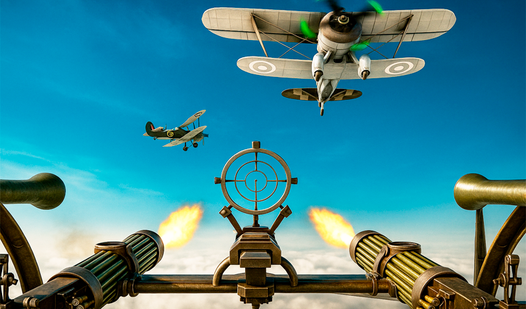
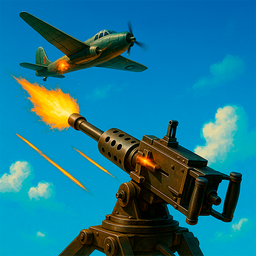
Turret Gunner: Air Raid is an arcade shooting game in which you repel attacks with a mounted machine gun. To clear its stages, lead moving aircraft, switch to the closest immediate threat, and stop wasting long bursts on targets that are already leaving. On difficult stages, including levels 45 and 46, success comes from target order and controlled fire rather than frantic crosshair movement.
How do you clear levels in Turret Gunner: Air Raid?
Every successful run depends on three actions: identify the immediate threat, aim ahead of it, and finish it before switching targets.
Begin by checking the failure condition. A stage may require you to preserve health, prevent too many enemies from passing, or complete another objective before the attack ends. Watch the interface carefully because destroying distant aircraft at random may contribute little to the actual mission.
Do not follow every object across the entire screen. Pick a sector, read the flight paths, and attack the enemy that will reach your position or protected area first. After the kill, bring the crosshair back toward the center of the active sector. This reduces the distance you must cover when the next threat appears.
The essential shooting habit is to aim slightly ahead of a moving aircraft rather than directly at its body. Faster targets require more lead. If the bullet trail remains behind the plane, do not respond with wild mouse movements. Move the firing point farther forward and keep it on the predicted path.
How do you beat level 45 in Turret Gunner: Air Raid?
To beat level 45, maintain control instead of chasing distant aircraft and handle each attack in order of immediate danger.
If you regularly fail just before completing the stage, the real mistake may happen near the beginning of the wave. Spending too long on the first visible target allows several later enemies to enter the danger zone together. Use the opening moments to scan the screen, read the directions of travel, and choose the aircraft with the least time remaining before it becomes a threat.
Fire a short burst that lets you judge the bullet trail. If the rounds pass behind, increase the lead immediately. Once the trail intersects the target, hold that firing line instead of circling the crosshair around the aircraft. Switch after confirming the kill, and stop firing into empty space when you move to the next target.
When the run repeatedly collapses at the same moment, remember which side produces the dangerous group. On the next attempt, position the crosshair closer to that sector in advance. You do not need to memorize the whole stage. Preparing for the one sequence that regularly ruins the run is often enough.
How do you beat level 46 in Turret Gunner: Air Raid?
To clear level 46, divide the attack into short cycles and choose targets by time until danger, not by size or position near the center of the screen.
The firing style that worked earlier may struggle against a denser pace. A common mistake is sweeping one long burst across several aircraft. Partial damage does not clear the screen, so the number of active threats continues to rise. Finish one dangerous enemy decisively before moving the gun.
Before each burst, ask one question: which opponent will cause damage first if I do nothing right now? That is your target. A distant aircraft heading toward the center naturally catches the eye, but a side target that is already close to the position may demand a faster response.
If the attempt ends almost immediately, you are probably noticing a flank too late. If you fail near the end, look for seconds wasted on aircraft that were already leaving. If the situation remains controlled but your accuracy breaks down, reduce the size of your movements and make smaller corrections. This diagnosis gives you a specific problem to solve instead of repeating the same approach indefinitely.
How do you play step by step?
- Scan the screen - learn where the first targets appear and where they are heading.
- Check the objective - identify exactly what causes victory or failure.
- Select the closest threat - judge time until attack rather than distance from the crosshair.
- Aim ahead of the target - place the bullet stream across its future path.
- Fire a short burst - read the trail and correct your lead.
- Hold the firing line - stop shaking the crosshair once rounds are connecting.
- Confirm the kill - do not abandon a nearly destroyed threat without a reason.
- Plan the next switch - choose the following target before the screen becomes crowded.
- Release a departing target - save time when it no longer affects the objective.
- Review the failure - change one decision at the difficult moment and try again.
How should you shoot moving aircraft?
Accurate shooting starts with lead: aim at the point where the aircraft and bullets will meet, not at the aircraft's current position.
Treat the bullet trail as feedback. Rounds behind the target mean the crosshair is lagging. Rounds passing in front mean you are leading too far. If hits register only briefly, you have found the right line but are moving the crosshair faster than the aircraft.
Against a steady flight path, track the plane smoothly. When it changes direction sharply, stop the long burst, reposition, and fire again. Continuous fire during a large crosshair transfer makes corrections harder to read and may consume the available rate of fire. If your version includes overheating or reloading, those short pauses also keep the weapon ready for the nearest threat.
Which targets should you shoot first?
Destroy the opponents with the least time remaining before their attack or entry into a critical area.
A practical priority order is:
- A target that is already attacking or close to the protected area.
- A fast opponent approaching along a short path.
- A damaged dangerous target that needs only a finishing burst.
- A distant aircraft that is still preparing to enter the fight.
- A departing target that no longer affects the stage objective.
This order does not depend on a particular aircraft model. It continues to work when the composition of the wave changes because you are comparing reaction time rather than appearance. The exception is an objective explicitly marked by the interface. A required mission target takes priority over the general list.
Why do you lose despite scoring many hits?
A high number of hits does not guarantee success when the damage is spread across several aircraft and no immediate threat is destroyed in time.
One common mistake is firing at the biggest or most noticeable plane. Your eyes stay near the middle while a smaller aircraft closes in from the side. Another mistake is following an enemy after it has left the dangerous sector. A third is opening every burst directly on the aircraft and then chasing it throughout the rest of its path.
Check the run for three symptoms. If the screen quickly fills with opponents, finish targets one at a time. If enemies repeatedly break through from one edge, return the crosshair to that sector more often. If almost every burst starts behind the target, position the crosshair farther ahead before firing. Change only one element per attempt so you can tell which adjustment actually helped.
Do not restart instantly. Take a moment to name the cause: noticed the left target too late, fired at a departing plane for too long, or began without enough lead. That small observation is more useful than replaying the stage with the same decisions.
Which settings make aiming easier?
Choose a sensitivity that allows one clean transfer between sectors while still supporting small corrections near an aircraft.
If the crosshair constantly jumps over targets, reduce mouse or trackpad sensitivity. If crossing the screen requires several separate hand movements, increase it slightly. Full-screen mode can make the side sectors easier to monitor, while a stable browser zoom prevents accidental changes to the apparent size of the play area.
Close unnecessary tabs or background applications if the image is stuttering. With unstable frame pacing, lead feels inconsistent because the aircraft moves farther than expected between updates. Establish smooth motion first, then evaluate your own accuracy.
Which tactics help on difficult levels?
I rely on four techniques that work regardless of the exact wave composition.
- I keep the crosshair near the center of future threats instead of leaving it at the edge where the last aircraft disappeared. The next transfer is shorter as a result.
- I use my first burst as a test. A brief bullet trail is enough to correct the lead without committing the whole stream to the wrong point.
- I release an aircraft that is clearly departing and no longer affects the objective. The urge to finish every target often gives a more dangerous enemy an open route.
- I memorize one troublesome moment rather than the entire sequence. On the next attempt, I prepare the crosshair a little earlier and check whether the result improves.
It also helps to separate speed from panic. Target selection should be fast, but tracking should remain smooth. Sudden movements often come from stress rather than necessity. As the attack becomes denser, rely on short, complete decisions: select, lead, destroy, switch.
How can you tell whether your strategy is improving?
A better strategy reduces the number of simultaneous threats even before it produces a completed stage.
Do not judge progress only by the final result. Reaching a later part of the attack, keeping the screen less crowded, and firing fewer long bursts into empty space are all useful signs. If your run once collapsed halfway through but now consistently reaches the final section, your target order has already improved.
Work on the last remaining problem without changing everything else. Do not alter sensitivity, priority, and firing style at the same time. Preserve what works and correct one mistake. This is especially effective on levels 45 and 46, where a few seconds of better target priority can decide the whole attempt.
FAQ
How do you beat level 45 in Turret Gunner: Air Raid?
Destroy the closest threats first, lead your shots, and prepare the crosshair for the sector where the difficult sequence usually begins.
How do you beat level 46 in Turret Gunner: Air Raid?
Handle the attack one target at a time, avoid spreading fire across several aircraft, and choose enemies by how soon they can attack.
Why does the machine gun miss a moving aircraft?
Bullets take time to reach the target, so move the crosshair ahead of the aircraft and use the visible bullet trail to correct the lead.
Does a version associated with developer X7 change the walkthrough?
If your game's listing names X7, interface details or balance may differ, but the main techniques remain the same: lead aiming, controlled bursts, and threat-based target priority.