
Do a Somersault Guide: How to Clear Levels

In Do a Somersault, you must complete the stated trick objective and finish the jump with a stable landing. The key is to split every attempt into three phases: takeoff, rotation in a tuck, and an early extension. Do not hold the tuck all the way to the ground. Build the required rotation first, release the control, bring the feet underneath the character, and prepare for contact.
How do you clear levels in Do a Somersault?
Each level becomes easier when you complete the required objective first and then focus on a clean landing.
Read the objective literally before jumping. The game may be checking a specific action rather than the overall quality of the trick. It could require a number of rotations, several separate tucks, a certain body position, or a successful landing. A spectacular jump will not help if the required action was never registered.
Use the first attempt to gather information. Watch how long the character remains airborne, how quickly the tuck accelerates rotation, and when the descent begins. On the second attempt, change only one detail. Release the tuck slightly earlier, for example. If you change the takeoff, tuck duration, and extension timing together, you will not know which adjustment helped.
It is useful to divide the flight into an objective window and a landing window. Perform rotations or repeated tucks during the first part. During the second part, stop chasing extra tricks and bring the feet down. Difficult objectives tempt you to spend all available height rotating. That usually ends with the character landing on their head or back.
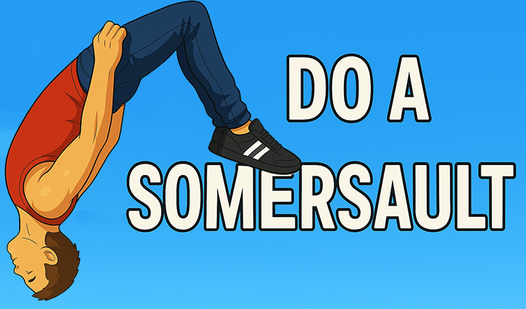
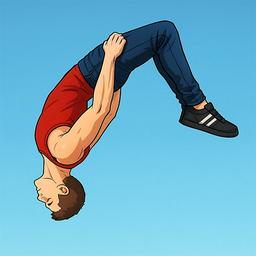
What does tuck three times mean in Do a Somersault?
Tuck three times usually means entering the tucked position three separate times, not completing three full somersaults.
Tucking pulls the legs and torso together, increasing rotation speed. To register one repetition, activate the tuck, release it clearly, and then activate it again. If you hold the control continuously, the game will usually detect one long tuck even if the character completes several rotations.
A reliable sequence is tuck, release, tuck, release, and tuck for the third time. Extend after the third activation and move on to the landing. The pauses do not need to be long, but the character's body must have enough time to change position. These transitions allow the counter to distinguish three actions from one continuous hold.
Do not confuse a tuck with a rotation. A rotation is counted when the body completes a full turn. A tuck is a command or body position. The character may complete more than one rotation during a single tuck, but that does not increase the number of tuck actions.
How do you perform a tuck and register it three times?
Use short, separate inputs and allow the character to extend slightly between them.
Begin the sequence after takeoff, once the character has both height and rotation. An input made too early may blend into the takeoff animation. Starting too late leaves no time to land. Watch the character rather than focusing only on your finger or key. Press again after the legs have at least started moving away from the torso.
If the third repetition does not register, do not make the sequence faster. Increase the gaps slightly instead. If all three actions register but the landing fails, keep the same rhythm and begin the entire sequence earlier. This fixes the landing without breaking the part of the attempt that already works.
How do you play step by step?
- Read the objective and identify the exact action the game needs to register.
- Start the jump and measure the available height without trying to set a record.
- Activate the tuck to accelerate rotation and build the required angle.
- Release the control to check the body position and slow the rotation.
- Repeat the tuck with separate inputs when the objective requires multiple actions.
- Finish the trick early and reserve the last part of the flight for alignment.
- Bring the feet down and keep the torso as close to vertical as possible.
- Wait for a stable position after contact before starting another action.
- Change only one point of timing on the next attempt if the objective fails.

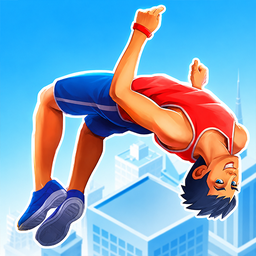
How do you complete the final objective on the third mountain level?
If the final mountain objective says to tuck three times, perform three distinct tucks near the beginning of the flight and prepare to land immediately after the third.
The common mistake is trying to combine the three actions with the largest possible number of rotations. The objective does not necessarily want a record. It wants three clear changes of body position followed by a successful finish. Use this sequence in the first half of the trajectory: tuck, extend, tuck, extend, and tuck for the third time. Then extend fully.
If the character is facing headfirst toward the ground after the third action, do not automatically tuck again. Check the direction of rotation first. Remaining extended may give the body enough time to rotate into a vertical landing position. Another tuck will increase the rotation speed and remove your remaining safety margin.
When the character falls forward, release the final tuck earlier. When they fall backward, hold the final input slightly longer, but do not move the entire sequence closer to the ground. Adjust the release point in small steps. This makes it easier to find the correct angle without rebuilding the whole jump every time.
If your version displays a different final objective, use the same method. Identify the observable action being checked, perform it during the safe part of the jump, and reserve a separate part of the flight for landing.
How do you control rotation and avoid falling after a somersault?
A tuck speeds up rotation while an extended position slows it down, so the landing angle depends on how long you remain in each state.
Watch the direction of the torso instead of relying only on elapsed time. Rotation speed can change after different takeoffs. When the feet pass the highest point and begin moving toward the ground, prepare to extend. If you remain tucked until the feet already point down, momentum will often carry the character beyond the safe landing angle.
A stable landing requires more than having the feet underneath the body. The torso must not be rotating rapidly at contact. Begin extending before reaching the ideal visual angle, not exactly when you reach it. Momentum will complete the remaining part of the turn.
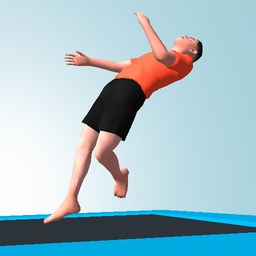
Under-rotation usually looks like a backward fall or a landing with the torso leaning too far back. Over-rotation often sends the character forward, onto their head, or onto their back after an unnecessary turn. Fix under-rotation by holding the tuck slightly longer. Fix over-rotation by extending earlier. There is no need to change the takeoff if you already have enough height.
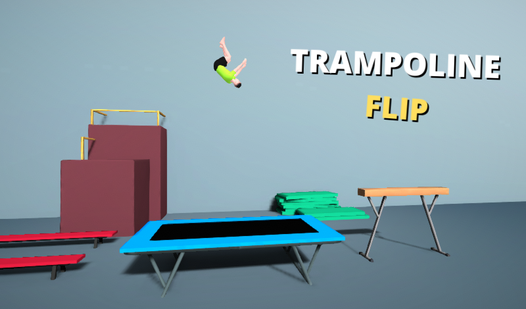
Why does the objective fail after a successful-looking jump?
The objective may fail because the game detected one continuous hold instead of several actions, the landing was unstable, or the required pose appeared too briefly.
First, check for a visible counter or a change in the objective text during the jump. If the number does not increase, the problem is the action itself. Make each input clearer and add a short extension between inputs. If the counter reaches the required value but the level still fails, the landing is probably the cause.
Do not press again immediately after contact. Give the character time to settle. The first contact can look successful while the remaining rotation causes a fall a moment later. The game evaluates the final state, so the landing must be calm as well as accurate.
Do not try to fix repeated actions with one longer press. When an objective asks for a specific number of actions, the counter usually responds to the beginning of each new state. You need at least a brief return to the extended position between repetitions.
Which techniques make difficult objectives more consistent?
I use a few simple techniques to reduce the number of random attempts.
- I first find a safe extension point without adding extra tricks. Once I can land the basic jump several times, I place the required actions into the unused part of the flight.
- For three tucks, I follow a press and release rhythm while checking that the body actually extends. This is more reliable than three rapid taps that the game may combine into one action.
- If the character over-rotates, I move the release point only slightly earlier. A large correction often turns severe over-rotation into equally severe under-rotation.
- Once the objective counter is complete, I stop improving the trick. My only job during the remaining height is to reduce rotation and put the feet underneath the body.
The difference between consistent progress and a lucky attempt is a repeatable rhythm. Remember the first input point, the intervals, and the final extension point. Your next attempt then becomes a correction to a working pattern instead of a completely new experiment.
FAQ
What does tuck mean in Do a Somersault?
It means moving into a compact body position with the legs and torso pulled together, which increases rotation speed. A tuck is not the same as a complete rotation.
How do you tuck three times during one jump?
Activate the tuck three times and briefly extend the body between activations. A continuous hold will usually count as only one action.
When should you release the tuck before landing?
Release it before the feet point directly down. Momentum will continue rotating the character slightly and bring the body toward the correct landing angle.
Why is the level incomplete when the objective was performed?
The game probably did not register a stable landing. After completing the trick, align the torso, reduce the remaining rotation, and wait for the character to settle after contact.