
Slap Aura Walkthrough and Beginner Guide

In Slap Aura, you need to survive each clash, land well-timed hits, and avoid giving your opponent an easy position. The objective is straightforward: read the opponent's behavior, wait for a safe opening, and respond with one accurate action. Do not mash the attack control. Check your range and any red warning first, strike, then immediately prepare to regain control of your character.
How do you play Slap Aura?
To play consistently, alternate between observation, one accurate hit, and a short pause to read the next threat.
Do not try to win your first attempts through tapping speed alone. Start by learning how far your character can reach, how long the attack motion lasts, and whether you can act again immediately. Even when the controls use only a few buttons or taps, timing decides the exchange. Attack too early and you miss. Attack too late and the opponent starts first.
Keep your character where you can see both the opponent and the open space around you. If the arena allows movement, avoid standing beside a dangerous edge without a reason. A central position normally gives you more room to correct a mistake. Near an edge, a single bad exchange may end the attempt.
Watch the opponent's entire silhouette, not only the hand. A body turn, a brief stop, or sudden forward movement may reveal more than a bright effect. After each clash, ask one question: which appeared first, the warning or the actual attack? After a few repetitions, the opponent's actions will stop feeling random.
How do you play step by step?
Use the first few attempts as short practice sessions, then turn your observations into a repeatable routine.
- Inspect the arena and opponent - identify open space, dangerous edges, and the starting distance to your target.
- Test one normal action - learn the real attack range without hiding the result behind random inputs.
- Back away after the test - restore a safe distance and deny the opponent an easy punish.
- Wait for a visible cue - use a hand movement, color change, or pause as information about the next attack.
- Move before contact - make the attack miss or receive it from a safer position.
- Answer with one accurate hit - catch the exposed opponent while keeping the option to move or defend again.
- Check the result - note how the range, rhythm, and character positions changed after the exchange.
- Repeat the successful rhythm - keep using the proven sequence until the opponent changes behavior.
- Slow down when a new effect appears - learn what the signal means before risking the current attempt.
- Preserve the center of the arena - leave yourself an escape route instead of moving into a position with no room to dodge.
This routine is more useful than searching for one magic combination. The situation may change, but the cycle remains clear: notice the threat, avoid a bad trade, punish the miss, and restore your position.
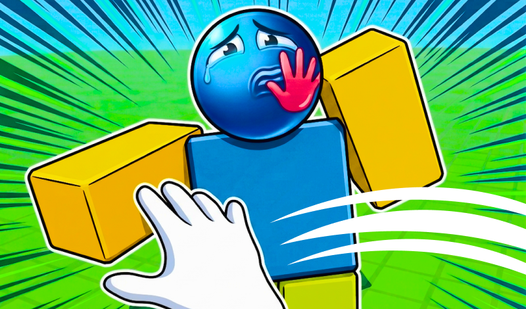
What does the red hand mean in Slap Aura?
Treat the red hand as a warning of an enhanced or dangerous action until the game's behavior shows otherwise.
Do not attack automatically just because the hand turns red. First check what happens immediately after the signal. The red hand may accompany a powerful attack, a dangerous state, a selected target, or a temporary restriction. Determine its exact meaning from the outcome instead of trusting a single frame.
Run a simple test. The first time you see the red hand, increase the distance and watch. During the next attempt, try moving sideways instead. Compare whether an attack follows the signal, whether it tracks your character, and whether the effect disappears after the hit. Two or three controlled tests are usually enough to reveal the rule without repeating the same defeat.
My advice is to cancel the aggressive plan when the red hand first appears and keep enough space to move. If the signal is harmless, you lose only a second. If it warns about a dangerous attack, that saved distance can preserve the attempt.
Do not stare at the color alone. Check whether the windup, approach speed, or opponent's position changes. The effect tells you that something is happening, while the animation suggests how to respond.
How do you beat Slap Aura without constant defeats?
For consistent progress, find a repeatable opening after the opponent acts and attack during that opening.
A common mistake is trying a different random response every time. That makes it hard to learn what worked. Choose one safe pattern: hold medium range, wait for the enemy movement, step away, and answer after the miss. Repeat it several times. If the result remains consistent, you have found a working pattern.
Separate mistakes into three categories. A range mistake means your hit failed to reach or the opponent got too close. A timing mistake means the correct action happened too early or too late. A positioning mistake means you landed the hit but finished the exchange in a dangerous place. This method lets you change one variable per attempt.
After losing, I recommend thinking about the action before the final hit rather than the hit itself. The attempt was often lost earlier: you moved too close, wasted a safe opening, or stood beside the edge. Fixing that cause is more effective than tapping faster during the final moment.
If the opponent changes pace, do not keep following the old rhythm from habit. Spend one cautious cycle observing. Missing an attack opportunity is better than taking a new move you have not learned to read.
When should you attack?
The best time to strike is after the opponent misses or finishes a visible action and has not started the next response.
Do not confuse an opening with close range. An opponent standing nearby is not automatically safe to attack. Check whether the movement has ended and whether an immediate counter is possible. If the animation is still running, a short pause is often safer than rushing.
Think in exchanges rather than isolated hits. The first contact changes the distance. The next action either confirms your advantage or punishes your greed. After landing a hit, ask whether you can safely continue. If not, restore your position and prepare the next exchange.
My rule is simple: one controlled hit is worth more than three inputs without control. I press again only when I can see that the opponent still has not started a response. It feels slower at first, but it quickly reduces the number of defeats caused by impatience.
How do you hold a safe position in the arena?
A safe position leaves room to retreat while keeping the opponent within a distance you understand.
If movement is unrestricted, avoid placing your character, the opponent, and the arena edge on one straight line. Any powerful contact can then push you toward the area with the fewest options. Shift your angle so that open space remains behind or beside you.
Do not run toward the center without looking. Make sure the route does not cross the opponent's attack line. A short side movement can be safer: let the attack pass, then recover the better position. Space control comes from small corrections, not long uncontrolled dashes.
When the opponent retreats, you do not always need to chase all the way to the edge. A chase stretches the distance and encourages an extra attack input. Stop at the range of your most reliable hit and make the opponent cross the dangerous space first.
After every successful hit, I check how much open space remains around my character. This small habit prevents a good sequence from ending with one fall caused by poor positioning.
Which mistakes block progress most often?
The most common problems are attack spam, reckless chasing, ignored warnings, and repeating a mistake without testing its cause.
The first problem is easy to spot: the player taps faster than the character can perform actions. It becomes difficult to tell which input registered and when control returns. Press once and wait for a visible result.
The second mistake is greed. After landing a hit, you want to extend the sequence even after the opening has closed. If the opponent has recovered, another attack creates a new risk. Reset the cycle instead.
The third mistake concerns red and other visible effects. Players either ignore the signal completely or panic and abandon their position. Use a testable response instead: create distance, move sideways, and observe the result.
Finally, do not change your attack timing, movement direction, and range at the same time. Even a victory teaches you little under those conditions because you cannot identify the reason it worked. Adjust one element and preserve everything that is already reliable.
How can you practice reactions and range?
Practice recognizing one signal and performing one planned response instead of trying to increase raw tapping speed.
Choose a visible start to the opponent's attack. Before the attempt begins, decide whether you will retreat, move sideways, or wait for the motion to finish. This link between cue and response turns a guess into a habit. Once you read the first cue consistently, add another.
To practice range, stand just outside the distance where you think the attack will connect and approach in small steps. Strike once, remember the characters' positions, and back away again. Soon you will recognize the correct range without using a test input.
You can also alternate the main game with related variants. Different opponents and presentation stop you from relying only on one memorized animation, which helps you learn the broader principle of observation.
FAQ
What is the main goal in Slap Aura?
Win each clash through accurate timing, safe range, and position control instead of constant attack inputs.
Why does my attack keep missing?
You are probably attacking outside the effective range or pressing before the approach is complete. Test the distance with one hit and remember the characters' positions.
Should I attack when the red hand appears?
No. Treat the red hand as a warning first. Create distance, watch the next action, and attack only after you recognize a safe opening.
What should I do if the same attack keeps defeating me?
Change only one part of your response: movement timing, dodge direction, or distance. This will reveal the cause of the defeat and help you preserve the solution that works.