
Best Escape Games Online: Free Picks and Strategy

The best escape games online are quick browser challenges built around one goal: get a character, object, or vehicle out of danger. Start by identifying what you control, test each safe action, and watch how the level reacts. Most games reward timing, route reading, or puzzle logic rather than random clicking. A strong first choice loads fast, explains controls clearly, and makes failure useful by showing what to change.
Escape games cover more than traditional locked-room puzzles. Some ask you to inspect a scene and combine clues. Others turn escape into a compact action challenge involving obstacles, moving hazards, precise launches, or a safe route to an exit. The setting changes, but the useful habits remain the same: observe first, understand cause and effect, and solve one problem at a time.
What are the rules of online escape games?
The basic rule is to reach the exit or remove the trapped subject without losing all your attempts.
Before moving, determine the objective shown on the screen. An exit might be a door, an open path, a safe platform, or simply the far side of the level. Next, identify the controls. Browser games may use mouse clicks, taps, dragging, arrow keys, WASD, or a single timed input. Do not assume that a familiar-looking game uses familiar controls; one experimental move can reveal more than several rushed attempts.
Hazards usually reset the level, remove a life, or send the controlled object back to a checkpoint. A reset is information, not wasted time. Notice exactly where the attempt failed and whether the cause was poor timing, the wrong direction, too much force, or a missed clue.
Most levels also impose an order. You may need to open a route before moving through it, wait for a hazard to pass, or collect something that makes the exit usable. If the apparent solution fails repeatedly, look for a prerequisite rather than repeating the same input faster.
How do you play escape games step by step?
You play efficiently by turning each attempt into a small, controlled experiment.
- Read the objective to define the finish. Find the exit, safe zone, target object, or character that must be rescued before touching the controls.
- Identify your input to avoid accidental moves. Check visible prompts, then test one click, tap, drag, or key at a time in a safe area.
- Scan the whole level to map danger. Look for spikes, moving objects, blocked passages, switches, suspicious gaps, and repeating movement patterns.
- Separate fixed hazards from timed hazards to plan the route. Walls remain predictable, while moving obstacles require you to learn a cycle and choose an opening.
- Choose the shortest safe first action to limit uncertainty. Move toward nearby safety or activate an obvious mechanism instead of committing to a long sequence immediately.
- Pause after each change to see the result. A switch, collision, collected item, or moved object may alter another part of the level.
- Retry with one adjustment to learn faster. Change the launch angle, delay, path, or interaction order, but keep the rest of the attempt consistent.
- Complete the route cleanly to confirm the solution. Once a method works, repeat it deliberately rather than relying on a lucky chain of inputs.
This process is especially effective in short levels. Random experimentation can occasionally produce a win, but it does not teach you why the solution worked. Controlled attempts build a reusable understanding of the game's timing and physics.
How do you win at escape games more consistently?
You win more often by reducing uncertainty before attempting difficult movements or multi-step solutions.
Start with route reading. Trace a path backward from the exit and ask what prevents you from using it now. A moving barrier may create a timing problem. A sealed path suggests a switch or key. A jump or launch that appears impossible may require a different starting position. Working backward keeps the visible goal connected to each action.
For timing challenges, watch at least one full hazard cycle without moving. Identify the moment when the route begins to open, not merely when it looks fully open. Starting slightly earlier can let your character or object arrive during the safest part of the cycle. If momentum matters, also account for the time needed to stop or change direction.
For physics-based escape games, make small adjustments. Large changes in angle or force make it difficult to tell which variable fixed the problem. If an attempt falls just short, add a little force while preserving the angle. If it reaches the right distance but hits an obstacle, adjust the angle first.
For clue-based puzzles, keep a short mental inventory of unused information. Colors, numbers, symbols, object positions, and unusual shapes are often meaningful, but not every visible detail is a clue. Test a theory only when you can explain how the clue connects to a lock, sequence, or mechanism.
Finally, protect successful progress. Once the first half of a route is reliable, perform it the same way and focus experimentation on the unresolved section. Constantly changing the opening introduces mistakes into a part you have already solved.
What are the best escape games to play free online?
The best free escape games provide clear feedback, readable hazards, responsive controls, and solutions that feel understandable after you discover them.
A fair game can be difficult, but it should show why you failed. Good level design lets you distinguish a timing error from an incorrect route. Restarts should also be quick because repeated attempts are part of the genre. Beyond that, the best choice depends on the kind of escape you enjoy.
Try Go Escape when you want to begin with the genre's central objective rather than choosing by a particular character or story theme. Use the opening attempt to learn the controls displayed by the game, since similarly titled escape games can use different mechanics.
Try Bus Escape if a vehicle-themed premise sounds more appealing. Vehicle scenarios naturally encourage you to think about routes, space, and obstacles, but let the actual level teach you which of those ideas matter instead of guessing from the title.


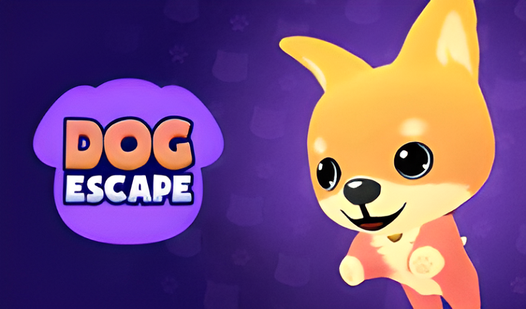
Choose Dog Escape when you prefer an animal-centered theme. The same core method applies: locate the goal, inspect threats, test the available input, and change one part of your plan after each failure.

Pick Ball Escape if you like escape challenges framed around an object rather than a human character. Pay particular attention to any movement feedback the game provides before deciding whether precision, timing, or route choice is the main challenge.
There is no single best title for every player. A short action escape is ideal for a quick session, while a larger puzzle scene suits players who prefer observation and deduction. The practical test is simple: after two or three attempts, do you understand more about the problem? If so, the game is teaching fairly.
What types of online escape games are there?
Online escape games range from clue-heavy room puzzles to fast obstacle courses, with many games combining elements from both.
Room escape games focus on searching a location, collecting items, decoding clues, and opening a final door. Their challenge comes from noticing relationships between objects and using information in the correct order.
Action escape games make movement the main puzzle. You dodge hazards, cross dangerous spaces, or reach safety under pressure. Pattern recognition and input timing matter more than maintaining an inventory.
Physics escape games revolve around momentum, collisions, launches, gravity, or moving objects. They reward measured adjustments and an understanding of how the game responds to force and direction.
Rescue games shift the objective from escaping yourself to freeing a person, animal, or object. These often require clearing a route or removing dangers before triggering the final movement.
Chase and pursuit games add an enemy, timer, or advancing threat. Decisions must be faster, but observation still matters. A short pause to recognize a pattern can save more time than repeated panic-driven attempts.
Many browser games are hybrids. Treat the dominant source of failure as your guide: if you know the route but miss the opening, practice timing; if your execution is accurate but the exit stays closed, search for a missing condition.
What beginner mistakes make escape games harder?
The most common mistake is repeating an unsuccessful attempt without changing the underlying plan.
Random clicking creates another problem. It can trigger several events at once, making it impossible to tell which action mattered. Slow down and isolate interactions. In action games, avoid holding a direction before you know how quickly the character accelerates or stops.
Beginners also focus too closely on the controlled character. Scan ahead and inspect the edges of the play area. The next hazard, switch, or safe landing point may be outside your immediate focus. In puzzle scenes, revisit the environment after every major change because a previously useless object may now have a purpose.
Do not treat every failure as evidence that the route is wrong. If you nearly succeed at the same point several times, the route may be correct but the timing or precision may be off. Conversely, if attempts fail in fundamentally different ways, step back and reconsider the route.
Hints are most useful after you can state the exact blockage. Asking for help because nothing works teaches little. Asking what opens a specific barrier preserves the rest of the puzzle and lets you continue solving independently.
FAQ
Can I play escape games online for free?
Yes. Browser escape games can be launched without buying a traditional downloadable game, although individual titles may display ads or offer optional features.
Do online escape games require a download?
Most cataloged browser games run directly on the game page. A modern browser and a stable connection are generally enough, though controls and performance vary by title and device.
Are escape games always room puzzles?
No. The genre also includes obstacle escapes, physics challenges, rescues, vehicle scenarios, and chase games. The shared idea is reaching safety or freeing something from danger.
What should I do if I am stuck on an escape game?
State the exact obstacle, review unused clues or mechanisms, and retry while changing only one variable. If the blockage remains, use a targeted hint instead of revealing the entire solution.