
Wonderful Field Capital Show Answers and Walkthrough

In Wonderful Field: Capital Show, you identify a hidden word from a question or clue by revealing useful letters and eliminating bad candidates. The key to progressing is combining the topic, word length, and positions of known letters. Do not submit the first answer that comes to mind. Build the pattern, check its grammar, and enter the complete word only after the evidence matches.
How do you find answers in Wonderful Field: Capital Show?
You find an answer by combining three clues: the meaning of the question, the number of spaces, and the positions of revealed letters.
Read the entire prompt first. One word often defines the required category, such as a city, profession, plant, dish, character, object, or action. Then count the spaces. Even an obvious answer is wrong if its length does not match the board.
Once a few letters are visible, create a mental pattern such as _ O _ O _ A. Stop considering every word associated with the topic. Look only for words of the correct length with letters in those exact positions. This method quickly narrows the search and prevents guesses that fit the clue but not the pattern.
Pay attention to grammar. A prompt asking for the name of an object usually expects a noun. A question about someone's occupation may require the name of a profession. If the clue asks what a person did, the answer may be a verb. Gender, number, and grammatical form can eliminate many tempting candidates before you type anything.
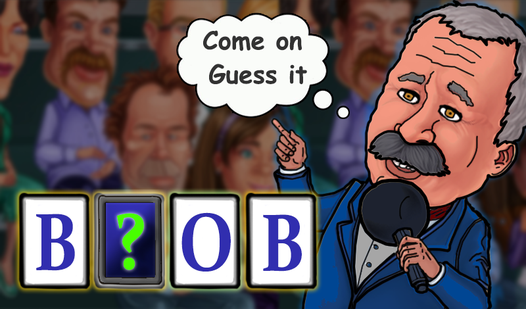

How do you play step by step?
A reliable walkthrough is based on collecting information carefully instead of making fast random guesses.
- Read the complete question - identify the topic and likely part of speech.
- Count the spaces - keep only words with the correct length.
- Inspect possible endings - infer the word's form from the wording of the clue.
- Choose a common consonant - test letters such as N, T, S, R, or L when the round allows letter guesses.
- Check common vowels - try O, E, A, or I when the consonants do not reveal a recognizable pattern.
- Build the word mask - remember every revealed position without moving letters around mentally.
- Create several candidates - compare each one against the clue, length, and grammar.
- Discard weak guesses - never submit a word that contradicts even one confirmed letter.
- Give the complete answer - do this when one strong candidate remains or another turn carries more risk than value.
If the screen offers extra actions, a wheel, or a stake selection, first check what a mistake can cost. When a wrong answer carries a large penalty, revealing one more letter is safer. When the penalty is small and the pattern is nearly complete, solving the word can save time.
Where can you find all Wonderful Field answers?
A single answer list is not always reliable because questions may appear in a different order and the available tasks can change between game versions.
A published answer is useful only when the full prompt, word length, and revealed letters all match. A shared topic is not enough. For example, a clue about a capital could require a city, a country, a former capital, or even a nickname. Search using the complete question rather than two broad keywords whenever possible.
If there is no exact match, break the task into smaller checks:
- isolate the main meaning of the question;
- identify the answer category;
- count every character without spaces;
- include two or three revealed letters;
- inspect the likely ending;
- compare the candidate with every known position.
Do not trust a list if its proposed word is longer than the board or places a different letter in an open space. It is probably answering a similar but different question. A grammatical mismatch is another common problem. An occupation, the grammatical form of that occupation, and a specific person's surname may all concern the same subject while answering different prompts.
Which letters should you reveal first?
Common letters are useful early in a round, but your selection should still reflect the topic and likely form of the word.
For Russian answers, letters such as O, E, A, I, N, T, S, R, and L are often productive. This is not a fixed sequence. If the word appears to have a feminine ending, A may provide more information than another consonant. A plural word may make I or Y useful. Vowels divide long words into recognizable syllables, while consonants tend to expose the root.
I usually begin with one or two common consonants. If neither appears, I switch to a vowel to uncover the word's structure. Testing five consonants in a row is rarely efficient because even correct consonants can remain hard to interpret without vowels around them.
Never choose a letter that is already visible or marked as used. Before each turn, scan the open spaces and previous attempts. It takes a second and prevents one of the most frustrating mistakes in any word game.
How can you solve a word from only a few letters?
Reconstruct possible parts of the word first, then test their meaning against the question.
The final two or three positions can reveal a common suffix or grammatical ending. Endings equivalent to -ness, -tion, -er, or adjective forms can suggest a part of speech or the way a word is constructed. Treat an apparent ending as a working theory, not a fact. The start of the word can be equally useful if a familiar prefix separates from the root.
Divide long answers into syllables. A ten-space pattern can seem impossible until it breaks into two familiar pieces. Check names, geographical terms, and loanwords for characteristic letter combinations. A Russian word should usually have a plausible structure. If your candidate requires a very unlikely cluster of consonants, reconsider it.
I keep two or three candidates in mind instead of committing to one. I then choose a letter that separates those candidates. If two possible words share a letter, revealing it proves little. A letter found in only one candidate can test an entire theory in a single turn.
What should you do if a correct answer is rejected?
Check the spelling, grammatical form, and number of spaces before assuming that the task is broken.
Start by ruling out a typo. Look closely at similar characters, doubled consonants, the Russian soft sign, and the letters Е and Ё. The interface may require Ё separately or treat it as a version of Е. Use the on-screen keyboard and revealed characters as your guide.
Read the question again. The game may want a surname rather than a first name, a capital rather than a country, or a specific term rather than a broad label. Your answer must match the exact wording. If the board contains one word, do not add explanations, prepositions, or extra spaces.
Count the spaces again. Players sometimes overlook a repeated letter or forget that the soft sign occupies a position. If a candidate is even one character too long or short, look for a synonym with the required length. When several names could be valid, the game normally expects the one that fits its fixed pattern.
How can you avoid mistakes in difficult rounds?
Difficult questions become easier when you separate confirmed facts from assumptions.
Create a short mental list. Facts include the length, revealed positions, used letters, and grammar of the prompt. Assumptions include the topic, possible root, and likely ending. Never let your first association overrule the facts. If your favorite answer conflicts with one space, discard it immediately.
My practical rule is to avoid submitting a full answer on impulse. I spell the candidate letter by letter and compare every position with the board. This is especially helpful with long names, where an extra character is easy to miss.
Another useful technique is to identify the narrowest possible category before searching for the word itself. For a food question, decide whether the answer is a dish, ingredient, utensil, or cooking method. For geography, separate countries, cities, rivers, mountains, and regions. A precise category leaves far fewer candidates to test.
Finally, consider the cost of a mistake. If the rules offer a safe move with little downside, reveal a letter that separates your remaining candidates. If another action could erase your advantage and the word is almost complete, verify the full answer carefully and finish the round.
Which similar games can help you practice?
Other word-guessing games train you to recognize endings, common letter combinations, and the relationship between a clue and its answer length.
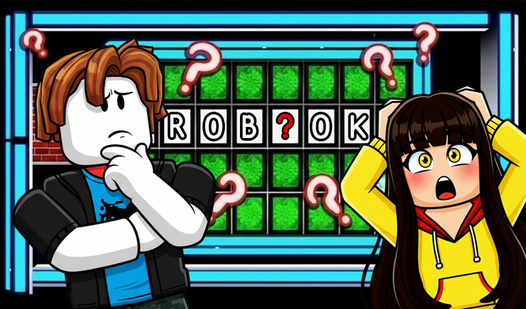
Use the same sequence in a similar game: identify the topic, count the spaces, map the open positions, and verify the word form. Do not rush. A few calm sessions build the habit of analyzing the board before taking an action.
A wheel-based format also develops risk management. When a turn includes a random outcome, you need to recognize when the information from one additional letter is no longer worth the danger of losing your advantage. The same judgment is useful in the main game.
FAQ
Is there a list of every Wonderful Field: Capital Show answer?
A complete list may become outdated after updates or use a different question order. Matching the full prompt, word length, and revealed letters is more reliable.
Which letters should I choose at the beginning?
Common Russian letters such as O, E, A, I, N, T, S, and R are usually useful, but your choice should reflect the topic and likely ending.
Why is a word rejected even though it fits the clue?
Its length, grammatical form, or precise meaning probably differs from the expected answer. Also check Ё, the soft sign, and doubled consonants.
When should I submit the complete word?
Enter the full answer when it matches the clue, number of spaces, every revealed letter, and the required grammatical form.