
Word Search Find Words Guide: How to Beat Every Level

In Word Search, your goal is to locate every hidden word and connect its letters in a direction allowed by the puzzle. Start with long words and unusual letter combinations, then inspect the edges, diagonals, and reversed lines. If you get stuck, change the direction in which you scan the grid before spending a hint. This method catches words that random letter hunting tends to miss.
How does progression work in Word Search?
You complete a level by finding every required word and tracing its letters correctly.
Check what the interface reveals before you begin. Some levels display the full word list, while others show only word lengths, a topic, or the number of missing answers. Your approach should match the information available. With a visible list, search for the rarest letter in a specific word. Without one, identify the likely theme and collect the clearest combinations first.
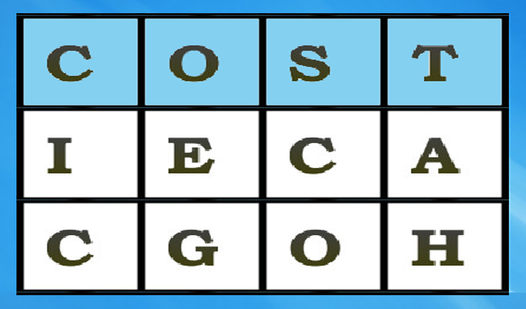
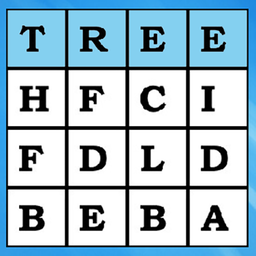
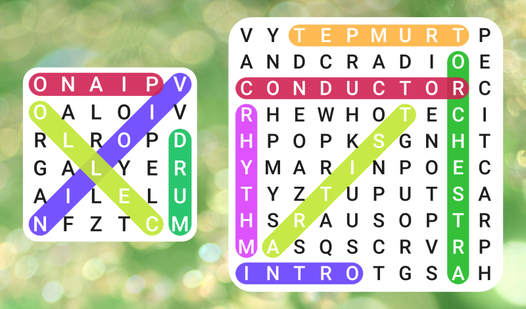
In a classic word search, words may run horizontally, vertically, diagonally, or backward. Fillword puzzles use different rules: letters form a path through neighboring cells, and each completed word may occupy its own section of the board. Do not carry assumptions from one mode into another. If a diagonal or neighboring cell cannot be selected, the puzzle may simply forbid that move.
Watch how the board reacts. The first cell may light up, a line may follow your finger, or an invalid path may reset. These signals quickly reveal which directions are legal and are more dependable than guessing from the visual design.
How do you play step by step?
Survey the whole grid first, then work from the most distinctive words toward the short and well-hidden ones.
- Read the objective and word list to learn the topic, legal directions, and level completion condition.
- Inspect the corners and edges to find words with fewer possible paths.
- Locate an unusual letter to reduce the number of candidates for a long word.
- Scan every row from left to right and right to left to catch reversed words.
- Check every column from top to bottom and bottom to top to separate real vertical words from coincidences.
- Inspect diagonals in both directions if the current rules allow diagonal paths.
- Trace the letters in one steady motion so the game records the entire word.
- Compare the result with the list so you do not search for an answer that is already complete.
- Count the letters in the remaining answer so you look for the correct path length.
- Use a hint only after checking the full grid so it reveals something you genuinely missed.
Do not try to read the entire board as a block of text. Divide it into areas of roughly three by three cells and inspect them one at a time. This keeps your eyes from jumping across the same easy section while ignoring another part of the grid.
What should you do when you cannot find a word?
When a word refuses to appear, stop repeating the same scan and change how you look at the board.
A common trap is checking one area several times from the same direction. Your brain has already labeled it empty, so it starts skipping familiar patterns. Rotate your phone or mentally turn the grid around. Reversed words often become obvious as soon as the viewing angle changes.
Next, use the puzzle's constraints. If the missing answer has seven letters, ignore paths with four or five. Find its first or last letter, preferably one that appears only a few times, and test every legal direction from those cells. Compare the ending as well as the beginning. Two matching opening letters are not enough to confirm an answer.
I normally make two deliberate passes. The first covers rows and columns. The second covers only diagonals and reversed lines. It feels slower than random searching, but it removes blind spots. In modes that permit turning paths between neighboring cells, I start from the rarest letter and keep track of the cells I have already tested.
Check your input as well. Begin near the center of the first cell, move without sharp swings, and release inside the final letter. Starting near an edge or making a wide turn can select the wrong cell on a small screen.
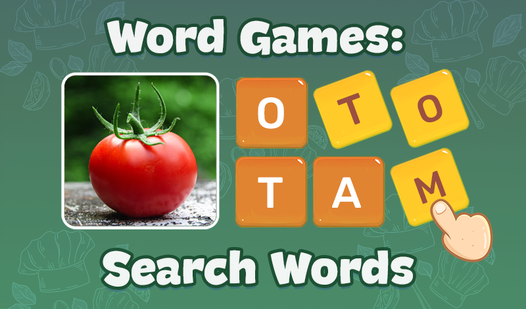
How do you beat level 191 in Favorite Words Solitaire?
An exact answer to level 191 requires the actual letter grid, but you can solve it by combining word length, rare letters, and a complete scan of every legal direction.
A level number does not uniquely identify the puzzle. Different releases, platforms, and updates may use different layouts. A solution posted for another version can contain the wrong set of letters. Compare the screenshot, grid arrangement, and missing word lengths instead of relying only on the number 191.
If the answer list is visible, choose the longest unfinished word. Find its least common letter on the board and test the word forward and backward from every matching cell. If you see only blank spaces, count them. Familiar endings can suggest a direction, but treat them as a hypothesis. The grid still has to confirm every letter.
I would not search for a numbered solution immediately. I first note the remaining length and write down visible fragments of three or four letters. One reliable fragment often reveals the full word faster than trying every imaginable combination.
How do you make words from the letters in mem polis?
If mem polis is the given letter set, begin with short stems and check whether each letter may be used only as many times as it appears.
Confirm the rules of the current mode. An anagram puzzle lets you rearrange letters, but it usually does not let you reuse a character. A grid puzzle depends on cell positions. A fillword also requires each consecutive letter to occupy a neighboring cell. A possible answer may work as an anagram and still be impossible on a grid.
Separate repeated letters from the unusual ones. In this set, m appears more than once while the other characters support several different beginnings and endings. Build three-letter or four-letter combinations first, then add the remaining characters to a promising stem. If the game accepts bonus words, submit obvious short answers even when they do not fill the main objective.
Do not treat the space as part of the puzzle unless the interface explicitly asks for a two-word phrase. A search query may separate the letters even though the game displays them as one continuous set.
When should you use hints?
A hint is most useful after a systematic scan, when you already know the length and approximate location of the final word.
An early hint often reveals a letter you could have found within seconds. A late hint provides more information. With only one answer left, a single exposed cell can remove most false candidates. Check the edges, reversed lines, and diagonals first. Then try searching from the end of the word. Use the hint only after those attempts.
If you can choose the kind of help, reveal one letter or the starting cell instead of the entire answer. A full reveal saves time now but does not show why the word escaped you. A partial hint preserves the puzzle and trains you to notice similar layouts later.
Here is my routine: after receiving a hint, I do not trace the word immediately. I locate the full path with my eyes, verify its direction, and only then connect the letters. That turns the hint into practice instead of a skip button.
Save help for boards containing many repeated letters. Those boards produce more false starting points, so one revealed cell eliminates more bad paths than it would on a varied grid.
Which mistakes make levels harder?
The most common problems are rescanning one area, ignoring reversed words, and using hints too early.
The first mistake comes from rushing. Glancing across the board is not the same as checking it. Keep a fixed order: rows, columns, and then diagonals. Finish one direction before moving to the next.
The second mistake comes from normal reading habits. We naturally recognize words from left to right, so a forward word is easier to notice than the same letters in reverse. Read every line from both ends. Alternate between the top and bottom when checking columns.
The third mistake is building a convincing word that violates the board's geometry. In a fillword, all the letters may be nearby but the path could cross an occupied cell. In a classic grid, every letter may match while the path makes an illegal turn. Verify the shape of the path before committing to the answer.
The fourth mistake is an inaccurate swipe. If a correct word is rejected, move more slowly and watch each cell light up. Repeating the same broad gesture ten times will not fix it.
Finally, do not become attached to your first guess. After spotting a promising three-letter beginning, it is easy to search for only one expected ending. Treat the visible fragment separately from your proposed answer and test every available branch.
How can you find words faster without random guessing?
You solve faster when you reduce the number of possible paths before touching the letters.
Prioritize rare characters, long words, and distinctive endings. A long path covers more of the board and crosses more visual zones, making it easier to spot while the grid is still fresh. Save three-letter words for later because short combinations often appear by accident.
Use the shape of the grid. A corner letter has fewer possible continuations than a central one. Corners are quick to test, so I begin every level with all four before moving inward. For diagonals, I inspect the long corner-to-corner lines separately from the short lines near each edge.
If the topic is known, think of a few likely answers in advance, but do not confuse a guess with proof. A food category may suggest products or dishes, yet the board decides which word is actually present. A theme should direct your attention, not replace checking the letters.
Take a short break after a minute without progress. Looking away for several seconds is more productive than making ten identical scans. When you return, start from the opposite side and check the direction you neglected before.
FAQ
Can a level be completed without hints?
Yes. Scan by direction, start with rare letters, and compare each path length with the missing answer. Use a hint only if a systematic search produces nothing.
Why does the game reject a correct word?
Check the permitted direction, letter order, and accuracy of your swipe. Some modes prohibit diagonals, turns, or using the same cell twice.
Does level 191 have the same answer in every version?
Not necessarily. Updates and different releases may change layouts or numbering, so compare the actual grid and missing word lengths.
Which words should you find first?
Start with long words and combinations containing unusual letters. They produce fewer false candidates, while short answers are easier to locate after the board has been cleared.