
Solitaire Word Puzzle Walkthrough and Level Answers

Solitaire Word Puzzle is a word game where you gradually clear the layout by finding meaningful connections between the available words. Start with the most obvious combinations, inspect every newly revealed card, and save flexible words for later. If the level ends in a dead end, change one of your first uncertain moves. The mistake is usually much earlier than the final pair.
How do you beat any Solitaire Word Puzzle level?
Any level becomes easier when you look for groups governed by one precise connection instead of collecting isolated matches.
First, inspect every open card and describe the possible relationship between each promising pair. The link may be a shared category, part of a familiar phrase, a function, a location, a property, or a sequence of related ideas. A strong connection can be explained briefly and applies equally well to every selected word.
Do not choose the first plausible match automatically. A flexible word such as key, field, or leaf can have several meanings and may fit multiple chains. Use narrow, specific words first. They reduce the number of possible interpretations and reveal how the layout was designed.
Review the board after every successful move. A newly exposed card may confirm a theory that could not be tested earlier. If several moves lead to no clear continuation, one of your early matches was probably incidental rather than the intended connection.


How do you play step by step?
Clear the layout from obvious relationships to uncertain ones while checking the result of every decision.
- Inspect all open words and understand the available options before making a move.
- Find the most specific connection and reduce the number of possible interpretations.
- State the rule clearly and confirm that it explains the whole pair or chain.
- Remove the confirmed combination and reveal the next part of the layout.
- Review the remaining cards and notice relationships exposed by the updated board.
- Save ambiguous words until another card provides enough context.
- Change an early move after a dead end instead of repeating the same route after restarting.
It helps to say the connection aloud: these are types of transport, these are parts of a house, or these words combine with the same verb. If the explanation requires a long story and several exceptions, the combination is probably wrong.
How do you beat level 14 in Solitaire Word Puzzle?
On level 14, begin with a pair or chain that does not depend on an unusual second meaning.
Card sets may vary between releases and updates, so use the words in your own layout instead of relying entirely on somebody else's answer list. Review every available word, then sort the candidates by relationship type: shared subject, familiar phrase, function, location, or common property.
If two moves look equally convincing, examine what each one leaves behind. The intended combination usually preserves at least one clear relationship among the remaining cards. A bad move consumes a useful word and leaves concepts that can only be connected through a vague explanation. Taking a moment before the first move is often faster than restarting the whole level.
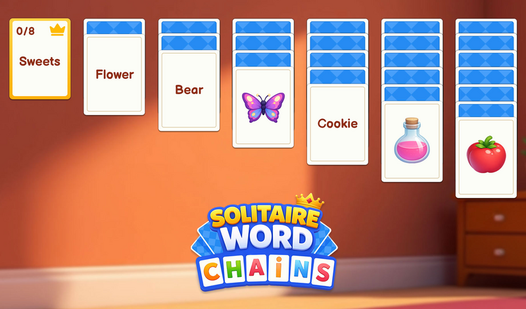
How do you find the answer to level 41?
To solve level 41, determine which meaning of an ambiguous word belongs to the current group and which meaning will be needed later.
Test every candidate with three questions:
- Can the relationship be described with one short rule?
- Does that rule apply to every selected word without exceptions?
- Will the remaining cards still contain a logical combination?
The third question is the most important. A pair can be locally correct and still break the layout. Two words may genuinely belong to the same broad subject, but one of them may be intended for a more precise group. Consider both the current match and the options it removes from the rest of the board.
If your version has an undo feature, use it to test a specific theory instead of tapping combinations at random. Make the uncertain move, inspect the revealed cards, and evaluate the remainder. Without undo, record your first two or three moves, restart, and change only the earliest questionable choice.
What if level 41 has different words?
If your level 41 words do not match a screenshot or another walkthrough, solve the current layout by analyzing its relationship structure.
A different game version, an update, or a changed card order may explain the mismatch. Do not force an old answer onto a new set. Find two words with the narrowest shared subject, then check whether either word also forms a familiar expression with another visible card.
A useful technique is to give every proposed group a title. Labels such as food, nature, or things are too broad. Labels such as drink ingredients, parts of a plant, or tools for one specific activity can be tested. The more precise the title, the more likely it describes the intended relationship.
How do you beat level 61 without random guessing?
On level 61, reduce the options through elimination and identify the word that has only one natural partner.
Separate the board into reliable and uncertain relationships. A reliable relationship has one simple explanation. Leave context-dependent and figurative words in the uncertain group. Clear the reliable part first, but make sure you are not taking a card required by the only possible remaining group.
When only a few words remain, work from the most awkward card. Find the word that fits just one candidate. That restricted relationship contains more information than a flexible word that matches three different cards. This reverse approach is much faster than trying every possible order.
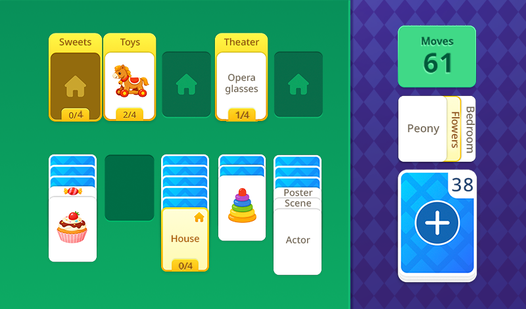
How do you beat level 341 without getting stuck at the end?
On level 341, plan the final combinations before committing to the first attractive move.
Late levels often become difficult because several associations are valid at the same time, not because the vocabulary is obscure. Before making a move, try to assign every open word a possible partner or group. You do not need the complete order yet, but no card should be left without a reasonable destination.
Pay special attention to words that fit almost anywhere. Treat them as reserves and save them until the other relationships become more specific. If the last two words are incompatible, the error probably happened earlier. Return to the first card that had two reasonable destinations and change that decision.
If your version offers hints, use one when you have narrowed the problem to two concrete theories. The hint will then reveal how the remaining layout should be read instead of merely supplying an isolated move.
Why does a level fail when the connections look correct?
A level usually fails because the relationship is too broad, an ambiguous word was spent too early, or the same opening order is repeated after every restart.
Common mistakes include:
- The connection is only technically valid. The words share a broad subject, but the intended group has a narrower common property.
- A convenient word is used too soon. The flexible card completes the current group but leaves another group impossible to build.
- The remainder is ignored. The player checks the current move without asking whether the leftover words can still be connected.
- The same opening is repeated. The first moves are replayed from memory, so the board returns to the same dead end.
- A hint is used without analysis. The move is copied, but the relationship remains unclear and the next card causes the same problem.
To audit a failed attempt, name the exact rule behind every completed group and look for a more precise alternative. Then identify the first move that allowed two reasonable explanations. That is the decision to change, not the final obvious moves before the dead end.
Which tactics do I use on difficult levels?
The most reliable tactics preserve future options and expose a weak theory quickly.
- I begin with the most specific word. If a card has only one natural association, it provides a dependable entry point. I save ambiguous words for later.
- I check the remainder before confirming a move. I mentally remove the chosen group and see whether the other words can still be paired. One obvious orphan is a reason to reconsider.
- I record uncertain opening moves. After restarting, I change only one early choice. This reveals which theory broke the layout and prevents the attempt from becoming random tapping.
- I give every relationship a precise name. If my only explanation is that the words are somehow connected, I do not use the combination. I want a testable category, function, part of a whole, familiar phrase, or shared context.
These tactics remain useful after updates and on layouts with a different card order, unlike a fixed list of answers.
FAQ
Is there one exact answer for every Solitaire Word Puzzle level?
The exact solution depends on the words and card order in your version. If your layout differs from a walkthrough, analyze the current relationships and inspect the remainder after every move.
What should I do if the final words are incompatible?
Return to the earliest ambiguous word. It was probably used in a valid but unintended combination.
How can I tell whether an association is correct?
A strong association has one precise rule, applies to every word in the group, and preserves clear relationships among the remaining cards.
When should I use a hint?
Use a hint after reducing the choice to two possibilities. This helps you understand the solution pattern instead of receiving one unexplained move.