
Mahjong Blast: How to Clear Every Level

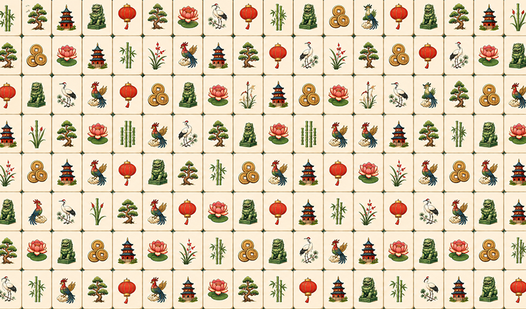
Mahjong Blast is a solitaire puzzle in which you clear the entire board by removing pairs of identical free tiles. The key to beating levels is not speed but move order: open upper layers and long blocked rows first, compare every available pair, and avoid spending your only convenient duplicate too early. The exact total number of levels has not been reliably confirmed and may vary by game version.
What are the rules of Mahjong Blast?
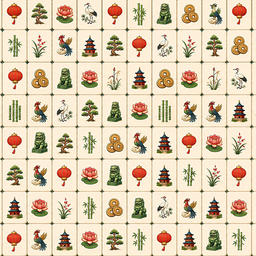
You can remove two identical tiles only when both are uncovered and each has at least one free side.
A tile is blocked when another tile sits on top of it or when neighbors trap it on both the left and right. Matching artwork alone is not enough: both parts of the pair must be selectable under these rules. Removing a pair exposes new moves, so every match changes the position.
The usual level goal is to remove every tile. This is not competitive four-player mahjong, so you do not need to learn hands, suits for scoring, or discard rules. Observation and planning a few pairs ahead matter here. If the board includes season or flower symbols, follow the game's highlighting: some versions allow tiles from the same special group to match even when their pictures are not identical.
How do you play step by step?
This short routine helps prevent a dead end halfway through a layout.
- Scan the top layer - find every tile with nothing covering it.
- Check the open sides - discard matches whose tiles are trapped on both sides.
- Compare available pairs - choose the one that exposes more new tiles.
- Remove a top or edge pair - increase the number of possible moves.
- Scan the board again - account for matches created by the last move.
- Alternate between areas - do not clear one easy corner while leaving the center sealed.
- Keep a reserve pair - save a simple move in case another branch runs out.
- Clear the remainder - before the final moves, make sure every visible tile still has a partner.
Do not click the second tile automatically as soon as you notice a match. A pair may be legal but strategically weak. A useful move exposes at least one new tile, opens the side of a row, or lowers a tall stack.
How can you clear levels without getting stuck?
To clear levels consistently, judge a pair by the tiles that will become available after you remove it.
The strongest move is often near the top of the layout. A top tile may block several pieces below, so removing it creates more options than taking a pair from a completely open edge. Long horizontal rows are the next priority. Once you remove an end tile, its neighbor gains a free side and may become playable.
Pay close attention when a symbol appears four times. If three or four copies are currently free, do not match the first two you see. Decide which copy obstructs the layout most. Pair that strategically blocked copy with the safest open one, leaving the other two compatible with each other.
Before a move, ask three questions: what will this open, will a partner remain for the duplicate below it, and will I gain a new choice? If none has a good answer, the move makes the board smaller without improving the position. Leave that pair for later.
Mahjong Connect Blast is a different game: it moves tiles or groups to form adjacent pairs or pairs on an unobstructed straight line. These free-side solitaire tactics should not be transferred to it.
Which pairs should you remove first?
Prioritize pairs that open the top, release the ends of long rows, or remove tiles covering several positions at once.
It helps to sort legal moves into three groups:
- Strong moves expose at least two tiles or remove a crucial cap from a layer.
- Working moves expose one tile or create a new free side.
- Empty moves expose nothing and merely remove pieces that were already accessible.
Start with strong moves. Between two working moves, choose the one affecting the more restricted part of the board. Empty pairs are useful as reserves: they let you change the position later without breaking an important match now.
A symmetrical layout can be misleading. You do not have to clear the left and right sides evenly. If one side releases a top tile over the center, focus there for a while. Balance matters only when it prevents a chain of identical tiles from becoming trapped beneath another chain.
What should you do when no moves are available?
When no moves remain, recheck the edges and top tiles, then use undo, hint, or shuffle only if that option exists in your version.
A dead end usually begins several moves before the game announces it. Required copies of one symbol may have ended up stacked above each other or buried inside two closed rows. If undo is available, return to the last moment when you had a genuine choice between pairs, not merely one random move. Change that decision and examine the new branch.
A hint reveals a legal pair, but it does not necessarily identify the best strategic move. Treat it as an eyesight check, not a complete solution. Shuffle changes the board more dramatically, so save it for a position that undo cannot repair. With no such tools, restarting is better than clicking randomly. Once you replay the familiar opening, you can quickly identify the fork that caused the dead end.
How many levels are in Mahjong Blast?
There is no reliably confirmed fixed total: the available layouts can differ between versions and can change with updates.
If the menu shows a map or counter, use it as the number of stages currently available, not necessarily as a permanent final total. When no last stage is displayed, giving an exact figure without checking that specific build would be guesswork. This does not change the basic strategy. Difficulty comes from layout shape, layer height, and fewer productive opening pairs, while the same planning principles continue to work.

Which mistakes most often prevent a win?
The biggest mistake is removing the first visible match without checking the other available copies of that symbol.
Other common errors include:
- Clearing only the outer edges while ignoring the top layer that covers most of the board.
- Matching the two easiest copies out of four and leaving an incompatible pair buried in closed layers.
- Emptying one side completely while a chain on the opposite side remains trapped.
- Treating a hint as an instruction without judging what its suggested pair will expose.
- Making many fast moves in a row without rebuilding your mental map after each removal.
If the board is nearly empty but the last pair is blocked, the decisive mistake usually happened earlier. Look for a point where three identical tiles were available or two different pairings used the same symbol. That is where the matching order most often determines whether the layout can be completed.
Which techniques do I use on difficult layouts?
I slow down at decision points and preserve at least one safe pair, so my progress does not depend on a single chain of moves.
- I count exposed tiles. If one pair opens two positions and another opens none, I almost always take the first.
- I track sets of four. I decide in advance which two copies must meet later, especially when one lies in a lower layer.
- I rescan after every removal. A new strong move is easy to miss when I follow the old plan on autopilot.
- I undo to the fork. At a dead end, I do not reverse the latest moves blindly. I return to the decision that offered real alternatives.
For practice, say what a move will achieve before taking it: open the center, release the left edge, preserve a match for the lower tile. After a few boards, this analysis becomes quick and barely slows play.
FAQ
How can I tell whether a tile is free?
Nothing can cover it, and either its left or right side must be open. If both sides are trapped, the tile cannot be selected.
Should I always remove an available pair immediately?
No. It can be better to keep it as a reserve and first remove a pair that opens the top layer or a long row.
Can a layout be cleared without hints?
Yes, provided the starting layout has a solution and you choose the pair order correctly. Hints help you spot a move, but they do not replace planning.
What matters more, speed or avoiding mistakes?
Move order matters more for normal completion. Secure new pairs and an escape from dead ends first, then play faster once the layout becomes familiar.