
Fruit Merge Strategy: 10 Ways to Keep Space and Build Bigger Merges

Keep matching fruits reachable and leave room for the next drop
The most useful fruit merge strategy is to protect space while keeping identical fruits able to meet. Before placing anything, check where it will settle, whether its partner remains reachable, and what happens if the expected merge fails. A reliable position usually matters more than one ambitious combination.
In familiar drop-and-merge formats, matching fruits combine into a larger fruit, while an overcrowded container threatens the run. Exact controls, fruit sequences, objectives, and loss conditions vary. Use the games below to practice the relevant habits, and check each game's instructions before applying rules you learned elsewhere.
1. Learn how the fruit actually moves

Use the opening drops to observe movement. Does a fruit roll far after landing? Can it bounce over a neighbor? Does the view make depth or contact difficult to judge? In a three-dimensional presentation, apparent alignment may not guarantee that two objects touch.
Choose a low landing area and watch the complete result before repeating a placement. If a fruit consistently moves sideways, aim with that movement in mind. Your first goal is to learn one predictable placement, not maximize the opening score. Reliable control gives every later decision a stronger foundation, especially near crowded edges where a small bounce can change the outcome.
2. Group useful pairs without building a rigid pattern
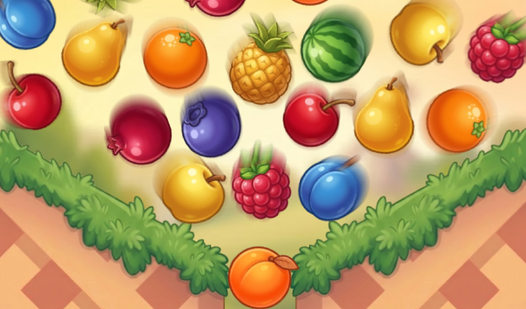
Keep identical fruits near each other whenever you can do so safely. A small fruit dropped between two larger, different fruits may become inaccessible, even if its matching partner arrives immediately afterward. Think about the path a partner would need to travel.
Try keeping a low area available for incoming small fruits while allowing larger fruits to collect elsewhere. Treat this as a flexible arrangement. If the pile shifts, follow the new shape instead of forcing every fruit into a predetermined column. The useful question is whether a match can still happen, rather than whether the board looks perfectly sorted. A tidy pile can still contain blocked pairs.
3. Plan the landing after the merge
An immediate match can be attractive yet leave its replacement in an awkward position. Before taking it, imagine where the larger fruit will settle and whether it will cover something you still need. A successful merge changes both the available space and the shape of the pile.
Use a short planning horizon: the current placement, its likely result, and one plausible follow-up. If a next-fruit preview exists, include it. If there is no preview, preserve a landing area that works for several possible arrivals. You do not need to predict an entire sequence. You need a position that remains playable when the next fruit is inconvenient.
4. Manage the highest point, not just empty space
A container can have plenty of empty pockets and still be in danger because one narrow tower reaches too high. Look across the top of the pile before each drop. Identify the highest point and ask whether your placement will raise it further.
Prefer a lower landing that creates access to a pair over a speculative drop onto the tallest stack. Side walls may help contain movement, but piling everything against one wall can create a steep tower. Spread the height when the physics allow it. If the game shows a danger line or warning, learn what triggers it rather than assuming every version uses the same rule.
5. Build chains from accessible pairs
A chain reaction becomes more plausible when the result of one merge lands beside its next matching partner. Look for neighboring pairs and ask which merge could connect them. This is more useful than hoping a random impact rearranges the entire container.
For example, if merging two small fruits produces a medium fruit, having another medium fruit close to the landing area may create a second merge. The result still depends on contact and movement. Keep a safe alternative in mind if the chain stops early. A good chain setup leaves the board usable after its first step, rather than requiring every imagined collision to succeed.
6. Wait for movement to finish
When the game allows deliberate timing, let fruits settle before making your next placement. A rolling fruit may expose a pair, close a gap, or move underneath your intended landing point. Dropping during that movement makes the outcome harder to judge.
Develop a simple rhythm: place, observe, reassess. After a large merge, inspect the whole pile because several supports may have shifted. Waiting cannot repair a blocked arrangement by itself, and some games may impose a timer or other pressure. Within those limits, take enough time to see the board you actually have. Rapid tapping often turns one uncertain placement into several problems before you can respond.
7. Use gaps only when they lead somewhere
An empty pocket is useful only if a fruit can enter it and contribute to a later move. A narrow opening may admit a small fruit but leave it trapped beneath larger neighbors. Filling that pocket can make the pile look compact while reducing your options.
Before aiming into a gap, check its width, the expected landing surface, and the route for a matching partner. If the placement simply buries an unmatched fruit, a slightly higher but accessible position may be preferable. Keep at least one practical landing area when possible. Its value comes from the choices it preserves, not from looking empty on the screen.
8. Switch to survival before the board becomes critical
As the pile grows, change your priorities. Early in a run, you can experiment with arrangements and longer chains. Near the upper limit, focus on dependable matches, lower landing points, and reducing the highest obstruction.
Use a simple test: if the intended merge does not happen, will the new fruit leave a manageable position? If the answer is no, search for a safer placement. A modest merge that lowers a dangerous area can be more valuable than progress toward the largest fruit elsewhere. Avoid sending several unmatched fruits into the same crowded region. That often removes the last route to the pair you were trying to reach.
9. Review the first avoidable blockage
After a run ends, identify the earliest placement that made later decisions harder. The final drop is often only the visible consequence. Perhaps a small fruit became buried, a tall central ridge divided the container, or an attempted chain needed too many uncertain bounces.
Choose one adjustment for the next run. You might keep small pairs more accessible, avoid adding height to the center, or wait longer after merges. Change one habit at a time so you can tell whether it helps. Compare how often you retain useful landing choices, as well as your score. A single lucky chain can hide weak decisions during an otherwise unstable run.
10. Match your decisions to the actual objective
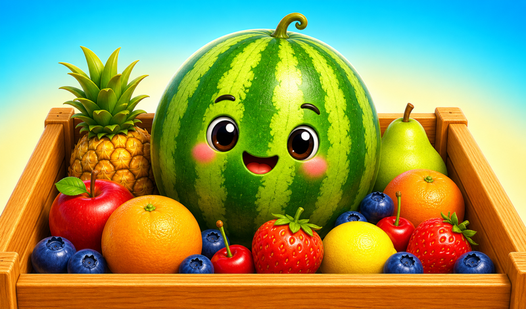
Read the stated goal before deciding what counts as a good move. A collection target, score target, and survival objective can reward different choices. Also check what happens to the largest fruit: whether it remains, disappears, or contributes to a separate counter affects space planning.
For a longer collection task, a repeatable, stable arrangement is especially useful. Keep producing accessible merges without letting large objects isolate the smaller ones. If the game provides limited tools, read their effects and costs before using them. Save them for a specific obstruction you understand, rather than assuming they will rescue any crowded position. Follow the displayed rules when they differ from general advice.
A practical checklist for your next run
Before each drop, ask three questions: Where will this fruit settle? Can its partner still reach it? What happens if the merge fails? When two placements look similar, favor the one that preserves more room and leaves fewer fruits trapped.
Start by practicing one habit for several runs. Let movement finish, keep a landing area open, or stop adding fruit to your highest stack. Once that habit becomes consistent, add another. These games run free in the browser without downloads, so you can compare different versions and practice a few deliberate placements whenever you have a spare moment.