What is a Tycoon Game? Complete Guide for Beginners
What is a tycoon game?
A tycoon game puts you in charge of something — a business, a city, a theme park, a mine — and asks you to grow it. You start with limited resources, make decisions about how to spend them, watch the operation expand, and reinvest the profits to go further. The cycle of build → earn → upgrade → build more is the core of every tycoon game, regardless of setting.
The genre has been around for decades. Titles like Theme Park, RollerCoaster Tycoon, and SimCity defined the formula in the 90s. Today the same ideas live on in browser games, mobile apps, and massive PC titles, and nub.games hosts over 200 tycoon games as of April 2026.
Why tycoon games are addictive
The short answer is compounding progress. Every upgrade you buy makes the operation slightly more efficient, which generates more income, which lets you buy better upgrades, which generates even more income. The feedback loop is tight and satisfying — especially when you hit a point where the numbers start moving fast.
There's also a strategic layer that keeps things interesting beyond the first hour. You're constantly making decisions: upgrade the production line or expand into a new area? Hire another worker now or save for a major facility upgrade? None of these decisions are as weighty as a real strategy game, but they're enough to give tycoon games a planning dimension that pure idle games lack.
The main sub-genres
Business and management tycoons
These focus on running a company — managing staff, pricing products, researching improvements, and competing against rivals. The management depth here is higher than in most tycoon sub-genres. If you like spreadsheet-adjacent thinking, this is the category to start with.
Idle tycoons
Scaled-back, lower-attention versions of the formula. You set things up, collect resources periodically, and upgrade to reduce how often you need to check in. These are designed to be played in short sessions with long gaps between. Great for players who want progress without sustained attention.
Factory and production tycoons
You design production chains — raw materials go in one end, finished products come out the other. The satisfaction comes from optimizing the layout to remove bottlenecks. Castle Defense Tycoon on nub.games has a good version of this mechanic paired with a defense layer.
Mining and resource tycoons
Dig, extract, sell, reinvest. The loop is similar to factory tycoons but with a spatial element — you're literally expanding a physical mine, deciding which veins to target and where to place infrastructure. Deep Mine Tycoon is a clean example of the format.
Theme park and entertainment tycoons
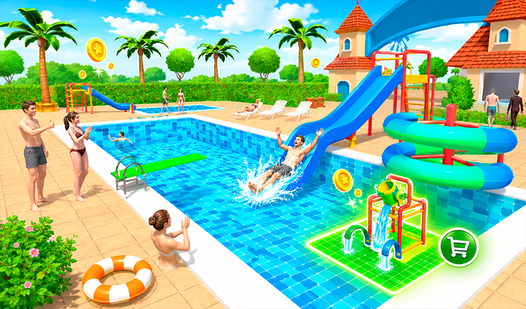
You build attractions, set prices, manage guest happiness, and deal with maintenance. These tend to be the most visually elaborate tycoon games because the "product" you're selling is something fun to look at.
How to get started
1. Pick a sub-genre that fits your available time
Idle tycoons work for five-minute sessions. Factory tycoons reward longer, uninterrupted play. Knowing which you have more of will save you from picking a game that doesn't fit your schedule.
2. Don't rush early upgrades
The instinct when money starts coming in is to upgrade immediately. Resist it for the first few minutes and get a sense of the income curve first. Early upgrades that increase production speed often have better long-term value than ones that just boost a single number.
3. Find the first automation milestone
Every tycoon game has a point where something starts running automatically, reducing how much you need to actively manage. Getting to that milestone quickly makes the rest of the game more enjoyable.
4. Experiment without fear
Browser tycoon games on nub.games are free and have no permanent failure states. If you make a bad decision, the game keeps running. The worst outcome is slower growth, not a game over screen.
FAQ
What's the difference between a tycoon game and an idle game?
The distinction blurs a lot in practice, but tycoon games generally have more active decision-making and a defined "empire" you're building. Idle games focus more on passive progress that happens even when you're not playing. Many browser tycoons are hybrids of both.
Are tycoon games free on nub.games?
Yes — all games on nub.games are free to play, including the full tycoon catalog.
How long does a typical tycoon game session last?
It depends on the sub-genre. Idle tycoons are designed for sessions of a few minutes. Management tycoons can hold your attention for an hour or more once you're invested in the operation.
Do I need to be good at math to enjoy tycoon games?
No. The numbers are there for flavor and feedback, not calculation. The decisions are intuitive, and the games show you clearly when something is working.