
Secrets Of The Castle Match-3 Guide: Tactics For Difficult Boards

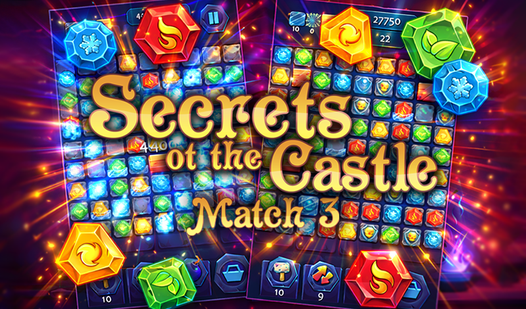
To progress in Secrets Of The Castle Match-3, look at the board objective before looking at available matches: collect pieces, remove blockers, drop items or score points. Every move should push that objective forward. The main match-3 secret is to create boosters near the lower part of the board, combine them beside obstacles, and avoid pretty matches that do not help.
Quick Level Plan
Before the first move, judge three things: the objective, the move count, and the most blocked areas of the board. If the objective is about obstacles, start beside them. If items must fall down, open vertical channels. If you need to collect a color, look for a way to make a booster from four or five pieces. A simple match of three is useful only when it opens space for a stronger move.
Match-3 looks fast, but difficult boards are won through pauses. Spend a few seconds looking for the future booster. A move that creates a rocket, bomb or color effect is often worth more than three small matches in a row.



How To Read The Board Objective
The objective defines the whole walkthrough style. If you must collect specific pieces, wide combinations and color boosters are valuable. If you must break tiles, ice, chains or other blockers, explosions beside them matter more. If objects must fall to the bottom, do not clear side areas without a reason. Work under the object and create a path to the lower edge.
Many players make the first match they see. It creates motion, but not always progress. Ask what changes after the move. Will it open a blocked cell, create a booster chance, or move the needed item closer to the exit? If the answer is no, delay that move and look for a stronger one.
Boosters And Their Value
A match of four pieces usually creates a line booster that clears a row or column. A shaped match often creates an explosive booster. Five pieces usually create the strongest color effect. Exact names can vary, but the principle is stable: the more pieces used to create the booster, the more control you gain over the board.
Do not activate a booster immediately if you can move it closer to the objective. A booster in the center of an empty board looks nice, but a booster beside a lock, chain or closed corner wins the level. Two-booster combinations are especially strong. If the game lets you place them next to each other, wait for the chance and combine them. A combo can clear a large part of the field and start a cascade.
The Lower Board
In match-3, playing low is usually good. When you move pieces near the bottom, new pieces fall from above, random matches appear, and the board refreshes. This is a cascade. A cascade can create free boosters or damage blockers without extra moves.
But lower-board play should still serve the objective. If the target is at the top or in a corner, a precise move beside it can be better. Use this rule: if a lower move does not harm the objective and may create a cascade, choose it. If a blocker controls an important section, hit the blocker first. Do not chase cascades when the board asks for precision.
Handling Difficult Obstacles
Obstacles rarely disappear from moves made far away. Work beside them, even when the match looks small. One move next to a blocker is better than a large match far from the goal. If a blocker sits in a corner, look for a line booster that crosses that corner. If it sits in the center, explosive boosters are strong.
When there are many obstacles, do not spread damage everywhere. Choose one section and expand it. An open section gives more room for boosters, which speeds up clearing nearby cells. If you try to clear all sides at once, the board remains closed and moves run out before strong combinations appear.
Saving Moves
Every move needs a result. A result can be a broken cell, collected target, created booster, opened channel or prepared large combo. If a move only swaps three pieces and does not change the situation, it is weak. On hard boards, weak moves are what consume the move count.
A useful habit is counting not only the current move, but the next one. If a match of three makes pieces fall into a match of four, it is a good move. If a normal match ruins a future five-piece line, avoid it. Strong match-3 players do not need to see the whole future. They notice one or two next effects.
Pre-Level And In-Level Boosters
If the game gives boosters before the level starts, do not use them everywhere. Save them for boards with strict goals: many blocked cells, few moves, narrow channels or corner items. On simple boards, a booster is often wasted. During the level, use a booster when it finishes a task or opens a locked part of the board.
Do not use a booster out of frustration after several bad moves. First identify the obstacle: missing color, closed corner, item not dropping, no explosion. Then choose the tool for that problem. This keeps rare boosters for levels where they decide the outcome.
Common Mistakes
The first mistake is scoring points when the objective is not points. A big cascade feels good, but if it does not touch the target, the level can still fail. The second mistake is detonating boosters immediately. Sometimes waiting one move lets you combine two boosters for a much larger effect. The third mistake is forgetting corners. Corner cells often become the final problem, so open them early.
Another mistake is spending the last moves on hope. When few moves remain, stop building long plans. Look for direct action: a booster in the needed row, a tool for the final target, or a match beside the last blocker. Final moves should be concrete.
Reviewing A Failed Attempt
If a level fails, do not restart at the same pace immediately. Recall why the moves ran out. Did you lack access to a corner, fail to drop an item, leave blockers alive, miss the needed color, or detonate boosters far from the goal? The reason tells you the next plan. If a corner blocked progress, open that corner earlier. If an item did not fall, build a vertical channel. If a color was missing, aim for a color booster instead of ordinary three-piece matches.
This review takes less than a minute, but it strongly improves the next attempt. Match-3 levels rarely fail because of one mistake. They usually fail through a series of small moves that do not connect to the objective. After a loss, choose one rule for the next try: play lower, hit blockers earlier, save two boosters side by side, or ignore side matches that do not help. One clear rule is enough to make the attempt stronger.
If the reason is still unclear after two attempts, change the starting zone. Begin not with the most obvious match, but with the section that usually remains until the end. This changes the falling pattern and can reveal a solution without extra power-ups.
Also watch which boosters appear more often. If the board easily creates line boosters, build paths through rows and columns. If explosions appear more often, work near dense blocker groups. The level itself shows which tool is more convenient, but you need to notice the repeated pattern.
Before the final moves, count objectives rather than points. Sometimes one blocker or one item remains, but the player keeps building a large booster. Near the end, a small precise move is better than waiting for the perfect combo.
FAQ
How do I beat hard levels in Secrets Of The Castle Match-3?
Read the objective before the first move, play beside blockers, create boosters, and combine them near closed areas. Do not spend moves on matches that do not advance the task.
What matters more, boosters or normal matches?
Boosters matter more on difficult boards, but normal matches prepare them. The best move creates a booster, opens space for one, or directly completes the objective.
Why should I play from the bottom of the board?
Lower moves cause new pieces to fall and create cascades. This can produce free matches, but if the target is blocked elsewhere, work near the target first.
When should I use power-ups?
Use them on levels with few moves, closed corners, narrow channels or one final difficult target. Do not spend them on boards that standard tactics can solve.