
Mystery of the Ancient Fairy Tale: The Way Home Walkthrough, Puzzles and Secrets

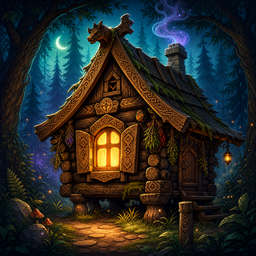
To finish Mystery of the Ancient Fairy Tale: The Way Home, do not rely on random clicks. Move through each task chain: inspect the scene, clear the obvious objects, test interactive zones, then solve mini puzzles by reading clues in the environment. The main secret is to save hints for moments when you do not know what is active, and to return to earlier places after every important find.
Quick Walkthrough Plan
This game plays like a fairy tale hidden object adventure with logic locks. Your goal is not only to find everything on the screen, but to understand which object opens the next step of the story. Work through every scene in layers. First read the objective list and mark the large shapes: keys, books, fragments, ornaments, tools and symbols. Then check smaller details near doors, chests, windows, stones, plants and frames. Those areas often hide the items that move the story forward.
When you find an item, do not start clicking everywhere. Ask what task it belongs to. A key usually leads to a lock, a fragment to a mosaic, a symbol to a panel, and a tool to an obstacle. This keeps the walkthrough clean because you stop wasting hints on simple transitions and keep them for unclear moments.




How To Read A Scene
In fairy tale adventures, objects are often hidden by meaning rather than by color. A leaf may sit among real leaves, a feather may be near a bird, and a coin may be part of a pattern on a box. Start with a broad scan, but do not keep your eyes only in the center. Scene edges, furniture corners, shadows under steps and high shelves usually produce more finds than the bright central objects.
Divide the screen into four zones and clear them one by one. In every zone, look for large objects first, then medium objects, then small outlines. If the target list uses words, say each name to yourself and imagine its possible shape. If it uses silhouettes, compare outline and proportion instead of color. Your visual memory quickly learns the artists' hiding style, and after a few scenes you will notice repeated tricks.
Order Of Actions In A Hard Location
When a location feels empty, use a short routine. First, click only clearly active places: sparkling areas, doors, drawers, locks and large foreground objects. Second, check whether the task asks for several pieces. If the game wants fragments, do not try to solve the central puzzle until all pieces are collected. Third, return to the inventory and decide which object can be used without more information.
If there is a mini puzzle, look for the rule inside the same scene. Colors, numbers, symbol order, arrow directions and repeated drawings are rarely decorative only. Do not brute force a code. Find the clue in the environment, then transfer it to the mechanism. If the clue seems incomplete, there is probably another fragment nearby or an action that changes the object state.
How To Save Hints
A hint is most valuable when you do not understand the type of action. If you simply cannot see the final object, pause for twenty seconds, look away from the screen, and return with fresh focus. Hidden object games fatigue the eyes with similar textures, and a short pause often helps more than a hint.
Use a hint only after three checks. First check the screen edges. Then check places with heavy decoration. After that, compare the target list with the objects you already found. Sometimes you search for an item in its normal form, while the game shows it as part of a drawing, emblem or pattern. If all three checks fail, the hint is being used for a real reason.
Secrets For Fewer Wrong Clicks
The core secret of this kind of adventure is remembering connections between locations. A new item may not be needed where it was found. If you receive something and the current scene has no obvious use for it, go back to the previous screen and check locked areas. Many progress chains use a short loop: find a detail, return, open a niche, get a symbol, move forward again.
Do not ignore objective descriptions. Even a short line like "something is missing" usually means the object is incomplete, not broken. If a lock does not react, you do not need a different clicking rhythm, you need a missing part. If a panel is open but unsolved, you have not found the rule yet. This reasoning saves time and reduces random clicking.
Common Mistakes
The first mistake is searching only by the exact item name. In translation, one object can be named slightly differently, and a silhouette can be stylized for the fairy tale setting. Search related forms. If the game asks for a wand, it may look like a stick, staff or decorated rod. If it asks for an amulet, inspect pendants, round signs and door patterns.
The second mistake is starting a mini game before all details are collected. Many mechanisms appear available early, but the final solution is impossible until every part is in place. The third mistake is spending hints one after another. After a hint, apply the information and update your plan. A hint points the way, it does not replace the logic of the walkthrough.
Tactics For Late Scenes
Near the end, the game usually increases the number of items that must be used elsewhere. Keep a mental list of open tasks: a locked door, incomplete picture, symbol panel or blocked passage. When you receive a new object, match it to that list. If it fits none of them, you probably missed an active zone or have not opened an intermediate object.
In final scenes, scan the screen right to left and top to bottom, because your eyes are already trained to focus on the center. This reverse route helps reveal small edge details. If the game limits wrong clicks, keep the cursor away from decorative clutter and click only after checking the shape.
What To Do When You Are Stuck
First change the task in your mind. Do not search for "the last object". Search for "the place I have not checked yet". Open the inventory, name each item, and state its possible use. Then inspect the location for an object that logically needs that item. This method works better than guessing because it restores the cause and effect chain.
If you are stuck on a mini puzzle, describe the condition in words. For example: set a symbol order, match colors, restore a picture or connect pairs. Then search only for a clue of the same type. A color puzzle almost always has a color clue, symbol order has a row or repetition, and a picture needs missing fragments. The more precisely you name the task, the faster the solution appears.
Mini Games And Returns
Mini games in fairy tale quests rarely require speed. They usually test attention: did you notice the order of drawings, collect every fragment, and understand which part of the mechanism is still locked. If a mini game opens but the solution seems impossible, do not treat it as a bug. Back out, inspect nearby objects, and return later. Often the game shows a mechanism early so you remember the goal and start looking for the missing piece.
Returns between locations should also be planned. Do not run back and forth after every click. Return when you receive a new item, reveal a symbol, get a task clue, or change an object state. On every return, check only open unfinished tasks. This route keeps the pace steady and helps you finish the story without feeling that you are walking in circles.
FAQ
How do I finish Mystery of the Ancient Fairy Tale: The Way Home faster?
Clear scenes in layers: large objects and active zones first, then small details, then inventory use and returns to earlier tasks. Save hints until you have checked edges and decorated areas.
Why does an item not work on the obvious place?
You probably need an intermediate action: open a niche, collect a fragment, find a symbol or activate a mechanism. Check whether nearby objects changed after your latest find.
Should I click randomly when one item is left?
No. Random clicks break focus and may be penalized. Pause, divide the screen into zones, and compare the target list with outlines near the edges.
What secrets help with mini puzzles?
Look for the rule in the environment. Colors, numbers, symbols and repeated drawings are usually clues for the mechanism, not just decoration.