
How to Play Dominoes: Rules, Scoring, and Winning Tips

How do you play dominoes?
In classic dominoes, players take turns connecting tiles with matching numbers. A tile showing 6 and 3 can be attached to an open 6 or an open 3. Your main goal is to play every tile in your hand before your opponent. If nobody can move, the player with the lowest total number of remaining pips wins the round.
Most beginner games use a double-six set containing 28 tiles. Every tile has two ends, and each end shows zero to six pips. The blank end counts as zero. Rules vary between draw, block, scoring, and regional versions, but matching open ends is the central idea in almost all traditional domino games.
1. Learn the basic flow with Classic Duel

Shuffle the tiles face down, then let each player draw a starting hand. In a common two-player game, each person receives seven tiles. Unused tiles form the boneyard, which is the pile used for drawing during the round.
The opening player usually places the highest double, such as double-six. If nobody has a double, the rules may select the tile with the highest pip total instead. From then on, players alternate turns and add one tile to either open end of the layout.
Suppose the open ends are 2 and 5. You may play any tile containing a 2 on one side or a 5 on one side. Rotate the tile if necessary so the equal values touch. Its other half becomes the new open end. Tiles can bend around the table for space, but the shape of the chain does not change which values are playable.
A double has the same value on both halves, such as 4-4. It is often placed crosswise to make it easy to recognize, but in standard games it still has only one continuing open end. Some variants treat doubles as special branching pieces, so check the displayed rules before assuming that a spinner is active.
2. Practice legal moves against the computer
A computer opponent is useful because it makes turn order and valid placements clear. Select a tile in your hand, then choose a highlighted end of the chain. If both ends match, the interface may ask where to place it. If the game rejects a tile, compare both halves of that tile with the two current open values.
In draw dominoes, a player who cannot move takes tiles from the boneyard until finding a playable one or exhausting the pile. Some versions allow only one draw per turn. In block dominoes, there is no drawing after the deal: a player without a legal move simply passes. The on-screen prompt will tell you which rule is being used.
The round normally ends in one of two ways. A player dominoes by placing the last tile and wins immediately, or the game becomes blocked because nobody can play. In a blocked round, add the pips left in each hand. The lower total wins. If the totals are equal, the software may declare a tie or apply its own tiebreaker.
3. Recognize puzzle variants such as Merge Dominoes
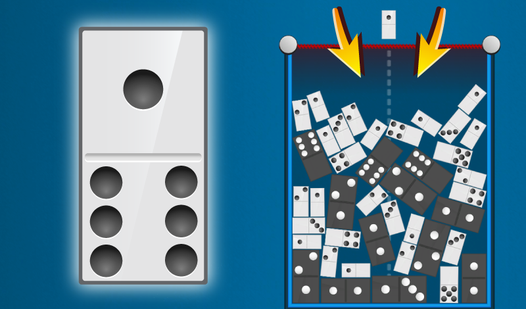
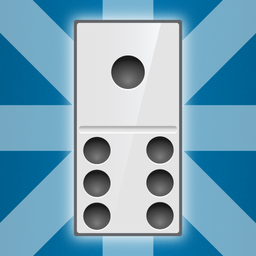
Not every game with domino tiles follows the traditional chain rules. Merge Dominoes is a number puzzle inspired by domino imagery. Its objective, legal combinations, and board management differ from draw or block dominoes. Follow its tutorial and aim for the stated target rather than trying to match the ends of a growing chain.
This distinction prevents a common beginner mistake. A domino-themed puzzle can still improve number recognition and planning, but it does not teach every rule of a competitive domino match. Use it as a change of pace and return to a classic version when you want to practice reading open ends, tracking suits, and deciding when to pass.
4. Understand scoring in a standard match
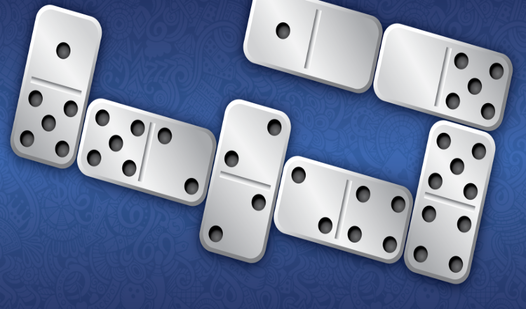
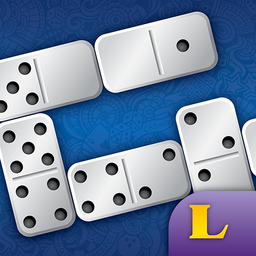
Casual games may count one round as a complete match, while longer matches continue until someone reaches a target such as 50, 100, or 150 points. A common scoring method awards the winner the total pips remaining in all opponents' hands. For example, if the losing player keeps 6-4, 3-1, and 0-2, those tiles contain 16 pips, so the winner receives 16 points.
Some all-fives variants also award points during play whenever the exposed ends add up to a multiple of five. That is a different system from simple round scoring. Read the game's instructions before planning around it. If no running score appears after an ordinary move, the match probably awards points only when the round ends.
Blanks are real values and match only other blanks. A blank is worth zero when counting the hand, which can make low blank tiles useful near a possible block. Doubles may carry many pips, so holding double-six late in a round is risky even if it could become a strong control tile earlier.
5. Build a simple winning strategy


Start by examining the distribution of your hand. A double-six set contains seven tiles for each value, including the double. If you hold many tiles containing 5, you have a strong 5 suit and can repeatedly steer an open end back to 5. If you hold only one tile containing 1, opening a 1 may give your opponent control of that side.
Play heavy tiles when it is reasonably safe. Removing high-pip pieces lowers your penalty if the round blocks. However, do not automatically discard the largest tile. A high double or a tile connecting your two strongest suits may be more valuable as a flexible response.
Watch what your opponent cannot play. If the open ends are 3 and 6 and the opponent draws or passes, they probably lack both values at that moment. Try to preserve control of a 3 or 6 end, although a drawn tile can change the information. Also count tiles that have appeared. Once all seven tiles of a value are visible or accounted for, nobody can introduce another tile from that suit.
Keep options in your hand. A balanced collection of connected values is usually safer than several isolated tiles. Before making a move, imagine the likely reply and check whether you will still have a play on either resulting end.
6. Play confidently in online matches
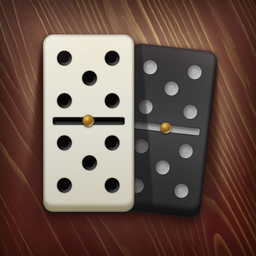
Online play uses the same matching logic, but turn timers can make decisions feel faster. Identify your legal tiles before your turn begins. Then compare three factors: the pips you can remove, the value you will leave open, and the number of replies remaining in your hand.
Do not confuse rotating a tile with changing its values. A 2-6 remains a 2-6 whichever way it faces. Visual highlights usually show valid targets, while the boneyard, pass button, score panel, and turn marker explain the current state. If a move seems impossible, check whether it is actually the opponent's turn or whether you must draw first.
Etiquette is simple: take turns promptly, avoid quitting a live round, and treat a loss as information. Review the tile that trapped you and consider whether an earlier move exposed a weak suit.
Practical tips before your next game
- Match one end exactly. A 4 can connect only to another 4.
- Check both open ends before drawing or passing.
- Reduce high-pip tiles when a blocked round looks likely.
- Use doubles early if they are difficult to place, but save a useful control double when the board favors it.
- Notice every draw or pass because it reveals which values an opponent may lack.
- Confirm whether the game uses draw, block, all-fives, or puzzle rules.
- Plan one reply ahead instead of choosing the first legal tile.
The fastest way to learn is to play a few short rounds and observe how the open values change. All the games above run free in your browser without downloads, so you can practice classic matches, computer duels, online play, and domino-inspired puzzles immediately.