
Brainrot Arena Online Guide to Complete the Index and Win

In Brainrot Arena Online, the goal is simple: buy affordable lucky blocks, unlock new brainrots, place them at your base, and turn their income into more purchases. To complete the index, do not chase only expensive blocks. Build steady earnings first, keep useful characters, and check the exact gaps in your collection. Arena fights reward the player who prepares an item, chooses the right moment, and does not leave the base exposed.
How do you play Brainrot Arena Online?
Start with the tutorial, buy a lucky block within your budget, and use the brainrot you receive to grow your income.
On a computer, use WASD to move, Space to jump, E to interact, and the left mouse button to attack. Mobile uses a virtual joystick and action buttons for the same commands. Adjust the camera sensitivity immediately if aiming feels jerky or turning takes too long. An uncomfortable camera can lose a PvP fight before your first clean hit.
The basic loop has four actions: earn currency, choose an affordable block, unlock a brainrot, and invest the new income into further progress. Do not spend your entire balance at once. Keep enough resources to continue the normal loop even when a block gives you something other than the character you wanted.
Watch the delivery risk as well as the price. Another player can intercept your loot or enter your base while you are focused on the shop or arena. Before leaving, scan the nearby players, collect your available income, and decide how you will return after the purchase. That short plan is more useful than running randomly between every bright object.

How do you complete the whole index in Brainrot Arena Online?
Complete the index by opening different block categories, tracking empty entries, and using duplicates to finance more targeted attempts.
You will not finish the index with one expensive purchase. Close the common part of the collection first. Cheaper blocks provide more attempts and help you establish a working economy sooner. Once the basic entries are filled, stop buying the same category automatically and switch to the rarity group that still contains gaps.
Check the index after every few openings. Do not rely on memory because similar characters are easy to confuse during a busy multiplayer session. Note the exact group that is missing. Your next purchase will then target a useful category instead of consuming your entire balance at random.
A duplicate is not automatically useless. If it generates income, keep it at the base temporarily and use those earnings for more blocks. Sell or replace it when it takes a needed slot, blocks a more profitable character, or funds several suitable attempts at once. Do not sell a rare brainrot merely to pay for one more random opening. Compare its recurring income with the one-time sale amount first.
Check the shop when its stock changes, but do not stand there without watching your surroundings. A rare offer will not help if someone removes the valuable part of your collection while you browse. Secure the base first, then study the offers. If part of the shop requires rebirths, read the confirmation screen and check what progress will reset. Rebirth is useful when your current cycle has slowed down and the newly opened options will accelerate future attempts to fill the index.
Where do you find lucky blocks and useful items?
Choose lucky blocks in the purchase area according to price and rarity, while combat boosts come from the shop and should be checked after stock changes.
Do not grab the first block that catches your eye. Approach it or aim at it long enough to read the cost and confirm that you can complete the purchase. Then inspect the route back to your base. A nearby block with a safe path can be more profitable than a rare one that must be carried through a crowd of players.
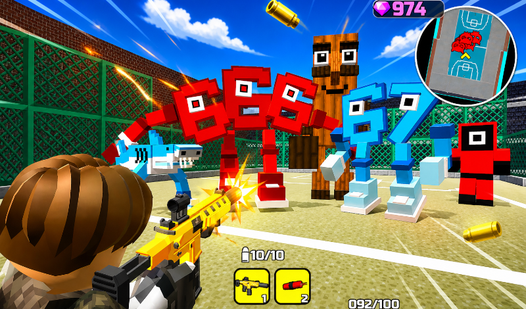
The shop is useful for more than direct attack power. Speed can end a bad fight or help you deliver loot, control effects can stop an opponent from closing the gap, and defensive items buy time to return home. Match the item to your next task. Mobility and protection are useful when collecting blocks. For an arena fight, prepare one way to begin the engagement and another way to leave it.
Do not wait beside a rare shop item when you cannot afford it. Return to your income, enter a safe battle, or open a cheaper block. Waiting produces nothing and makes you an easy target.
How do you play step by step?
A consistent action order builds income quickly, reduces theft risk, and leaves resources for recovery after a bad result.
- Finish the tutorial and adjust the camera to move, interact, and land attacks reliably.
- Inspect block prices and choose an affordable option to avoid waiting beside a purchase you cannot make.
- Open your first block and place the brainrot to start generating a steady flow of currency.
- Collect the accumulated income and keep a small reserve so one disappointing result does not stop your progress.
- Check the index and identify the nearest missing entry to buy the right block category instead of opening everything.
- Inspect the area around your base before leaving so you do not walk away during an enemy raid.
- Buy the next block through a safe route and turn back immediately if an opponent appears nearby.
- Use duplicates for income or sell them to fund new attempts without dismantling the useful core of your collection.
- Select a boost for a specific objective so you do not waste a combat item in a pointless skirmish.
- Enter the arena after preparing and claim the reward, but abandon the chase if an opponent pulls you too far from your base.
- Compare the benefit of rebirth with the progress it removes so you do not reset a strong economy too early.
- Repeat the loop for one incomplete index group at a time until random purchases become a controlled search.
How do you beat the strongest opponent in the arena?
Beat a stronger opponent through observation, distance control, and a planned escape route rather than a direct exchange of attacks.
Before engaging, watch how the player moves and when they use an item. Aggressive opponents often expose themselves by starting a chase, missing an attack, or spending a boost on a weak target. Do not join the fight immediately. Wait for the effect to expire, then close the distance.
Avoid running straight through the center. Change direction, use jumps to disrupt their aim, and position the camera so you can see both the opponent and your escape path. On mobile, short joystick adjustments are more precise than holding one long turn. On a computer, excessive sensitivity is just as harmful. A fast spin means nothing when your follow-up attack misses.
Prepare two parts of the plan. The first is for the attack: a speed boost, control effect, or another available tool that creates an advantage. The second is for leaving. If the opening attempt fails, do not burn every remaining item out of frustration. Break contact, recover a useful position, and wait for another mistake.
Remember the actual objective. Victory does not always require finishing a long duel. It can mean delivering a block, protecting a brainrot, or stopping a theft. If the opponent dominates open combat, force them to choose between chasing you and defending their own base. While they are distracted, collect income, change your route, or pressure their resources.
Move immediately after a successful fight. Inspect the base, secure valuable loot, and invest the reward into progress. Players often survive the duel and lose during the next few seconds because they celebrate and stop watching the arena.


Which tactics do I use for faster progress?
I progress faster by keeping a reserve, using short routes, and choosing a clear purpose for every purchase.
- I never spend my whole balance on the most expensive block I can afford. I keep resources for the normal economy loop and combat preparation. A random reward may be weaker than expected, and an empty balance turns one bad roll into a long pause.
- I collect income before visiting the shop and again as soon as I return. This puts resources back into circulation sooner and gives opponents less time to exploit my distraction. If another player is nearby, I check the base before opening any menu.
- I choose the route to a block before making the purchase. I look at enemy positions, places where I can change direction, and the distance over which I must carry the loot. The common mistake is simple: players watch the price and notice the ambush too late.
- I do not start serious PvP without a reason. First I decide what the win provides: an arena reward, base protection, a safe delivery, or access to an enemy resource. If there is no useful result, the fight only pauses my income and exposes my base to a third player.
What should you keep, sell, or steal?
Keep reliable income producers, sell duplicates that block your development, and steal only a target you can realistically carry home.
A new character matters to the collection, while income supports further progress. A newly unlocked brainrot normally deserves a slot until you check the index. Judge a duplicate by its practical value: how much it earns, whether it occupies a needed slot, and whether selling it pays for suitable blocks. Do not trade the reliable core of your base for a series of expensive random attempts with no reserve.
Before stealing, check the distance to your base, the owner's position, and your alternate route. A valuable target deep inside a guarded area may be worse than an ordinary block near the exit. If carrying it reduces your speed or immediately starts a chase, do not run along the most obvious straight line. Change direction before the owner and another player can trap you.
Stealing is particularly risky when your own base has uncollected income. You are gambling with the enemy item and your resources at the same time. Collect your earnings first and make sure the return journey will not take too long.
Which mistakes prevent you from completing the index and winning?
Aimless purchases, unnecessary chases, an ignored index, and an exposed base cause most slow progress.
- Do not buy a block only because its presentation looks impressive. Check its category, price, and the remaining index entries.
- Do not chase a retreating player across the whole map. They may be pulling you away from the base, waiting for your boost to expire, or leading you toward another opponent.
- Do not sell a rare unlock immediately. Check the index first and compare its ongoing income with the sale value.
- Do not hoard currency without a plan. Money becomes useful when it pays for a needed block, an upgrade, or a prepared arena attempt.
- Do not ignore performance problems. If combat stutters, reduce the graphics quality and adjust sensitivity. Consistent controls are better than a prettier image that makes you miss attacks.
FAQ
How can I complete the whole index quickly in Brainrot Arena Online?
Fill common entries with cheaper blocks first, then buy only from categories that still have gaps. Use duplicates for income temporarily instead of selling them automatically.
Why do I keep losing to a strong arena player?
You are probably trading attacks directly without a prepared boost or escape route. Watch the opponent spend their items and engage after they make a mistake.
Should I use rebirth immediately?
No. Read what will reset and what the rebirth unlocks first. Reset when the new option will noticeably speed up your next progression cycle.
What should I do when the brainrot I need never appears?
Keep improving your income, target the appropriate block category, and protect your reserve from random purchases. A complete index requires repeated attempts, so a stable economy matters more than one expensive gamble.