
Boo Scared 6: Italian Circus Walkthrough

To complete Boo Scared 6: Italian Circus, inspect every scene, watch how the environment reacts to clicks or taps, and perform actions in a logical order. Your goal is to find a way out of the circus. The key is to avoid blind clicking: collect visual clues first, test one idea at a time, and scan the whole location again after every successful action because the scene may have changed.
How do you complete Boo Scared 6: Italian Circus?
The walkthrough follows a short loop: inspect the scene, test noticeable objects, read the response, and choose the next meaningful action.
Do not start by clicking everything. Look for elements that stand out through shape, color, position, or animation. Check the edges of the screen, the foreground, and the background separately. In browser puzzle games, an interactive area can look like ordinary scenery. If a click causes a sound, movement, a change in the character's expression, or any other response, remember that object. Even when it does not solve the immediate problem, the reaction tells you that the element belongs to the puzzle.
After every visible change, scan the entire scene again. An opened route, a new interactive area, or an altered detail may appear far from the place you just clicked. If the game allows movement between scenes, revisit earlier locations after making progress because a completed action may unlock new options there. This method is faster than random trial and error, and it helps you understand the logic of each episode.
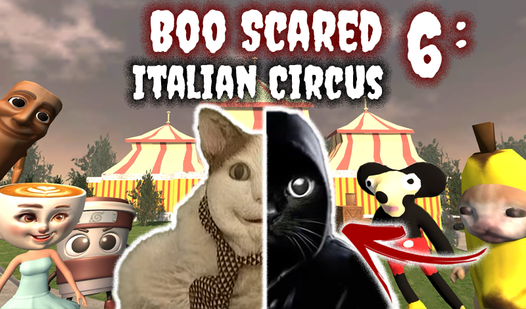
How do you escape the circus in Boo Scared 6?
To escape the circus, remove each obstacle between the character and the exit, linking every action to a visible clue or a clear response from the scene.
Keep one immediate goal in mind. It may be reaching the next area, disabling a hazard, or triggering an event that changes the environment. Ask a simple question: what exactly prevents progress right now? Search for the cause of the blockage instead of an abstract secret. If a route is closed, inspect the elements visually connected to it. If the character refuses to move, notice where they look, what they avoid, and which clicks change their behavior.
Do not try to guess the final action at the beginning. An escape usually consists of small cause-and-effect steps. A useful click should produce a readable result. If nothing happens, you may have selected the wrong area, missed a prerequisite, or clicked slightly beside the active zone. After two or three failed attempts, change your theory instead of repeating the same click.
How do you play step by step?
The reliable order is to study the available information first, change the state of the scene second, and look for the route forward third.
- Pause and inspect the scene - build a complete picture before making random inputs.
- Identify the obstacle - understand what is stopping the character from advancing.
- Mark the noticeable details - create a short list of possible interactive areas.
- Test one object - see its response without mixing the results of several actions.
- Remember the change - connect cause and effect and avoid repeating a useless step.
- Scan the screen again - notice new areas, animations, or available directions.
- Check connections between details - determine whether they must be activated in a specific order.
- Move the character forward - confirm that the obstacle has actually been removed.
- Return to the last decision point when stuck - find a missed clue without restarting everything.
- Restart only after testing your theories - restore a clear state if the action sequence has become confusing.
When using a mouse, click near the center of the suspected interactive area and then test the space around it. On a phone, use short single taps. A burst of rapid taps may trigger several responses, making it difficult to tell which action worked. Avoid covering an important part of the screen with your finger longer than necessary.
What should you do if the scene does not change?
If progress stops, return to the last confirmed change and search for one missing prerequisite instead of beginning another round of random clicks.
First, make sure the game is not waiting for an animation or line of dialogue to finish. Test the object that caused the last clear response again. Sometimes the first click starts an event, while a second click becomes useful only after the scene changes. Inspect the opposite side of the screen and the different visual layers. Players often keep watching the center even though a new active area has appeared at the edge or in the background.
If that does not help, reconstruct the chain aloud or in a note: what was available at the start, what you clicked, what changed, and what remains blocked. This record quickly exposes an action that produced no result. You may not be able to undo an input, so restarting is useful once you no longer understand the current state. Do not restart after every mistake, though. First, take a screenshot or remember the confirmed sequence so you do not waste time on the same theories again.
How can you tell a clue from ordinary scenery?
A clue is usually connected to the goal through a repeated visual feature, a response to input, or a change caused by an earlier action.
Compare similar elements. If one object differs in color, direction, size, or position, test it first. Watch the character's gaze and posture because they may point toward a danger, the correct direction, or the moment when an action becomes available. Sound matters as well. A positive cue, a click, a frightened response, or a brief animation can reveal more than the picture itself.
Do not treat every bright object as the solution. Contrast can also support the circus atmosphere. A real clue helps you make a specific decision: where to click, what to inspect next, or which action comes first. If a detail neither changes the scene nor explains the obstacle, leave it for now and reconsider it after the next event.
Which mistakes most often block progress?
The most common problems are chaotic clicking, ignoring changes, and trying to solve a new scene with the logic of the previous one.
The first mistake is moving too fast. When you click several areas in a row, you can miss a short response and lose the cause-and-effect link. The second is fixating on one object. If three accurate clicks do nothing, another condition probably comes first. The third is searching for a complex code when observation is enough. Begin with the simplest interpretation of a visual clue, and make the theory more complicated only after testing it.
Another mistake is treating a failed response as useless. A scare, the character's refusal, or a triggered hazard shows what cannot be done yet. That is free information about the rules of the scene. Remember it and change the order of your actions. Finally, do not copy a solution automatically from a similar episode. Familiar scenery can hide a different sequence.
Which tips help you finish faster?
The fastest approach is disciplined observation: one theory, one action, and one recorded result.
- I divide the screen into zones. I check the left side, center, right side, foreground, and background in order. This keeps a small interactive area from disappearing into the scenery.
- I treat every response as the game's answer. When something changes after a click, I pause for a second and inspect the whole scene. That is often when the next step appears.
- I limit repetitions. Two or three accurate clicks without a new result tell me to search for a condition elsewhere. Ten clicks on one spot rarely provide more information.
- I preserve the working sequence. Before a risky experiment, I remember the last successful actions. After a restart, I can return to the decision point quickly and test only the new theory.
For a direct walkthrough, separate observation from action. First state what you expect to happen: the obstacle may disappear, the character may behave differently, or a new direction may become available. Then click and compare the result with your prediction. If they match, continue. If they do not, you have a clear rejection of the theory instead of another meaningless click.
FAQ
Can you complete Boo Scared 6: Italian Circus with random clicks?
A lucky click may advance a scene, but this method soon becomes confusing because you do not know what changed or which condition is complete. Test one object at a time and read the response instead.
What should you do when the required object does not respond?
Check the accuracy of the click, wait for any animation to finish, and search for a missing prerequisite. If the object clearly stands out but remains inactive, another action probably enables it.
Do you need to restart the game after a mistake?
Usually not. Scan the scene again and try changing the action order first. Restart when the episode's state is unclear, the controls appear stuck, or you want to test a new sequence from a clean state.
Is there one universal click order for the full walkthrough?
No. Every scene has its own logic, and available actions depend on conditions you have already completed. The universal part is the method: inspect, form a theory, take one action, check the result, and inspect again.