
Bonko Walkthrough: Physics, Traps, and Puzzle Tactics

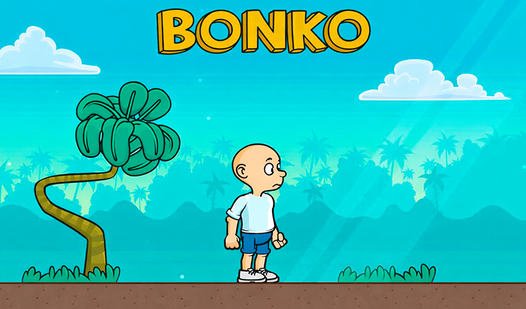
Bonko is a physics puzzle platformer where you guide a character to the exit by activating mechanisms, avoiding traps, and timing jumps. The key to completing it is simple: inspect the available scene first, determine what each button or lever changes, and only then move forward. Rushing causes more trouble than the controls. If the route looks blocked, try a different action order or use the movement of nearby objects to your advantage.
How do you beat Bonko?
You can beat Bonko consistently by treating every scene as a separate logic problem instead of a speed-based obstacle course.
Do not run toward the first visible passage as soon as a section begins. Locate the exit, observe moving platforms, identify safe surfaces, and note which mechanisms can be reached without a dangerous jump. Then divide the route into short objectives: reach a switch, open the path, return to a stable position, and perform the next jump.
Pay close attention to how the scene responds to your actions. A button may affect a distant platform rather than the nearest door. If you immediately start moving again, you can miss that connection. Stop after activating a mechanism and check exactly what changed.
I approach a new section like a scout: I move slowly, test safe edges, and remember the order of the mechanisms. The first attempt may take longer, but the next one becomes a planned route instead of a string of random jumps.

How do you play Bonko step by step?
To progress reliably, repeat the same cycle in Bonko: inspect the scene, test its mechanics, prepare your position, and execute the move accurately.
- Look around and locate the goal - identify the exit and visible hazards before attempting a difficult move.
- Test the controls - make a few short movements and jumps in a safe area to understand the character's momentum.
- Find the mechanisms - note buttons, levers, moving platforms, and objects that may change the route.
- Activate the nearest mechanism - create a new scene state without taking unnecessary risks.
- Stop and compare - determine which passage opened or which object started moving.
- Prepare your run-up - place the character on a stable surface with enough room for a controlled jump.
- Jump toward a safe zone - aim for the middle of the platform instead of its outer edge.
- Secure the landing - release the direction, assess the new position, and continue only when the character is stable.
- Change the action order at a dead end - return to accessible mechanisms and test another sequence.
- Repeat the route calmly - use information from the previous attempt instead of rushing through familiar ground.
This process is especially useful in sections that combine platforming with logic. It may not guarantee success on the first attempt, but every mistake gives useful information: the jump was mistimed, the starting position was poor, or the mechanisms were activated in the wrong order.
How do you control the character and jump accurately?
Accurate jumps depend on understanding acceleration and momentum, then controlling how long you hold a direction rather than merely choosing left or right.
The browser version uses the arrow keys, while compatible mobile devices use on-screen buttons, as described on the [Bonko page in Yandex Games](https://yandex.ru/games/app/bonko-514849). Begin with short taps. This shows how far the character travels before stopping and whether the trajectory can be adjusted after leaving a surface.
Settle the character before a difficult jump. If the character is already sliding, turning, or standing on a moving platform, the same input can produce a different result. Do not try to repair a poor start by holding a direction aggressively. That usually causes an overshoot or a slide after landing.
I aim near the center of a platform, not its edge. The extra space on both sides allows for a small speed error. I also release the controls briefly after contact so momentum does not carry the character onward.
How do you find the correct route through a new section?
The intended route is usually revealed by a chain of accessible actions: a safe platform leads to a mechanism, and that mechanism opens the next part of the path.
First look for a route that does not demand a maximum-distance jump. If a platform appears barely reachable, the scene may need to change before you approach it. A moving platform might come closer, an obstacle might move away, or a previously useless surface might become a new launch point.
It also helps to read the scene backward. Locate the exit and ask which platform would provide a comfortable final approach. Then work out how to reach that platform. This reduces the number of possibilities and can reveal a mechanism connected to the end of the route.
Watch the geometry of the space as well. A low ceiling limits a high jump arc, a narrow platform requires early braking, and a moving object changes the best landing point. The important questions are not only where to jump, but also where to start, when to move, and how much speed to carry.
How do you use the level physics?
Physics becomes helpful when you anticipate movement and work with it instead of constantly trying to correct against it.
Observe a moving platform for a full cycle before jumping. Identify two useful moments: the position where it is easiest to board and the position where it carries the character closer to the next target. Jumping during a random phase creates unnecessary difficulty.
If an object can be moved or used as a step, think about its final position before touching it. Do not push it without a purpose. Decide where it could form a step, cover a dangerous area, or provide a higher starting point. After each movement, check that enough room remains for the character.
I avoid holding a direction continuously while standing on a moving surface. Short corrections preserve my position and reduce the chance of walking off when the platform changes direction. Whenever possible, I jump during the phase when the platform itself is moving toward the destination.
A common mistake in physics puzzles is repeating the same maneuver at a higher speed. If the trajectory keeps failing, change the initial conditions: the starting point, timing, run-up direction, or state of the mechanism.
What should you do when the path is blocked?
If you cannot see a way forward, return to the last mechanism and inspect the entire scene for changes, not just the area beside the character.
First rule out a simple movement trap. Step away from the wall, try a short jump, and make sure the character is not caught against an edge. Then check whether you can return to the previous platform. Backtracking is often part of the puzzle because a button may need to be activated before you enter the main route.
If a mechanism remains active only while the character is nearby or standing on a button, look for a way to preserve its state through the available physics. Without assuming one specific solution, test the basic possibilities: positioning an object, moving through during a short opening, or approaching the same obstacle from another direction.
When none of these options works, restart the scene and repeat only the actions you have confirmed. Randomly moving objects can make a solution awkward even when the route is technically still possible. A clean attempt is often faster than rescuing a bad position.
Which mistakes cause most failed attempts?
Most failures come from rushing, starting a jump from a poor position, or failing to observe what a mechanism changed.
- Jumping before looking. The character reaches a platform, but the next route from it is awkward or blocked.
- Holding a direction after landing. Momentum carries the character across the safe zone and toward the edge.
- Repeating without adjusting. The same run-up produces the same miss, even when it looks close.
- Activating everything at once. You lose track of which button affected the object you needed.
- Chasing speed. A moving platform has not reached a useful position, but the jump has already begun.
- Refusing to backtrack. The route seems to lead only forward even though the solution requires returning to a mechanism.
My way to avoid confusion is to test one hypothesis per attempt. For example, I change the jump timing while keeping the same starting point. If you alter the run-up, direction, and timing together, you cannot tell which adjustment actually worked.
How do you complete Bonko faster?
Speed comes from understanding the route, so move quickly through familiar transitions but pause before mechanisms and moving platforms.
Remember important positions rather than every individual input: the safe starting spot, required switch, boarding point for a platform, and final surface before the exit. You can move more freely between these landmarks. Slow down again before an accurate jump and restore the correct position.
Do not save a few seconds by attempting a risky shortcut through part of the solution. If it requires an almost perfect landing, the stable route will usually be faster across multiple attempts. A strong run looks calm, with few unnecessary movements, deliberate pauses, and no panicked trajectory corrections.
What should you play after Bonko?
After Bonko, try obstacle games that reward precise movement and quick recognition of safe routes.
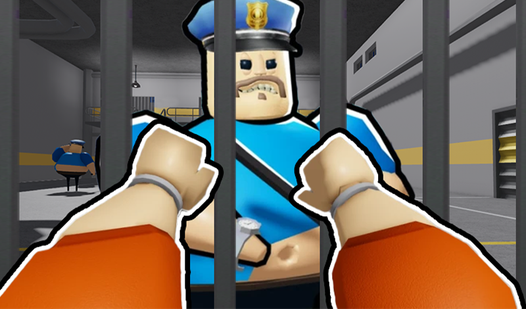
Obby: Escape from Barry Prison uses the same useful habit: identify a safe movement line first, then complete the route in short sections.
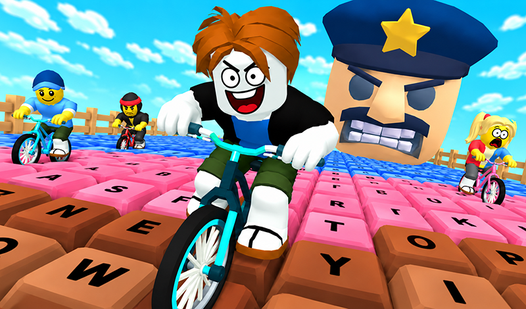
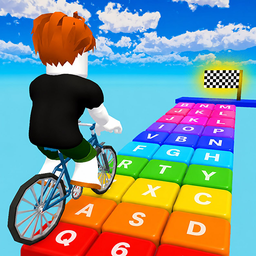
Obby But You're on a Bike adds speed and stronger momentum, making it good practice for early braking and careful landing-point selection.
FAQ
These short answers provide a quick tactical refresher before another attempt.
How do you beat Bonko when the next path is not visible?
Inspect the whole scene after pressing a button or lever, then trace the route backward from the exit to your current position.
Why does the character keep sliding off platforms?
Release the direction immediately after landing, aim closer to the center, and avoid starting a jump from an unstable position.
What should you do when one jump seems impossible?
Change only one factor: the starting point, run-up length, or takeoff timing. This makes the cause of the miss much easier to identify.
Do you need to complete Bonko levels quickly?
No. Understand the mechanisms and physics first. Faster runs will follow naturally once the route becomes clear and repeatable.